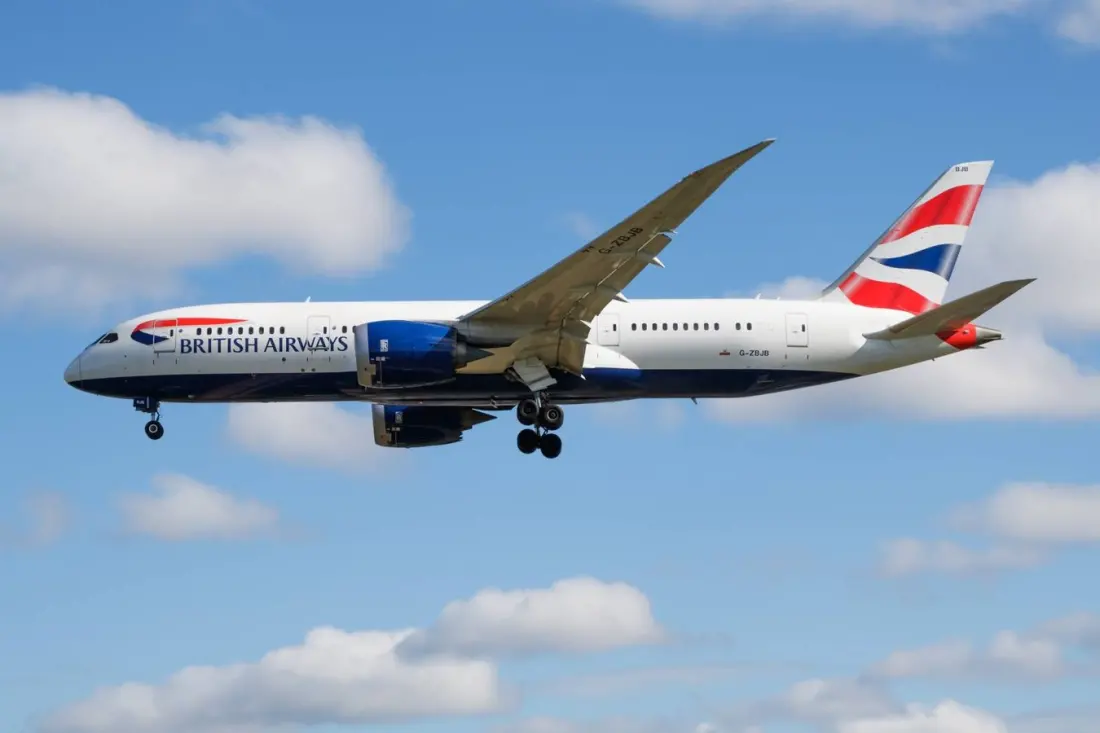
A Boeing 787 that landed at Pittsburgh International from London Heathrow on August 28 never flew home. Months later, the British Airways widebody - registration G-ZBJF, a 12-year-old 787-8 - is still parked on the apron, grounded by a ground-handling accident that turned out to be far more serious than it first looked.
The aircraft had completed its roughly 3,233-nautical-mile transatlantic crossing and touched down in Pennsylvania around 8:23 pm. Later that evening, according to reports circulating among aviation watchers, a mobile baggage belt loader raised into position against the jet's belly pierced the fuselage beneath one of its bulk cargo doors, leaving a hole in the cargo bay. The return leg to Heathrow was cancelled and the jet has sat at PIT ever since - well over 70 days.
Why so long? The Dreamliner is not a straightforward repair job. Around half of the 787's primary structure is composite material rather than conventional aluminium, so significant damage calls for specialised inspection and repair procedures that most airports simply don't have. The likely route forward: engineers build a bespoke patch so the aircraft can be cleared by the FAA for a one-off ferry flight to a properly equipped facility. Candidates include FEAM Aero's larger hangar at Cincinnati Northern Kentucky International, or Boeing's own 787 operation in Seattle.
Complicating things further, unverified accounts from those close to the repair suggest the landing gear system may also have been damaged - which would go a long way to explaining the prolonged stay. If confirmed, that turns a structural fix into a much bigger engineering problem.
The cost of sitting still adds up quickly. Pittsburgh publishes parking rates that would put the bill at roughly $175,000 for this length of stay, before millions in repair costs and lost flying revenue. Insurance and fault with the ground handling operator may soften that for BA, but the airline would clearly rather have the jet earning its keep. It operates 12 787-8s in total, so every frame matters.
There's a cruel twist of timing too. G-ZBJF spent nearly eight months at Cardiff between December 2025 and August 2026 undergoing a heavy D-check, returning to service on August 7. It managed just three weeks of flying before the Pittsburgh incident grounded it again.
For travellers, the practical takeaway is modest but real: if you're booked on BA's Heathrow-Pittsburgh route, expect schedule juggling and possible aircraft substitutions while the airline runs a widebody short. It's also a rare glimpse at how logistically messy it is to fix a big jet thousands of miles from its home maintenance base - a routine ramp accident can sideline a half-billion-dollar aircraft for an entire season.
Story via Simple Flying.