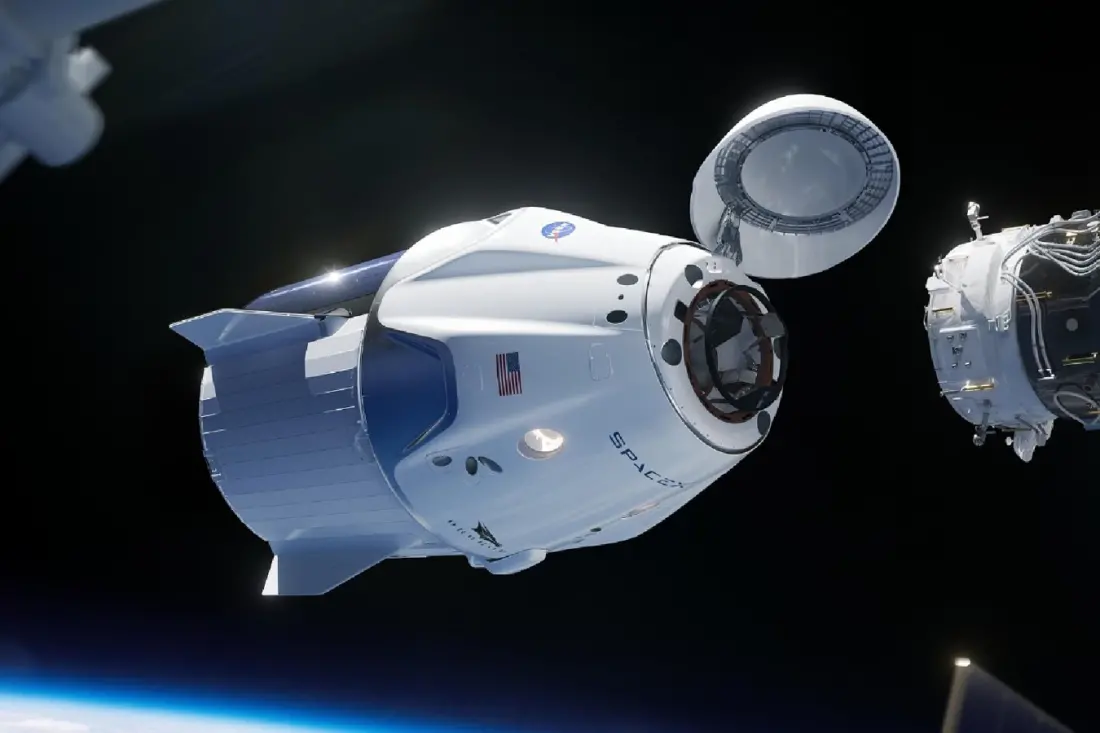
Two NASA spacecraft are about to make an unusual U-turn: the twin Escapade probes, currently looping back toward Earth, will skim past our planet on November 7 and 9, 2026, in a first-of-its-kind maneuver for a Mars-bound mission.
The timing is precise. The first spacecraft performs its flyby and engine burn around 5 a.m. EST on Saturday, November 7; the second follows at roughly 6 a.m. EST on Monday, November 9. Both will pass between 600 and 1,100 miles (965-1,770 km) overhead — close, in space terms — while firing their engines for about nine minutes to gain more than 1,000 mph and break free of Earth's gravity. After the burns, each probe will be travelling at roughly 6.7 miles per second, setting course for arrival at Mars in September 2027.
Why the detour? Escapade launched in November 2025 on Blue Origin's New Glenn rocket, but instead of heading straight to Mars, the pair first drifted to the Earth-Sun Lagrange Point 2 about a million miles away and waited for the right planetary alignment. That flexible route frees NASA from the traditional Mars launch windows that open only every 26 months — a big deal for future deep-space planning.
For skywatchers, this is a rare chance to watch interplanetary hardware up close, though expectations should stay modest. The probes will look like faint, slow-moving points of light, and a telescope will almost certainly be needed to pick them out from the stars. Visibility depends heavily on where you are. NASA flags parts of southern Australia as the best bet, especially during the engine burns, while observers in the western United States may catch the probes in the hours before closest approach — although they'll be below the US horizon at the key moment. Anyone serious about tracking them should pull live position data from the Jet Propulsion Laboratory's Horizons System.
Escapade — short for Escape and Plasma Acceleration and Dynamics Explorers — is more than a stunt. The twin craft will become the first mission to operate multiple spacecraft in coordinated formation around Mars, studying how solar wind strips away the planet's atmosphere. The results could explain how Mars went from a possibly habitable world to the cold, thin-aired place we see today.
For travellers, the takeaway is simple: if you happen to be in southern Australia or the US West Coast in early November, it's worth checking the flyby times and packing a telescope or decent binoculars. Seeing two spacecraft 1,000 kilometres overhead on their way to another planet is the kind of celestial event that doesn't come around often — and the viewing windows last minutes, not nights.
Story via Colombia One.