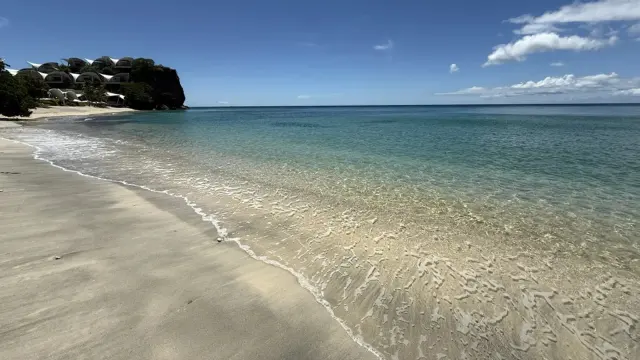
Anyone who has booked a Punta Cana beach holiday in recent summers knows the problem: sargassum. The drifting brown seaweed piles up on Caribbean shorelines in thick, smelly mats, forcing hotels into costly daily clean-ups and sometimes pushing travellers to pick resorts based on which beaches are cleanest that week.
A Dominican engineer thinks he has a better answer than rakes and wheelbarrows. Rómulo Pérez, a mechatronics engineer, has unveiled Sargazoom, a prototype robot designed to collect sargassum automatically. He presented it at the X Entrepreneurs Fair of the Dominican Republic at the Downtown Center in Santo Domingo.
The machine works like a catamaran-style vessel fitted with cameras that spot sargassum in the water. AI then plots collection routes, gathering the seaweed and carrying it to designated unloading points. When its storage is full, the unit heads back to shore by itself, dumps the load, and returns to work. Pérez says the finished version should hold up to eight cubic metres of sargassum per trip, and that fleets of units could eventually cover different stretches of coastline at once, day or night.
There is a human angle behind the tech, too. Manual sargassum removal is heavy, unpleasant work, often done in hot, shallow water with limited protection. Pérez argues that automating collection would cut the health and safety risks those workers currently face.
The catch is funding. Pérez estimates the project needs around US$1.5 million to reach full development, and he is looking for backers to get there. The prototype now doing the rounds at fairs is a smaller test version, so don't expect robot fleets on the water this season.
For travellers, why care? Because sargassum is now a genuine factor in choosing a Caribbean holiday. Seaweed arrivals can turn a postcard beach into a no-go zone within days, and resorts in Mexico, the Dominican Republic and beyond spend fortunes fighting it. Machines like Sargazoom, if they scale, could mean cleaner swimming conditions, fewer hotel disruptions, and a more sustainable fix than trucks on the sand. Until then, the usual advice stands: travel outside peak sargassum months (roughly May to October), check recent beach reports before booking, and remember that east-facing shores tend to catch the worst of it. Progress on the seaweed front is slow, but at least someone is engineering a smarter shovel.
Story via Dominican Today.