Nine hundred metres beneath the surface of the equatorial Atlantic, scientists have found something no one expected: a fossilised coral atoll, five million years old, standing 300 metres tall — close to the height of the Eiffel Tower — on top of a volcanic ridge that rises 4,100 metres from the seafloor.
The discovery was made during a 35-day expedition to the Romanche Fracture Zone, the longest geological fault in the Atlantic, led by Brazilian researchers aboard the Schmidt Ocean Institute's research vessel Falkor (too). It confirms a hypothesis scientists have carried for three decades: coral atolls once grew in the middle of the Atlantic, even though none reach the ocean's surface today.
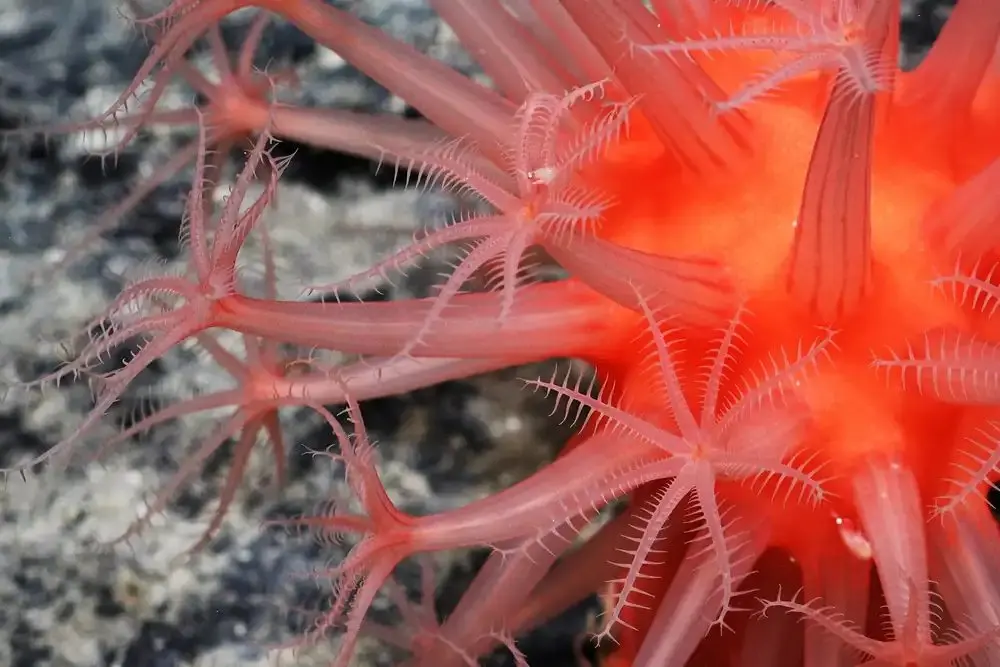
The ancient atoll is far from dead ground. Its summit hosts a thriving deep-sea coral garden, and the wider expedition documented dozens of rich marine ecosystems across four regions, at depths from 600 down to 4,000 metres. Highlights include sponge gardens and cold-water corals roughly 1,000 years old, plus a carpet of thousands of tiny light-pink zoanthids — animals related to anemones — covering an area the size of a football pitch at 1,200 metres, a type of ecosystem rarely seen in the deep.
One find genuinely surprised the team: a sponge and coral garden at 4,300 metres, far deeper than thought possible for these organisms. Deep water at that depth typically lacks both food and the minerals sponges and corals need to build their skeletons. The Romanche Fracture Zone, it turns out, is an unusual place — a corridor where North Atlantic Deep Water and Antarctic Bottom Water mix, driving surface phytoplankton blooms that eventually sink and feed life all the way down.
The team used the ship's mapping systems and an autonomous underwater vehicle named The Childlike Empress to pinpoint the atoll, then sent the remotely operated vehicle SuBastian down with high-definition cameras — the first time an ROV has ever been used to visualise the seafloor in this fracture zone. Chief scientist Dr Jose Angel Perez, of the Universidade do Vale do Itajaí, said the data provides the first scientific evidence of the region's ecological uniqueness and strengthens the case for protecting it under the recently ratified High Seas Treaty. Researchers suspect new species are among the samples collected, and say the expedition's data could fuel decades of research.
So why should a traveller care? You cannot dive the Romanche Fracture Zone — no recreational diver goes anywhere near 900 metres — but stories like this reshape how we think about the ocean. It's a nudge for anyone interested in marine conservation, expedition cruising or underwater exploration: vast, fragile ecosystems are still being found, and their protection now depends on international agreements that travellers and divers can follow and support. For divers, it also puts a spotlight on how much remains undiscovered beneath even well-travelled ocean basins — a reminder that the dive sites we do visit are a tiny fraction of the story. Meanwhile, the Schmidt Ocean Institute's footage from the expedition offers a rare window into a world few humans will ever see in person.