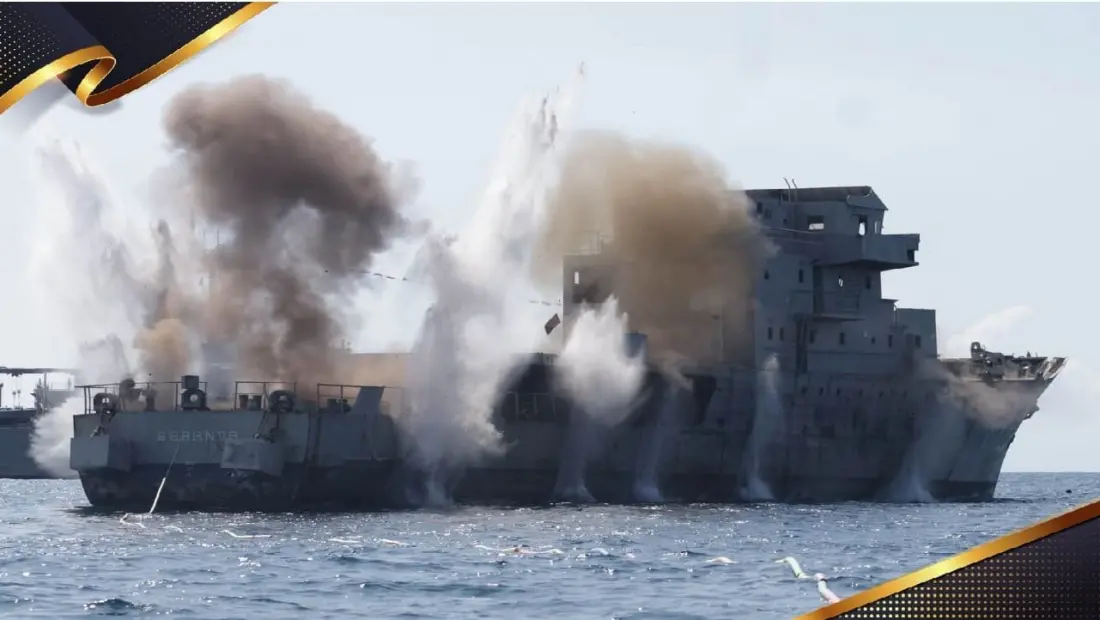
After four and a half decades patrolling Mexico's Pacific waters, the former ARM "Baranda" has a new job: sitting on the seabed off Manzanillo and growing into a home for fish and coral. The Mexican Navy carried out a controlled sinking of the vessel on Wednesday, carefully placed near Punta Juluapan in Santiago Bay on the coast of Colima.
The Baranda was no small retirement ceremony. The sinking was presided over by Admiral Raymundo Pedro Morales Ángeles, head of the Navy, alongside Colima's governor Indira Vizcaíno Silva, and coordinated through CIMARES with input from the environment and tourism ministries as well as the state government. Officials framed the project as a win on two fronts: marine conservation and tourism for Manzanillo.
The ship is the second vessel added to the Colima Artificial Reef System, joining a decommissioned ship called the Cora. Together, the two wrecks are meant to form the backbone of a new underwater sanctuary, giving local species shelter, feeding grounds and breeding sites while encouraging coral growth on the steel structures.
The Baranda spent its 45 years in service on maritime surveillance, anti-smuggling work and search-and-rescue duties in Pacific waters. Now divers will be able to visit it. The site opens up opportunities for recreational diving, nature tourism and even scientific research, and Manzanillo is hoping that a purpose-sunk wreck a short boat ride from shore becomes a draw for divers who might otherwise pass through the port town en route to busier beaches.
For divers, wreck sites like this usually take a year or two to really come alive, as coral settles and fish move in — so early visits offer a clean wreck, while later ones promise a fuller ecosystem. It's worth keeping an eye on local dive operators in Manzanillo to see when the site officially opens and what depth and certification level it requires.
The story matters for travellers because it signals that Mexico's Pacific coast is actively building dive infrastructure, not just the Caribbean side. The Yucatán and Riviera Maya get most of Mexico's diving attention, but this project is a nudge to look west — Manzanillo and the Colima coast now have two wrecks to explore.