Two collections of centuries-old stone inscriptions in northern Vietnam have just been added to UNESCO's Memory of the World Regional Register for Asia and the Pacific, and both are easy to visit if you're travelling through the Red River Delta.
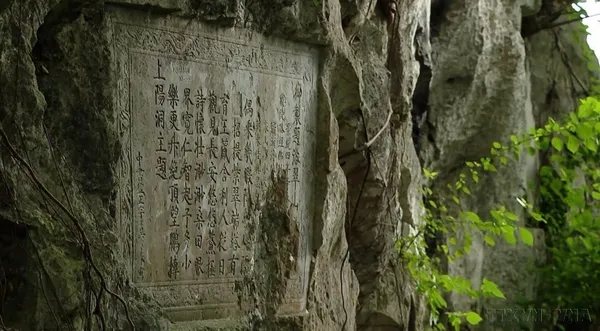
The first is on Non Nước Mountain in Ninh Bình Province, right beside the ancient capital of Hoa Lu. The mountain's limestone cliffs carry 43 carved inscriptions — known locally as ma nhai — dating from the 14th through the 20th centuries. Written in Chinese characters, Nôm (Vietnamese demotic script) and modern Vietnamese, they include poems, royal decrees, literary works and historical accounts from monarchs, scholars and poets. The oldest standout is the Record of Linh Tế Pagoda on Dục Thúy Mountain, carved in 1343 by Trương Hán Siêu, one of Vietnam's celebrated medieval writers.
The second collection sits in Hưng Yên Province: 41 stone steles at the Phố Hiến relic complex, inscribed in Chinese and Nôm from the 17th century to the early 20th century. Phố Hiến was once one of Vietnam's busiest international trading ports, and the steles record its commerce, social life and cultural exchanges — a rare documentary window into how the Red River Delta plugged into regional trade networks centuries ago.
Both inscriptions were approved unanimously at the 11th General Meeting of UNESCO's Asia-Pacific Memory of the World Committee (MOWCAP), held November 2-6 in Jakarta, where 40 member countries reviewed 24 nominations. With these two additions, Vietnam now counts 13 UNESCO-recognised documentary heritage items — four on the international register and nine on the regional one.
For travellers, this is a nudge to look beyond Vietnam's headline sights. Non Nước Mountain sits within easy reach of Ninh Bình's famous boat rides through Tam Cốc and the Trang An karst scenery, so the inscriptions slot naturally into an itinerary there. Phố Hiến, near the city of Hưng Yên between Hanoi and Haiphong, sees far fewer foreign visitors and offers temple complexes, old streets and a genuine slice of river-port history. Both sites reward a guide or a bit of reading, since the inscriptions themselves are in scripts most visitors can't parse — but the setting, the carving and the centuries of layered history come through regardless.
The recognition also underscores something Vietnam has been building deliberately: a case for heritage as a bridge, not just a museum piece. Officials involved in the nominations stressed the mix of conservation work and cultural diplomacy that got them over the line, plus decades of local stewardship in Ninh Bình and Hưng Yên. Expect better signage, interpretation and promotion at both sites as a result — another reason to see them now, before word gets out.