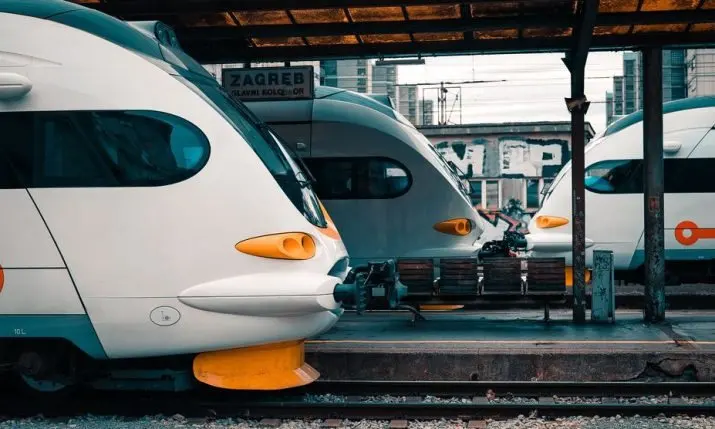
Slow travel fans watching the Balkans have something to keep an eye on: Croatia and Slovenia are teaming up to revive a rail corridor that would run from Ljubljana to Zagreb through Novo Mesto and Karlovac — four cities on one line, spanning two countries.
The plan was hashed out at a recent meeting in Grosuplje, Slovenia, attended by national and local authorities, both countries' railway operators and an EU-style cross-border cooperation group called EGTC Paths of the Future Ljubljana–Novo Mesto–Karlovac–Zagreb. Slovenia's Minister for Cohesion and Regional Development, Monika Kirbiš Rojs, was there too, which signals real political weight behind it.
The heart of the project is restoring the currently dormant rail connection between Novo Mesto in Slovenia and Karlovac in Croatia — though realistically that stretch isn't expected back until after 2030. Croatia, for its part, wants most of its main railway corridors finished by 2030, with regional lines tied into the EU's Trans-European Transport Network getting modernised along the way.
This isn't a new idea. The initiative has been bubbling since 2018, and in 2023 it was formalised as the first European Grouping of Territorial Cooperation based in Slovenia. Members include the Slovenian municipalities of Škofljica, Grosuplje, Novo Mesto and Metlika, Croatia's Karlovac region, Slovenian Railways and HŽ Infrastruktura.
There's a wider strategy in play covering 2028–2034, built on three pillars: mobility and transport, entrepreneurship and innovation, and sustainable tourism. The partners are pushing for the rail project to be recognised as a strategic initiative under the future Interreg Slovenia–Croatia programme, and the region has also been picked by the European Commission and the OECD for a pilot scheme supporting EU border regions — a route to European, national and local funding.
Why should a traveller care? Because this is exactly the kind of low-key, scenic, small-city rail journey that rewarding trips are made of. Novo Mesto sits on a bend of the Krka river in Slovenia's lesser-visited southeast, while Karlovac — built as a Renaissance fortress town where four rivers meet — is one of Croatia's most underrated stops, usually bypassed on the way to the coast or Zagreb. The plan explicitly includes reviving traditional rural and railway heritage sites along the corridor for sustainable tourism, so expect more to see and do at the intermediate stops, not just a faster A-to-B ride.
For now, the timeline is long-term: freight, passenger services and the Novo Mesto–Karlovac restoration all sit in the post-2030 window. But trains between Ljubljana and Zagreb already run via other routes, and the region's cross-border tourism push should start producing results well before the new line does. If you like being somewhere before the guidebooks catch up, southern Slovenia and northern Croatia between the two capitals is a good place to be early.