Day 15 of a Camino Francés walk sounds unremarkable on paper: just 5.8 miles from Hontanas to Castrojeriz, a easy leg through the heart of Spain's Meseta. It turned into one of the trip's best days — a good reminder that on pilgrimage routes, the mileage matters less than what's along the way.
The writer expected the Meseta to be a flat, barren stretch. In spring it was the opposite: rolling green hills, orange poppies and wildflowers at their peak under cool, sunny skies in the low 50s Fahrenheit. The morning meal was a Spanish tortilla — not a wrap, but an inch-thick potato and egg pie baked with cheese and onions, a pilgrim staple worth seeking out at village cafés.
The standout stop was San Anton, an 11th-century church in ruins that literally sits on the road. Pilgrims walk straight through its archway. The walls remain without a roof, cathedral shell open to the sky, and part of the enclosed interior functions as an albergue — arguably one of the more atmospheric places you could sleep on the route. Niches in the outer walls once held food for the poor, a reminder of how long this corridor has served travellers. Spanish pilgrims have been greeting each other with "Buen Camino" for over a thousand years, and locals in these rural stretches often speak no English — the Castilian "graTHias" pronunciation marks you firmly in northern Spain.
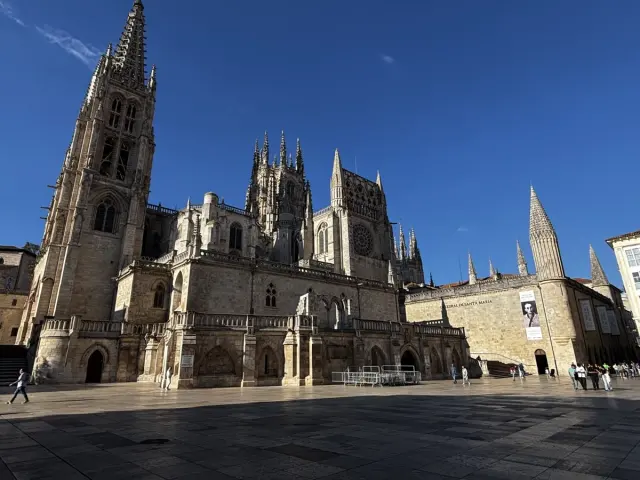
Castrojeriz itself, visible from miles off beneath a hilltop castle, is a medieval town with buildings built into the hillside and a striking main cathedral. Highlights beyond the usual pilgrim fare: an 1802 burial crypt inscribed "Oh Death / Oh Eternity" above skull-and-crossbones friezes, a Tree of Intentions where visitors tie ribbons, and a quirkier find — the House of Silence, an art installation scattered across the floors of an ancient cliffside home complete with back caves. The town has a small new-age, artist-enclave feel, with 60s-vibe bars to match.
For anyone considering the Camino, this leg captures why so many people walk it: low-mileage days that leave time to explore, pilgrim accommodation in medieval settings, and enough oddball sights to keep a route through farmland genuinely surprising. It suits slow travellers as much as long-distance hikers — you can stay in a modernised apartment inside a centuries-old shell with a terrace over the valley, then be back on the gravel path the next morning.