Seoul's War Memorial of Korea is hosting a photography exhibition that doubles as a piece of shared history: images of South Korea in the 1950s shot by Turkish soldier Izzet Keribar, who arrived in 1956 to complete his military service and stayed behind the camera long enough to document a country rebuilding after the Korean War.
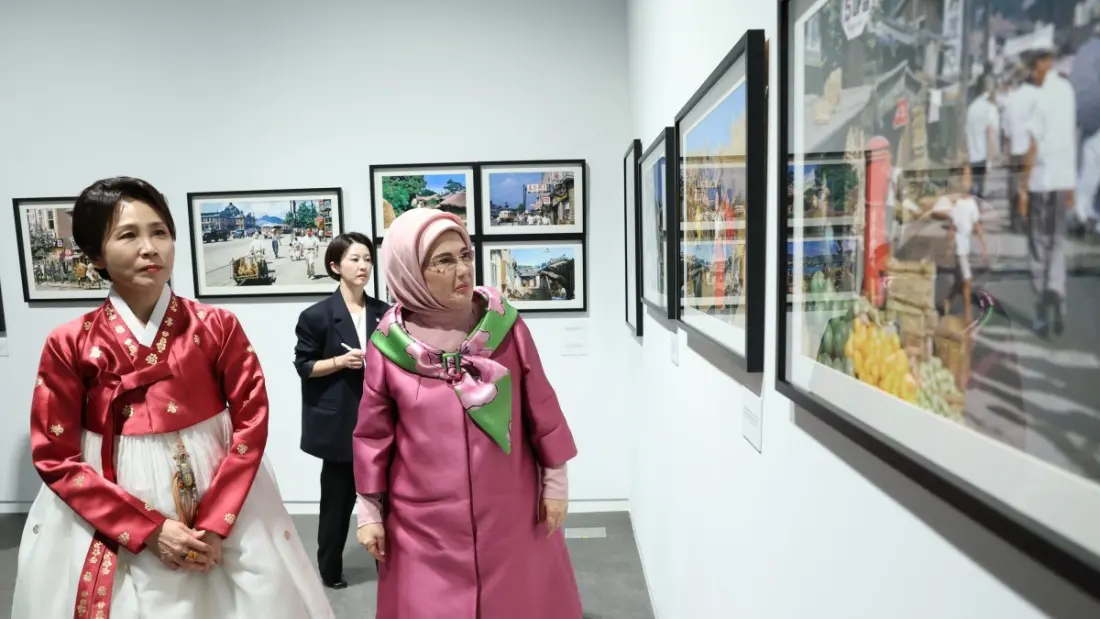
The show, titled "The Birth of a Friendship: Korea 70 Years Ago Through the Lens of a Turkish Photographer," was organised by Türkiye's Directorate of Communications and timed to mark the 69th year of diplomatic relations between the two countries. Türkiye's first lady Emine Erdoğan attended during President Recep Tayyip Erdoğan's visit to Seoul, and was welcomed by Kim Hea Kyung, wife of South Korean President Lee Jae Myung, along with museum director Hyun-Jong Kim.
The historical hook here is genuinely striking. More than 21,000 Turkish soldiers served in the Korean War, and the friendship that grew out of that deployment went beyond the battlefield. One of the most moving threads in the exhibition's backstory is the Ankara School in Suwon, founded by Turkish troops to care for children orphaned by the war. It started with roughly 70 kids sheltered in a field tent, grew past 100, and eventually moved into a converted derelict building near the soldiers' barracks, with Korean teachers volunteering to teach. Erdoğan singled out one photograph showing children praying before a meal at the school, calling the whole enterprise a "school of humanity."
For travellers, the exhibition is a rare chance to see Seoul as it looked seven decades ago, through the eyes of a foreign serviceman who later became a celebrated photographer. The War Memorial of Korea itself sits in the Yongsan district and is one of the city's most substantial museums, covering the full arc of Korea's military history. Even if you arrive knowing nothing about the Turkish contingent, the show frames why the two countries still mark their relationship today — and why you'll spot Turkish flags and memorials, including the monument in the same district, woven into the capital's fabric.
There's also a timely cultural angle. Erdoğan noted that Korean pop culture has a strong young following in Türkiye, while Turkish culture draws interest in South Korea — a two-way fascination that makes it easier than ever to build a trip around both. If the exhibition inspires a deeper dive, the Turkish Monument and the UN Memorial Cemetery in Busan, where many of the Turkish soldiers who died in the war are buried, extend the story beyond the capital.
Whether you're a photography lover, a history buff or just someone who enjoys finding the unexpected threads connecting two countries, this show is a good excuse to put Seoul's War Memorial higher on your list — and to see 1950s Korea in a way no textbook quite manages.