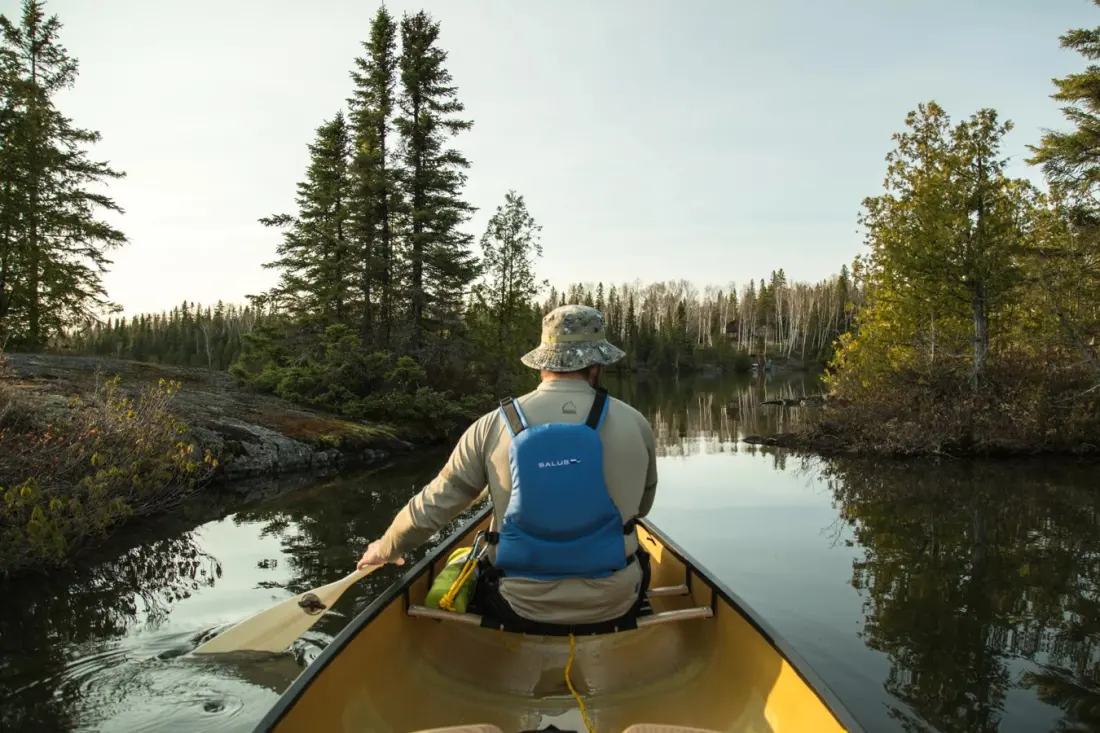
Some of Canada's most famous parks now demand reservations months ahead, shuttle bookings and military-grade planning. Northwest Quebec offers a different model: Abitibi-Témiscamingue, a region along the Ontario border where the forests run for miles, the water bodies number around 22,000, and you're unlikely to queue for a campsite.
Getting there is a deliberate choice, and that's the point. As you drive in from Ontario, towns thin out, evergreens take over, and it becomes obvious that nature here isn't an add-on — it's the whole identity of the place. Despite the remoteness, the region suits all levels, from first-time campers to paddlers plotting multi-day routes.
Water is the main event. Parc national d'Opémican, strung along lakes Témiscamingue and Kipawa, mixes rocky shorelines with tall red and white pines. Casual paddlers can wander the bays and islands of Lake Kipawa; those after a serious workout can run the 16-kilometre Kipawa River, which serves up Class II to V rapids and a 19-metre waterfall. The park also has human history worth a look — Pointe-Opémican preserves buildings from a former logging depot on a route the Anishinabeg had travelled long before the timber industry arrived.
Inland, Parc national d'Aiguebelle shows off a much older story: glaciers and ancient lava flows have left rocks here that date back 2.7 billion years. The park makes longer stays easy with traditional campsites plus ready-to-camp units — no tent required. Hiking highlights include rocky escarpments, a spiral staircase built into the terrain, and a 64-metre suspension bridge hanging 22 metres above Lac La Haie. Nights are the kind you'd hope for: a fire, a dark sky, nobody else around.
If you want remoteness dialled up further, Réserve faunique La Vérendrye is the next step. This vast swath of boreal forest sits between the Outaouais and Abitibi-Témiscamingue regions, laced with rivers and thousands of lakes. Because the territory is so big, paddlers can still find water with barely another canoe in sight — a level of solitude that's getting scarce across North America. Campsites and rustic cabins let you stretch a night into several.
For Ontario travellers, the practical appeal is obvious: it's closer than most would guess, since much of the region runs along the provincial border, and English-speaking visitors are welcome. The real draw, though, is the rare combination of genuine wildness and low-fuss logistics. You can hike, paddle and camp here without reserving your view months in advance, and without needing expedition-level skills. If your usual cottage-country lake feels crowded in July, this is the fix: pack the canoe, keep driving, and let the towns get further apart.