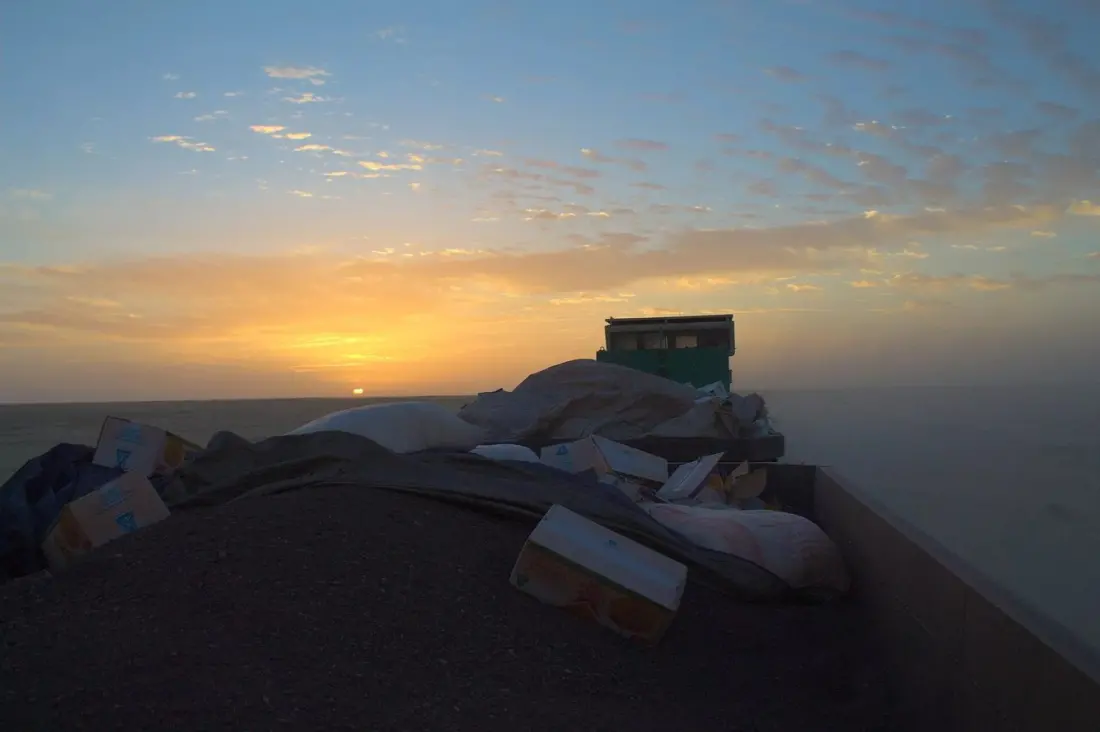
Somewhere in northern Mauritania, a train up to 2.5km long grinds across the Sahara carrying iron ore from inland mines to the Atlantic coast. It has no platforms, no departure boards and no café car — and yet it has become one of Africa's most talked-about journeys for adventurous travellers.
The railway opened in 1963 to link the iron mines at Zouérat with the port city of Nouadhibou, and today it stretches more than 700km through some of the emptiest terrain on the planet. It is operated by SNIM, Mauritania's state mining company, which sold over 14.7 million tonnes of iron ore in 2025 and keeps investing in the line. This is working infrastructure first, tourist attraction a distant second — which is exactly its appeal. You share the journey with miners, traders and locals for whom the train is simply life, not a photo op.
For years the famous version of the trip involved climbing into the open ore wagons and riding atop the cargo itself, emerging at the other end coated head to toe in black dust. Those images flooded social media and made the train a bucket-list item. But that chapter is closed: in December 2024 SNIM formally warned against riding in or on the ore wagons, citing safety and health risks. Dedicated passenger cars are attached instead, and that is the version travellers should take.
Don't mistake this for a luxury rail experience even so. Expect hard seats, extreme heat by day, genuine cold after sundown, and long hours where there is nothing outside but rock, sand and distant ridges. Timetables are unreliable and arrangements should be confirmed locally rather than trusted from old blog posts. The rhythm of the wheels and the huge desert sky at night — no city glow for hundreds of kilometres — are the real rewards.
One serious caveat: Mauritania's security situation warrants attention. UK and US travel advisories flag risks in parts of the country, with some regions under tighter restrictions. Anyone considering the trip should check current government guidance, travel with local operators, and keep plans flexible.
For travellers who want the Sahara at its most raw and slow, this is a rare chance to feel the scale of the desert rather than tick off viewpoints. There are certainly easier ways to see this landscape — organised 4x4 tours and desert camps abound — but few that let you sit for a full night watching it slide past. The Iron Ore Train is noisy, dusty and industrial, and that's precisely why people remember it.