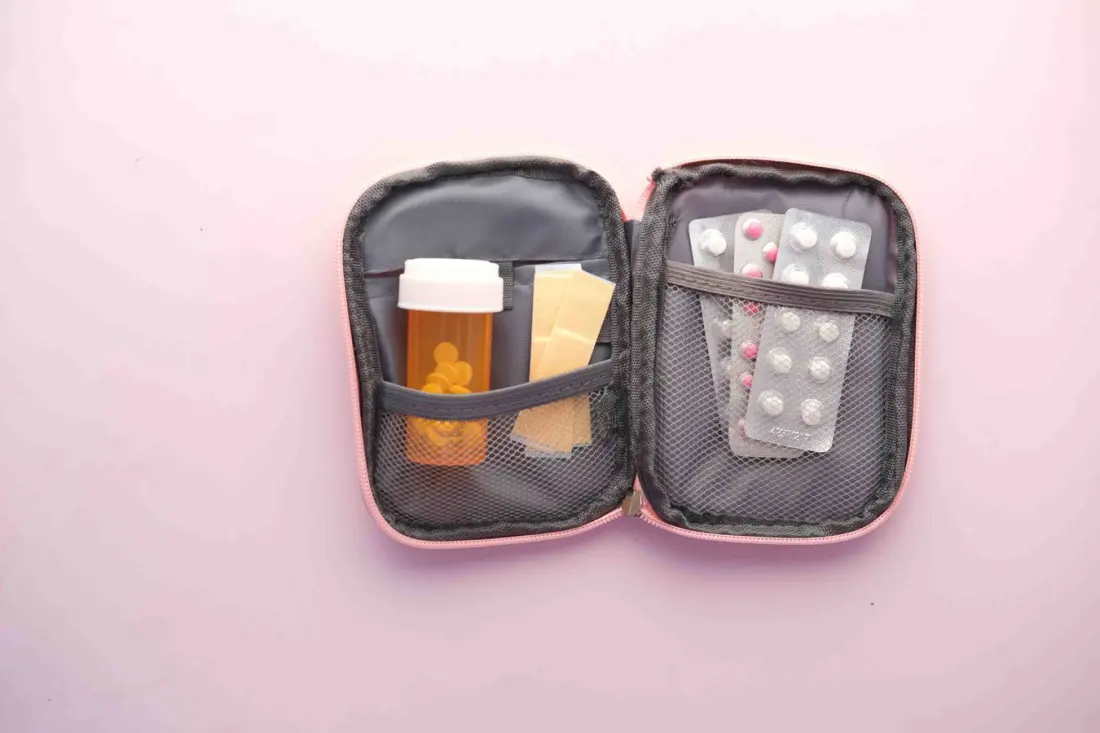
A pill that sits happily in your bathroom cabinet at home can turn into a border-control headache the moment you cross an international line. The rules cut in both directions: some US prescriptions are banned outright overseas, and some medicines you can buy openly in a foreign pharmacy are not allowed back into the United States.
The sharpest example is ADHD medication. Adderall, routine for millions of Americans with a prescription, is prohibited in both Japan and South Korea. Stimulants and sedatives generally attract the most scrutiny anywhere in the world — opioid painkillers such as oxycodone and codeine, sedatives like diazepam, and ADHD drugs including Ritalin all regularly appear on restricted lists. Even familiar over-the-counter items such as Sudafed and Benadryl can raise flags in some countries, and cannabis-derived products are increasingly a trap given how widely their legal status varies.
The sensible first step is a conversation with your doctor before you fly. They can identify which ingredients in your medication are treated as controlled substances at your destination, and suggest either alternatives for the trip or the paperwork you'll need. The CDC also maintains clear guidance on travelling internationally with medication, and recommends carrying your prescriptions with you as documentation.
The reverse direction is murkier. Say you pick up what looks like a standard cough medicine or a generic version of a US drug while abroad — in Mexico, for instance, a local equivalent of Lipitor. Bringing it home can be a problem, because the FDA only permits medicines it has approved for safety and efficacy. Unapproved imitations of American brands are not allowed through customs. There is a workable middle ground: the FDA lets travellers bring in a personal supply of up to 90 days of basic over-the-counter medications, and prescription medicines bought abroad can come with you if you hold a valid prescription for them. Either way, everything needs to stay in its original packaging, with the manufacturer clearly identified and English-language labelling.
A few specific categories are worth remembering when shopping at a pharmacy overseas: cough and cold remedies containing pseudoephedrine or dextromethorphan, antihistamines combined with certain cold medicines, and any knockoff brand that has never been evaluated by the FDA are all barred from entry to the US — even if a local pharmacist sold them to you without a second glance.
For most travellers carrying a personal supply of ordinary medication, border crossings are uneventful. The risk concentrates in a handful of ingredient families — stimulants, sedatives, opioids, and cannabis products — so a quick check of your destination's rules, plus a printed prescription, is cheap insurance against a fine or worse at the arrivals hall.
Story via TravelAwaits.