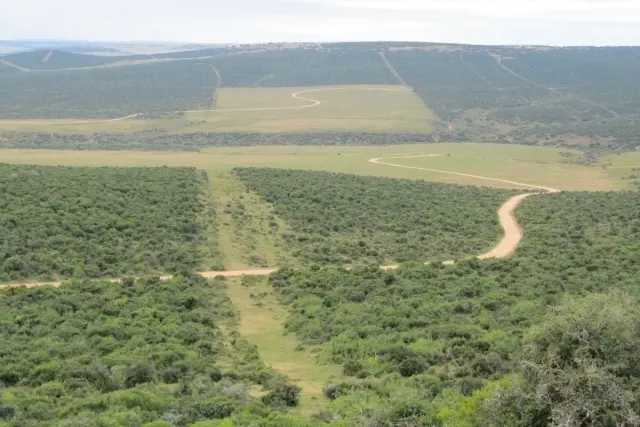
Addo Elephant National Park in South Africa's Eastern Cape is named for its most famous residents, but the park offers far more than a single species. SANParks counts 91 mammal species and 418 bird species here, plus all of the Big Five — and it markets itself as a Big 7 destination once you factor in the marine life in its wider conservation area.
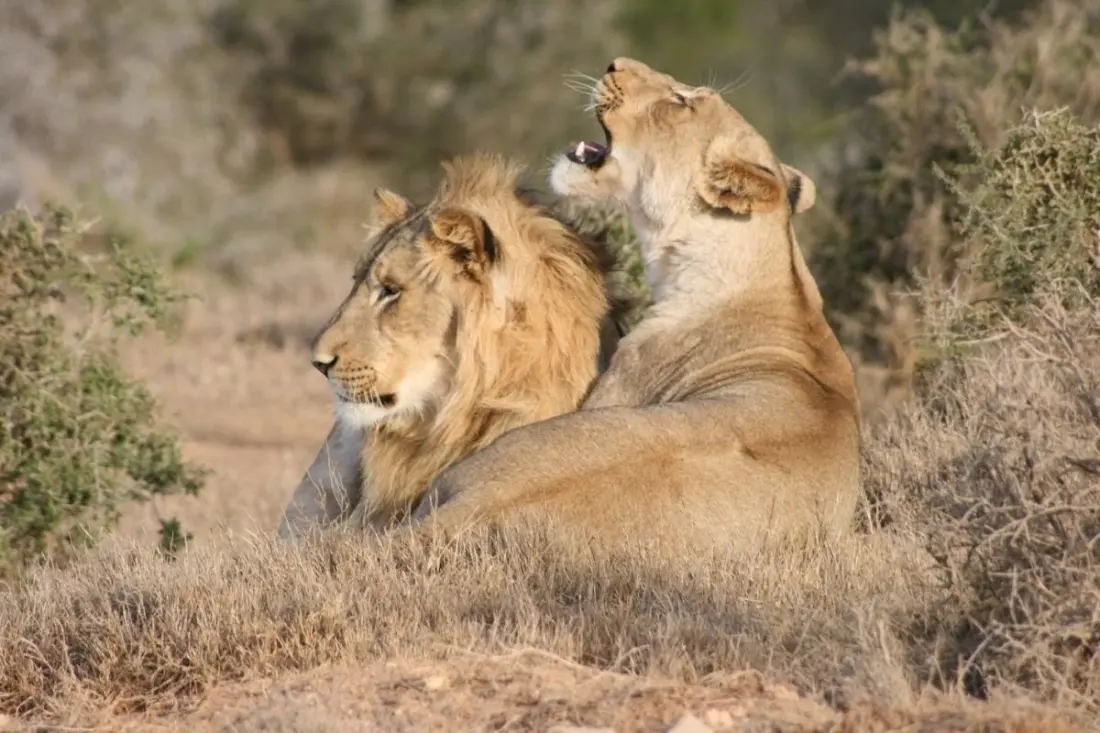
Elephants are the draw, and they deliver: more than 600 roam the main game-viewing area, and they're regularly seen at waterholes, especially on hot days. Cape buffalo number over 400, forming one of South Africa's largest disease-free herds. Lions were reintroduced in 2003 and are around, though they spend much of the day resting or hidden — early morning and late afternoon are your best windows. Black rhino and leopard also live in the park, but treat either as a bonus rather than a given; leopards in particular are famously shy here.
Beyond the headline predators, zebras, kudu, eland, red hartebeest, warthog and springbok are commonly seen from the road network, and spotted hyenas (also reintroduced in 2003) are a realistic predator sighting. If your luck runs deep, the secretive list includes aardvark, aardwolf, caracal, meerkat, honey badger, bat-eared fox and Cape porcupine — many of them nocturnal.
One of the park's quirkiest celebrities is tiny: the flightless dung beetle, an important nutrient recycler in the ecosystem. Visitors are asked to drive carefully because the beetles regularly cross park roads.
The real advantage Addo has over many safari destinations is accessibility. SANParks allows visitors to drive the main game-viewing area in their own vehicles, so no guided package is required. And if you want the best odds of a good sighting, the advice is simple: slow down, park up near waterholes and let the animals come to you rather than clocking kilometres.
For travellers who want a self-drive safari without the price tag of private reserves, Addo is an easy pitch — a single day can deliver hundreds of elephants, a buffalo herd and, with patience, a lion. And if the land-based Big Five aren't enough, the marine half of the Big 7 — southern right whales and great white sharks — awaits along the adjacent coast.