South Africa's road signs read like a punchline machine. Pofadder to Hotazel is a legitimate driving route in the Northern Cape, and the names attached to these dusty dots hide colonial shootouts, manganese strikes and one legendary brandy session.
Hotazel is the standout. Say it fast and the joke lands: 'hot as hell'. Legend has it that shortly after World War I, a group of land surveyors fortified themselves with Cape Smoke brandy in the Kalahari heat and pronounced the spot hot as hell. The name stuck, and the joke deepened when prospectors hunting underground water found manganese instead — still mined there today.
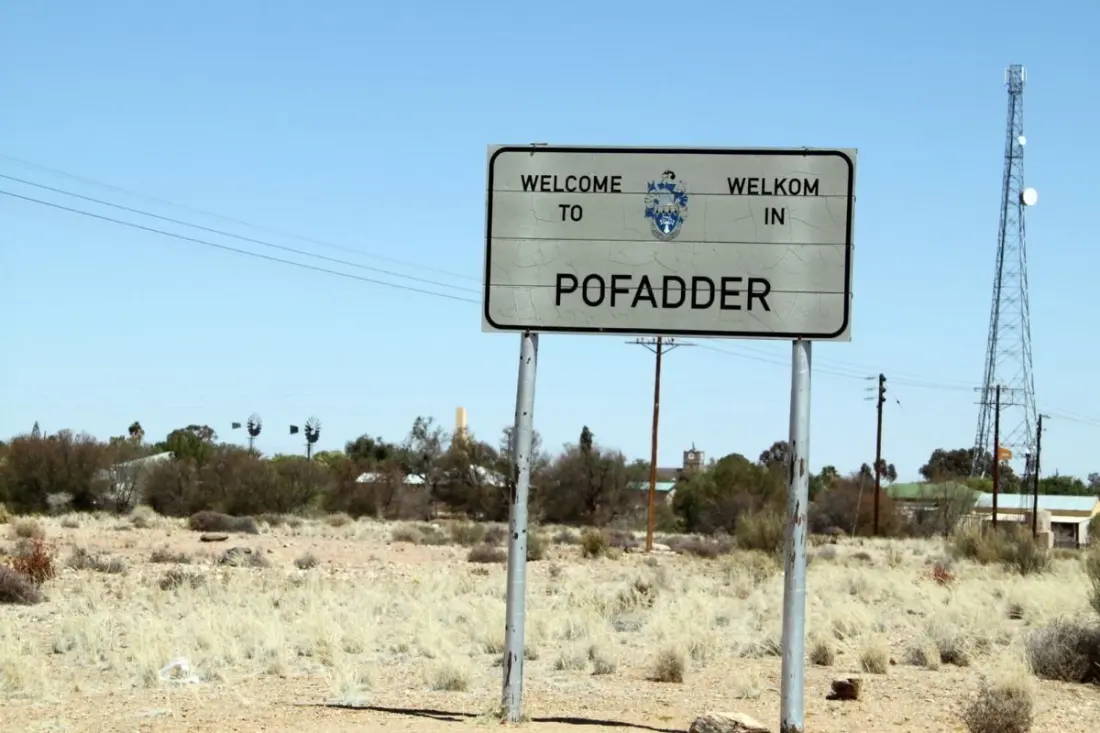
Pofadder, also in the Northern Cape, probably has nothing to do with the puff adder snake its name suggests. The leading theory credits Klaas Pofadder, a Korana leader who used a remote spring in the area as a hideout until he died in a shootout with Cape colonial forces in 1875. The snake theory persists anyway.
Die Hel, hidden in the Swartberg mountains of the Western Cape, looks like it should mean 'The Hell', and a 1940s stock inspector who endured the brutal route into the valley would presumably agree. But the more sober explanation from the Dictionary of Southern African Place Names points to 'helling' — a steep slope. Fitting: the only road in drops nearly 600 metres. The valley's residents, notably, never embraced the nickname and called themselves Klowers, or canyon dwellers.
A few more gems: Muizenberg isn't quite 'mouse mountain', but it's close — it comes from Wynand Willem Muys, the sergeant commanding an outpost at Zandvlei from 1743, whose name became 'Muys zijn Bergh', Muys's mountain. Putsonderwater means 'well without water', allegedly after a well-digger in the 1880s who refused to share water with thirsty travellers. Keimoes, on the Orange River, supposedly means 'mouse nest' in the Korana language, credited to river-pirate leader Klaas Lucas in the 1800s. Baardskeerdersbos in the Overberg translates to 'beard shaver's bush', honouring the sun spider that folklore claimed snipped beard hair from sleeping men to line its nest. And Limpopo's Thabazimbi is refreshingly straightforward: 'mountain of iron', a nod to the ore mined there for decades.
For road-trippers, this is the fun of South Africa's interior: the country's emptiest stretches, from the Kalahari to the Overberg, carry names that are miniature history lessons — colonial conflicts, mining booms, folk tales and municipal grudges, all stamped on tin signs. If you're driving the Northern Cape, a photo at the Hotazel town sign has real bragging value.