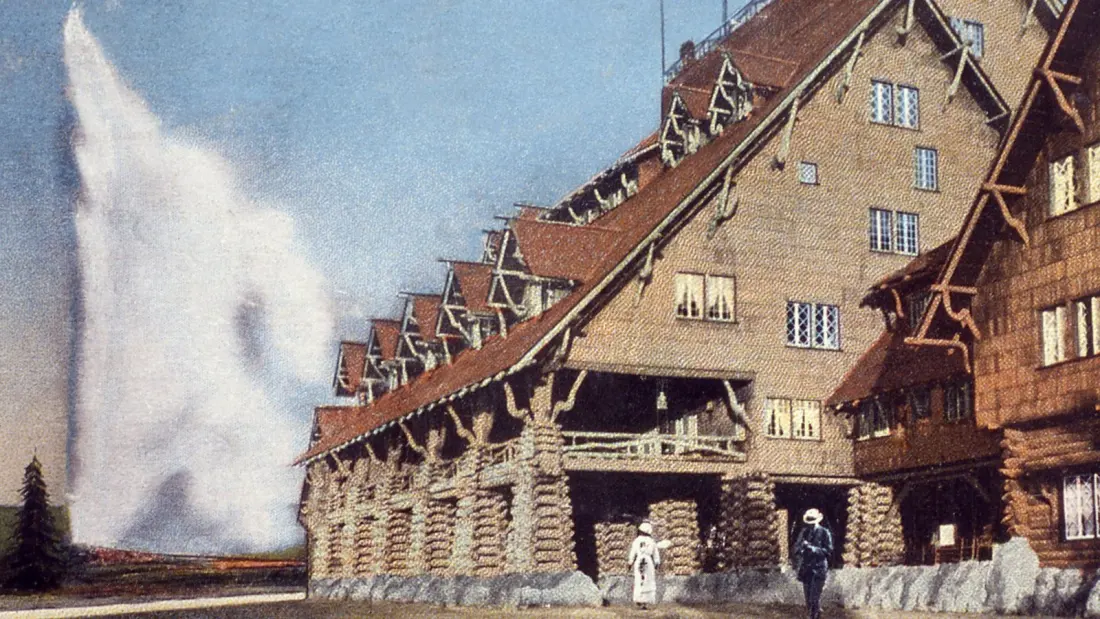
Yellowstone's Old Faithful Inn has a famous ghost: a beheaded bride said to haunt the Crow's Nest above the lobby after her 1915 honeymoon murder in Room 127. There's just one problem — she never existed. Park staff have traced the tale to bell captain George Bornemann, who, hounded by a reporter for ghost stories and having none to offer, simply invented one. Asked what year the murder happened, he reportedly told the reporter to pick any year he liked. A rival version credits a 1980s assistant manager who confessed in 1991 that he made the story up because guests expected historic hotels to come with a ghost.
Mammoth Cave in Kentucky doesn't need invented hauntings. In 1842, Dr John Croghan — who owned the cave — moved 16 tuberculosis patients about a mile and a half underground, convinced the cool, pure air would heal them. He built a settlement of wooden cottages and stone huts where patients lived by candlelight. Instead, smoke from cooking and heating fires filled the still air, residents grew sicker, some died below ground, and the experiment was abandoned within months. Alfred, an enslaved cave guide, described the residents as skeletal, their eyes black from dilated pupils. The stone buildings still stand, and visitors have long reported phantom coughing — one legend that maps uncomfortably well onto real suffering.
The cave's other famous spirit has an even odder origin. Melissa, said to wander near Echo River wailing for the tutor she abandoned in the dark to die, was never real either. She was a character in "A Tragedy of the Mammoth-Cave," a short story published in The Knickerbocker magazine in 1858 and attributed to writer Lillie Devereux Blake. Retellings gradually turned a fictional confession into a lingering ghost, even inventing details like her death from tuberculosis.
Not all the stories are fabrications, though. At To'aga, a beach on the island of Ofu in the National Park of American Samoa, belief in aitu — spirit beings respected deeply in Samoan culture — runs back generations, long before the park existed. Locals told NPS planners not to walk the beach at noon or after dark. A 1950 government health report records how a navy medic stationed at a dispensary built there in 1924 heard knocking at his door night after night, then encountered a headless man; his wife heard unseen visitors moving furniture in daylight. The most lasting tale describes boat travellers approaching the beach to see a siva dance performed by headless figures — including two nurses they'd left behind minutes earlier. Islanders refused to use the dispensary and eventually dismantled it. Its foundations are still there, and the warnings still stand.
Then there's Phantom Ranch, the roadless lodge nearly a mile below the Grand Canyon rim, where ranch workers have passed down stories of wranglers encountering dead colleagues in the old mule bunkhouse.
For travellers, this is more than Halloween filler. These stories are genuinely tied to the places you sleep in and hike through — a night at Old Faithful Inn, a crawl into Mammoth Cave or a stay at Phantom Ranch comes with a century of folklore included. Whether you believe any of it, knowing which ghosts are invented, which are memory, and which belong to a living culture like Samoa's makes the parks a lot more interesting.
Story researched by Lauren Liebhaber; original reporting by Outside Online.