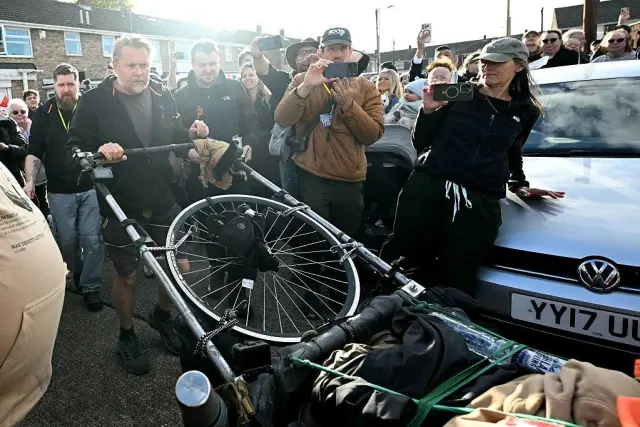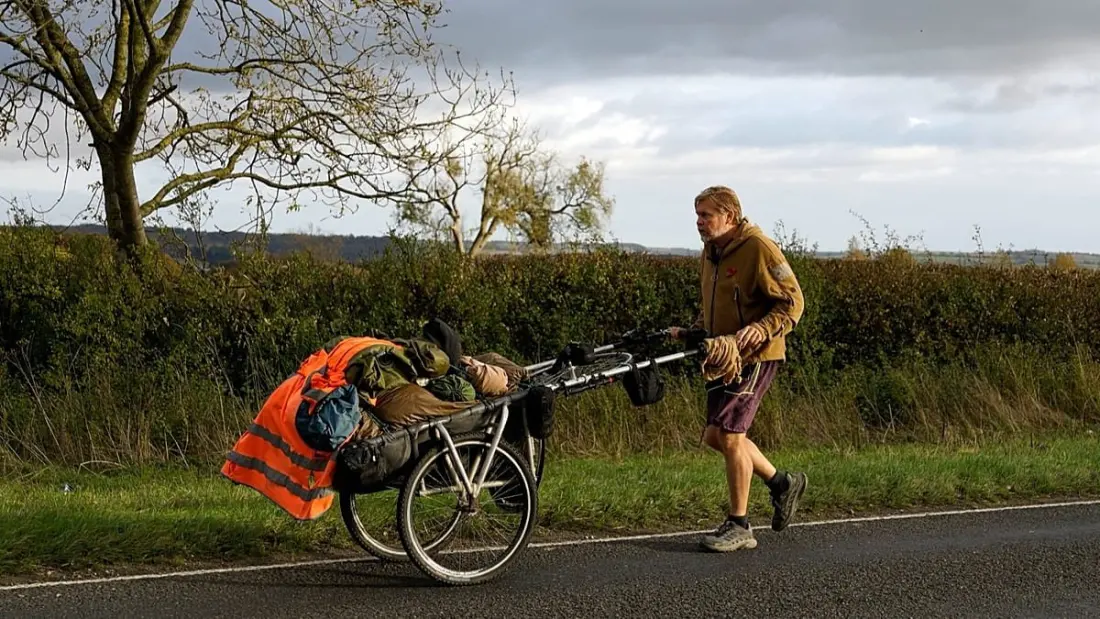
A former British paratrooper has completed one of the longest walks in human history — and it took him nearly three decades. Karl Bushby arrived home in Hull, northeast England, greeted by a crowd of up to 1,000 well-wishers, after trekking 50,000 kilometres from the southern tip of Chile to his mother's front door without ever using transport to move forward.
The idea took root in the mid-1990s, when his father Keith mentioned a debate among soldiers: could you walk from London to New York, crossing the Bering land bridge that early humans supposedly used to reach the Americas? Bushby drew a continuous line on a map, extended it all the way to Cape Horn, and set off with $500 and two self-imposed rules — no vehicles to make progress, and he had to finish on foot.
What was meant to take 12 years stretched to 28, thanks as much to bureaucracy as terrain. He battled hurricane-force winds on the Patagonian steppe, dodged conflict in the Darién Gap in 2001, and was jailed for 18 days after crossing a restricted zone in Panama. The 2006 Bering Strait crossing — a rare, 56-mile attempt with American adventurer Dimitry Kieffer — ended with an airlift to safety, a near-drowning in freezing water, then arrest and deportation proceedings in Russia. Russia then spent nearly a decade as his bottleneck: when a visa was refused in 2012, he protested by walking from Los Angeles to the Russian Embassy in Washington, D.C., which eventually worked. Pandemic delays, police shadows in China and Schengen's 90-day caps that chopped Europe into three-month chunks all added years.
One stretch stands out. With Russia and Iran both closed off, he crossed the Caspian Sea by swimming 31 days in a wetsuit and flotation vest, using an ungainly backward arm-flap technique he calls "floatimming" — despite describing himself as a poor swimmer. He reached UK shores in early October by swimming the English Channel.
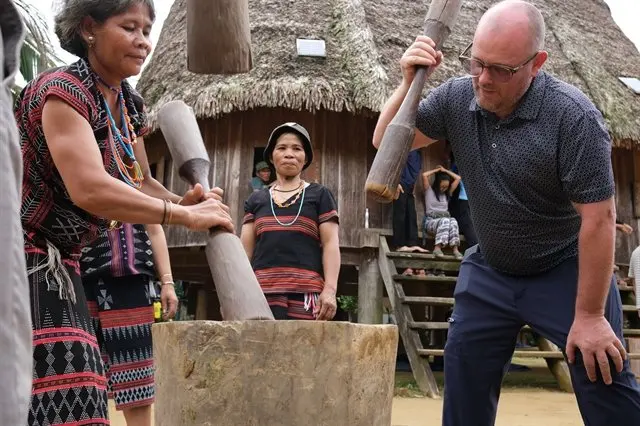
Money was a constant struggle, especially after the 2008 financial crash wiped out early sponsors. For the past 16 years the main backing has come from a production company run by "House of Cards" creator Beau Willimon and music producer Jordan Tappis, and Werner Herzog is now filming a documentary about the walk called "Walk of Life". But Bushby insists the real engine was ordinary people: rice-and-water meals, shacks built from car parts to sleep in, and a Peruvian family that nursed him through a stomach infection. "I've met 99.9999% of the very best of humanity," he said.
Why should a traveller care? Partly because it's a reminder that the world's most remote corridors — the Darién Gap, the Bering Strait, the Caspian — are real places with real politics and weather windows, not just lines on a map. Mostly, though, it's just a great story of stubbornness. Bushby's next challenge is arguably tougher than the tundra: as he put it before crossing from France, he has to get established in "the grown-up world" again. He arrived on Monday to reunite with his mother Angela, his son Adam, and a 12-year-old granddaughter he had never met.
Story via Euronews Travel