On November 2, cemeteries across El Salvador fill with flowers, music and families. Known locally as Día de los Fieles Difuntos — also called Día de los Difuntos or Día de los Muertos — All Souls Day is one of the country's most enduring traditions, and it looks nothing like the famous Mexican spectacle many travellers expect.
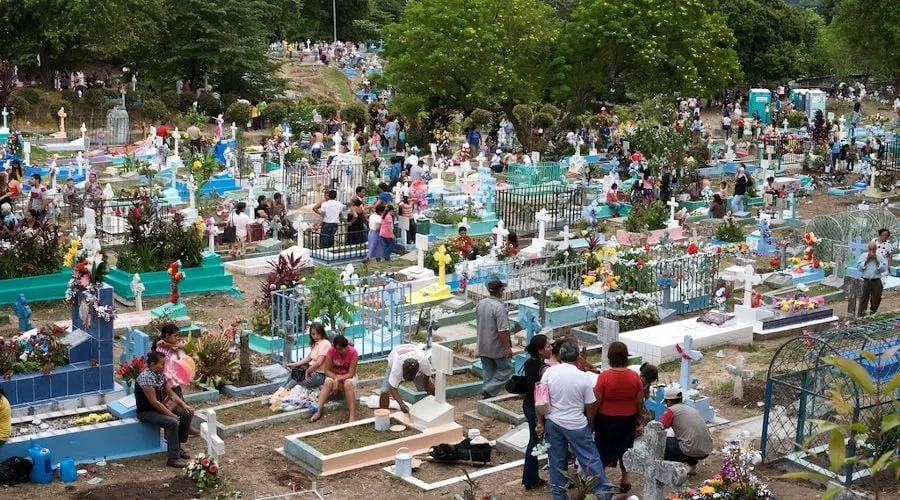
The heart of the day is the cemetery. Families arrive from early morning, often having spent the previous days cleaning, repairing or repainting family tombs. On the day itself they bring bouquets, floral crosses, wreaths, ribbons, photographs and candles in a custom known as enflorar. Grey rows of concrete graves turn colourful with roses and chrysanthemums, both natural and artificial. Some families keep it simple — flowers, a few prayers, shared stories. Others hire musicians or mariachis to play songs their loved one enjoyed in life.
There's commerce around it too. Outside busy cemeteries, vendors sell flowers, snacks, drinks and sweets, including hojuelas — fried pastries served with honey — while workers offer grave-cleaning and painting services. In San Salvador, Cementerio La Bermeja is among the busiest, with thousands of visitors passing through; the city typically runs sanitation, security and traffic operations to manage the crowds.
The tone is quiet rather than festive. Unlike Mexico's parades, face paint and Catrina imagery, El Salvador's observance stays solemn and family-centred — though some cultural events increasingly borrow elements like altars and Catrinas. The tradition carries particular weight in a country shaped by more than four decades of conflict, civil war, gang violence and migration, which left many families grieving across generations. Because of widespread displacement, it's common for Salvadorans to visit several cemeteries in different towns on the same day.
For travellers, November 2 offers a rare chance to see a tradition that's part of everyday family life, not staged for tourists. That means approaching it with care: photograph flowers, tomb architecture and wide scenes rather than grieving relatives, and always ask permission before taking identifiable photos of people. A November 1 visit on All Saints' Day (Día de Todos los Santos) can also add context, since the two observances flow together.
Salvadorans mark the day because losing someone is universal, and the cemetery visit — flowers, fresh paint, music, old stories retold — is how memories stay connected to the living. Many adults remember going as children and now return with their own kids, passing the custom along. If you want to understand El Salvador beyond its beaches and volcano hikes, a morning at a cemetery on November 2 is one of the most human experiences the country offers.