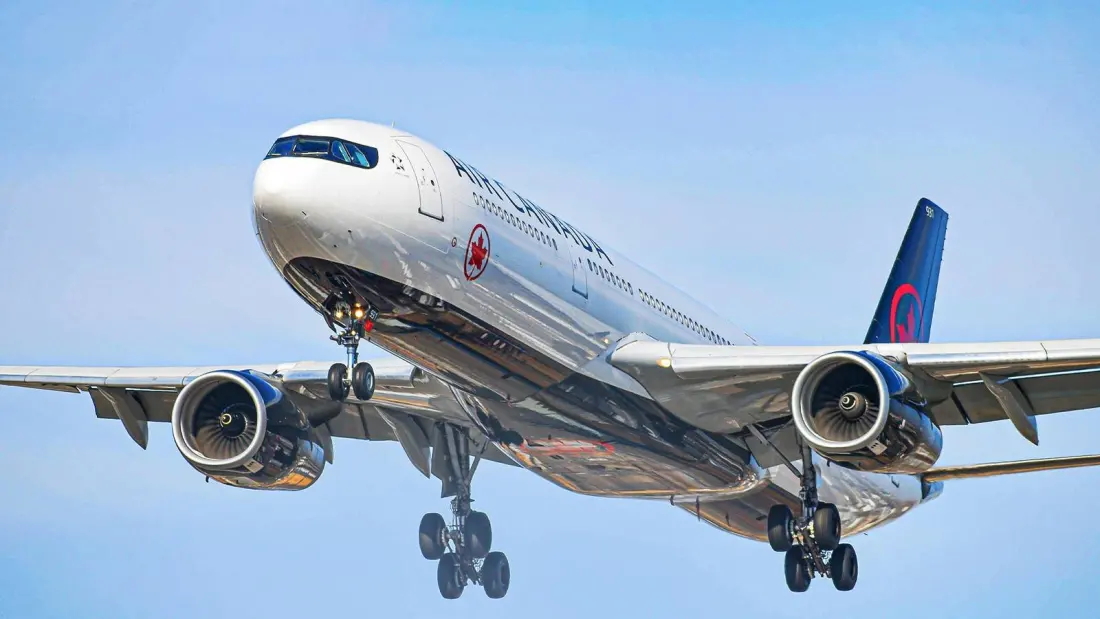
Air Canada has announced its biggest intercontinental expansion ever, with 12 new international routes launching in 2027 — nine of them entirely new to the network, three returning after years (or decades) away. The roll-out leans heavily on new aircraft deliveries, especially the Airbus A321XLR, a narrowbody with real transatlantic range.
Montréal-Trudeau is the big winner, picking up six of the 12 routes: new nonstops to Monterrey, Dubrovnik, Indianapolis, Basel and Seville, plus the return of Tel Aviv (suspended since October 2023). Toronto adds four — Louisville (a route last flown in 2002), Oslo, Shannon and Nice — while Vancouver gains Guangzhou and Edmonton gets a Newark service. Everything except Montréal–Seville starts by the end of June.
For Europeans, this is the interesting part: the A321XLR is letting Air Canada reach cities that never had nonstop North American service. Seville gets its first-ever transatlantic route, Basel becomes the airline's third Swiss destination after Zurich and Geneva, and Shannon is back after a single summer season in 2018. The XLR seats 182 with 14 lie-flat business seats — smaller than a 787, which is exactly the point. CFO John Di Bert told investors the 2026 batch of these routes was performing in the upper half of Air Canada's margin expectations.
There's more than just new cities. Ten existing routes get upgraded: Toronto–Shanghai and Vancouver–Brisbane go daily, Toronto–Heathrow hits five flights a day, and seasonal services like Montréal–Lima and Montréal–Tenerife become year-round. Overall, the airline plans over 125 international routes outside the US next summer — more than 85 destinations and up to 169,000 weekly seats, an 8%+ jump in capacity. Further announcements are promised as Boeing 787-10s start arriving.
Why it matters for travellers: if you live in Seville, Basel, Dubrovnik, Oslo or any of these secondary markets, transatlantic flying is about to get far more convenient — no connecting through a mega-hub needed. And if you're a Canadian heading to Europe, more competition on more city pairs usually means better fares. Roughly two-thirds of the new European routes will be flown by the A321XLR, so expect the compact-business-class-with-lie-flat-beds experience even on thin routes.