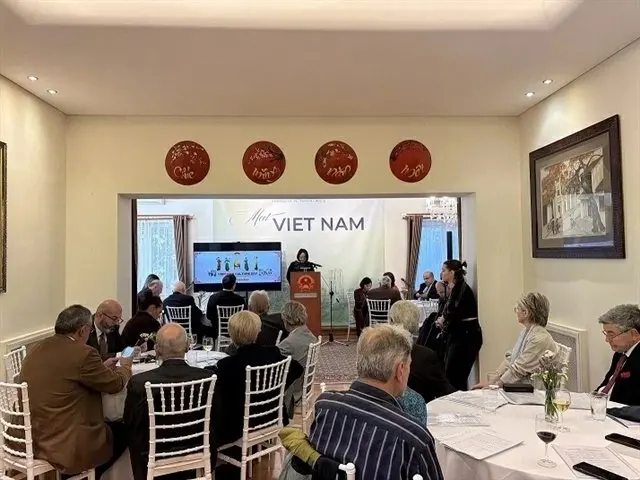
Film crews and broadcasters from across the Asia-Pacific gathered in Đà Nẵng this month for the ABU Documentary Co-production Project Meeting and the ABU CARE 13 training workshop on making TV programmes about culture and heritage. Hosted with Việt Nam Television (VTV), the event doubled as the launch pad for a significant repositioning: VTV8, the network's central-Vietnam station, is now the country's National Television Channel for Culture, Heritage, History and Tourism.
For travellers, the timing makes sense. VTV8 sits in the middle of what its deputy director Trương Duy Hòa called a natural studio — a stretch of central Vietnam packed with UNESCO-listed sites. Think the Complex of Huế Monuments, Hội An's old town, Mỹ Sơn Sanctuary, Phong Nha-Kẻ Bàng National Park and the Central Highlands Gong Culture Space. If Vietnam's television industry is betting its heritage programming on this corridor, it's a fair signal of where the country's richest cultural road trip lies.
The conference itself was heavy on craft talk. ABU's Director of Programming, Aoki Kazunori, praised the professionalism of the Vietnamese team and noted that one VTV documentary made the finals of the ABU Prizes, earning nods from international jurors. Xiao Xiaowai, executive producer of ABU CARE 13 and a documentary producer at China's CGTN, told attendees that documentary-making is a marathon rather than a sprint — and that heritage is fragile, with documentaries among the strongest tools for preserving it. She also congratulated VTV on the new channel, calling it a home for traditions and memories not only for Vietnam but for viewers worldwide.
The CARE programme, running since its first year with Vietnamese involvement, functions partly as a co-production scheme promoting participating countries and partly as a skills exchange, where producers compare storytelling approaches and build cross-border partnerships. Thái Nguyệt Quế of VTV's Research and Development Centre framed it as a chance to tell cultural stories in a modern, emotional television language.
So why should a holidaymaker care? Two reasons. First, expect a wave of new documentaries spotlighting central Vietnam's heritage and landscapes — from Sơn Trà's red-shanked douc langurs to the bridges over the Hàn River — which can double as inspiration for your own itinerary. Second, Đà Nẵng is emerging as a favourite base for domestic and international film crews, which usually means better tourism infrastructure, film-friendly attractions and a city that knows how to show itself off. If the region has been on your list, the run of Huế, Hội An, Mỹ Sơn and Phong Nha within a few hours' drive makes for one of Southeast Asia's most rewarding heritage routes.