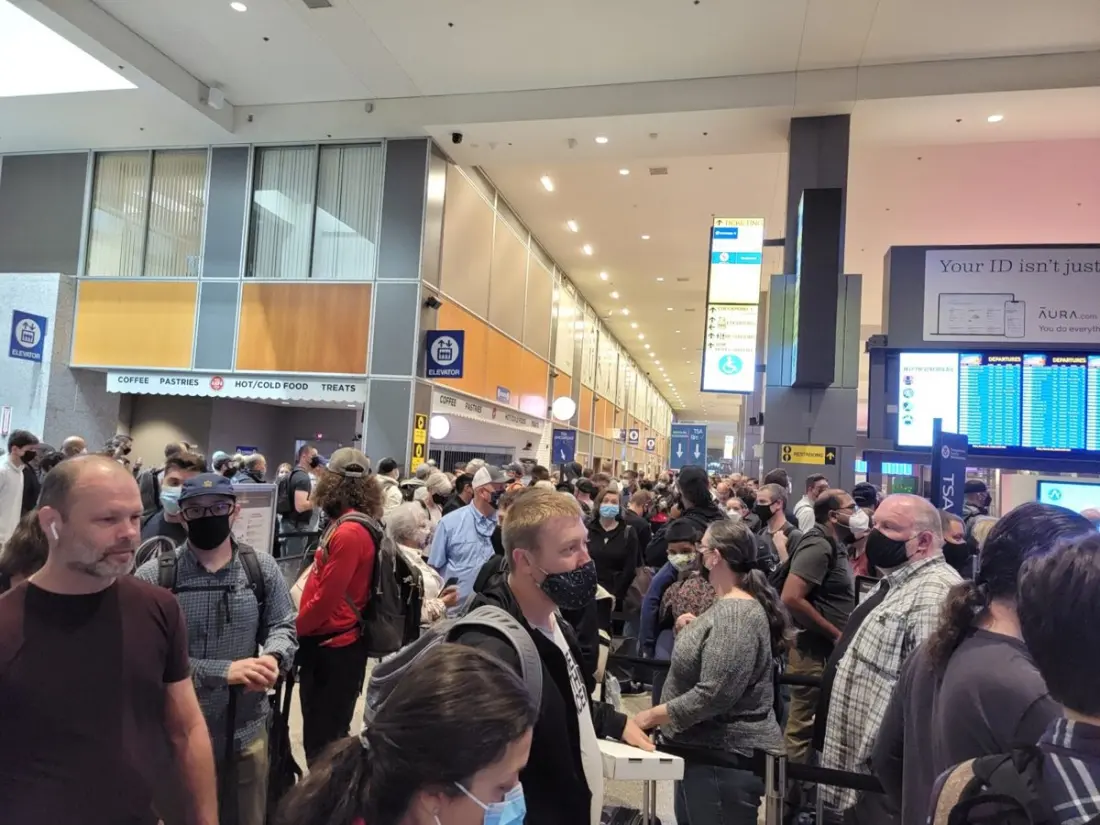
Austin-Bergstrom International has a knack for making travellers feel like they're queuing for a sold-out concert rather than catching a flight. A new comparison of passengers per gate puts Austin at roughly 637,000 per gate — the highest in its sample — ahead of Seattle at 592,000 and way clear of Washington Dulles at just 212,000. But as the analysis behind the numbers shows, gate maths alone can't explain why some concourses feel like a crush while others feel like a ghost town.
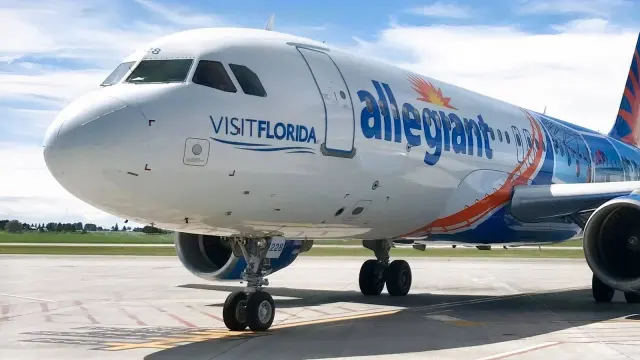
Take Austin's own gate count. The airport closed its three-gate South Terminal — the separate facility used by Allegiant and Frontier — on March 31 this year, folding those airlines into the main terminal. Sounds dramatic, until you look at traffic: the South Terminal handled just 771,354 passengers in 2025, or 3.6% of the total, versus nearly 20.9 million through the 34 main-terminal gates. Meanwhile Austin is actually adding capacity: three new west-end gates, a temporary six-gate bus-served Concourse M, and a new 26-gate Concourse B. The closed gates simply became construction space.
What really makes Austin miserable is floor space, not gate count. The airport's own master plan found it has about 89,600 square feet of circulation corridor — roughly half the 173,650 square feet its model says it needs at 22 million annual passengers. Everyone boarding, deplaning and passing through shares the same narrow strip of concrete. Atlanta's Concourse D rebuild makes the same point in reverse: it widens the building from 60 to 99 feet, deepens gate waiting areas from 20 to 35 feet, and cuts gates from 40 to 34 — fewer gates, more passengers per gate, yet a far better experience.
Charlotte shows why a healthy-looking passengers-per-gate figure can mislead. At around 432,000 per gate, it looks relaxed compared with Austin — until you're caught in a connection bank on Concourse E, where 45 gates turn regional jets all day. Small aircraft mean low passenger counts per flight but constant churn, and the piers stay jammed. Dulles, at the other extreme, has quiet gates partly because long-haul aircraft need long turns and international schedules leave gates empty for hours — which is exactly why its roughly $20 billion rebuild plan is so contentious.
For travellers, the takeaway is practical: crowds aren't about how many gates an airport has on paper, but how hard each is worked, how big the planes are, and how much room there is to walk. Expect Austin to stay tight through its multi-year construction; Seattle and Charlotte will feel dense for years too. And note that Austin isn't even America's true density champion — Dallas Love Field, capped at 20 gates by Congress and excluded from this 25-gate-plus comparison, runs at roughly 850,000 passengers per gate.