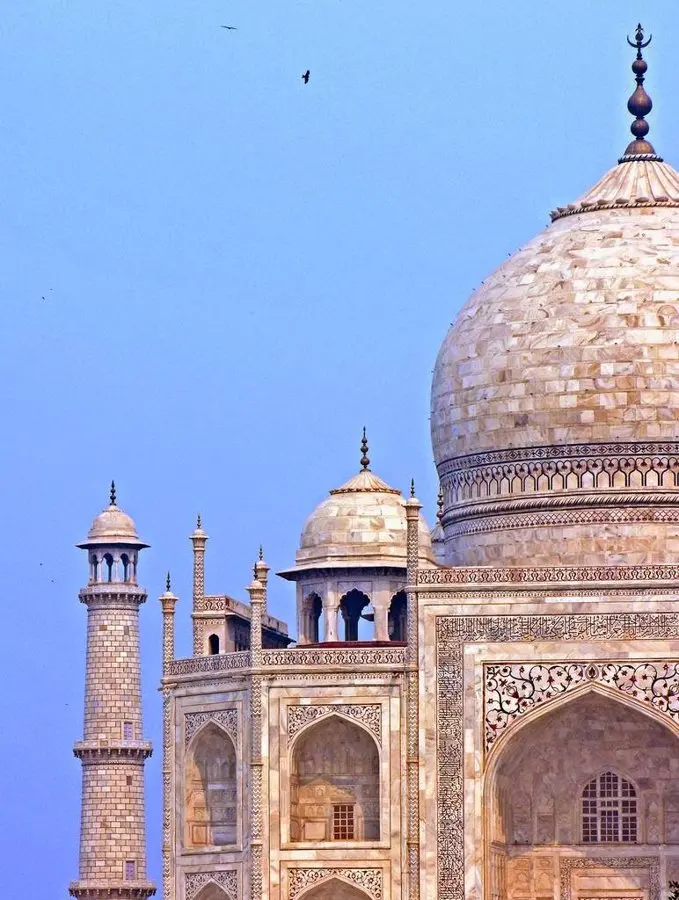
Yes, the Taj Mahal deserves its fame. But a country the size of India — thousands of years old, speaking hundreds of languages — cannot be summed up by one marble mausoleum in Agra. A recent roundup highlights ten alternatives that reward travellers willing to look further, and several of them rank among the most striking sights anywhere in Asia.
Start in the south, in Madurai, one of the world's oldest continuously inhabited cities. The Meenakshi Amman Temple, dedicated to the goddess Parvati and Shiva, is a riot of colour rather than white marble, ringed by ten towering gateways. The south gopuram, built in 1559, tops 170 feet, while the eastern tower dates all the way back to 1216.
Rajasthan alone could fill an itinerary. In Jaipur, the Jantar Mantar is a collection of enormous 18th-century astronomical instruments commissioned by Maharaja Jai Singh II, who took the throne at eleven and turned a near-bankrupt kingdom into a centre of science. A few hours away, Jodhpur glows as the Blue City — houses painted in shades of blue against the Thar desert, a tradition most likely tied to the old caste system. Nearby stands Kumbhalgarh, sometimes called the Great Wall of India: a 36-kilometre continuous wall begun in 1443, the second largest on the planet and still barely known outside the region. Then there is Karni Mata Temple in Deshnoke, where thousands of rats are deliberately fed and cared for in honour of the woman the temple commemorates — not an infestation, but the point of the visit. And for ghost-story fans, the abandoned city of Bhangarh, founded in 1573 between Delhi and Jaipur, is reputedly India's most haunted site; entry after dark is officially barred.
Further north and east, the variety gets stranger. Leh Palace rises nine storeys above the Himalayan town of Leh in Ladakh — once among the world's highest buildings, built by the Lion King of Ladakh in the early 1600s and abandoned after the dynasty's fall in 1834. Its resemblance to Tibet's Potala Palace is unmistakable. In Meghalaya, one of the wettest places on Earth, the Khasi people grow bridges from living tree roots, training them across rivers too dangerous to ford. In Maharashtra, the Ajanta Caves hold 31 rock-cut monuments begun some 2,200 years ago, lost to jungle for centuries until a British officer stumbled on a doorway in 1819 — and scratched his name into a wall, where it remains.
The roundup's wry conclusion: the tenth destination is simply India itself, too vast and varied for any list. That's the real takeaway for travellers. Each of these places sits in a different state, climate and culture, so rather than racing between them, pick a region — Rajasthan's forts and cities, the Himalayan north, or the temple towns of Tamil Nadu — and let the Taj Mahal be one stop among many rather than the whole trip.