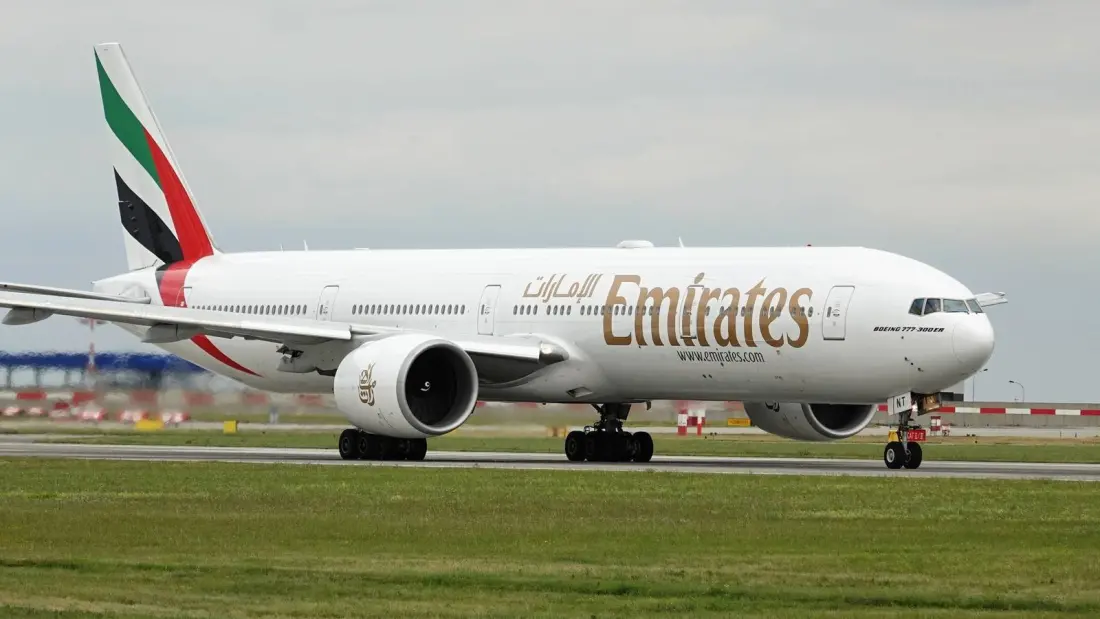
A flock of birds can undo an airline's schedule faster than almost anything else. That was the lesson for passengers on Emirates flight EK517, who spent an unplanned night in Delhi after a bird strike dented the nose cone of their Boeing 777 on arrival from Dubai.
The aircraft had landed at Indira Gandhi International Airport on Saturday, October 17, with visible damage to its nose cone — the section that houses the weather radar. Engineers couldn't clear it for the return leg to Dubai, which was set to depart at 4:25 PM that day. Emirates first pushed the departure to 7 AM Sunday, then again to around 10 AM, making the total delay roughly 17.5 hours. Footage from the airport showed ground crews inspecting the damaged nose section before the jet was eventually released back into service.
To its credit, Emirates put stranded passengers up in hotel accommodation and issued an apology for the disruption. The airline didn't say how many travellers were affected or detail the extent of the damage, and no injuries were reported. Crucially, this was a ground delay rather than an emergency — the flight landed safely, and the problem emerged during mandatory inspections afterwards.
Why does a dented nose cone matter so much? The radome protects the weather radar, and any damage there requires a technical inspection before the aircraft can fly again. Airlines can't simply assume a plane is fine because it made it to the gate. Bird strikes are common in commercial aviation — most cause little or no harm — but they can affect windscreens, engines and the nose section, and even a seemingly minor strike means maintenance crews get the final say.
The knock-on effects are the real headache. Long-haul jets like the 777 rotate through multiple flights a day, so pulling one out of service for repairs ripples across a network: subsequent departures slip, capacity drops, crew rosters need reworking, and connecting passengers travelling across several regions can miss onward flights. Emirates didn't announce any broader operational fallout in this case, but a 17-hour gap on a busy Delhi–Dubai route is exactly the kind of disruption that tests an airline's recovery plan.
For travellers, the practical takeaway is simple: a revised departure time on an app doesn't mean your connections have been fixed. If your flight is delayed overnight, check that onward reservations have actually been rebooked, keep airline communications handy, and know that carriers like Emirates will typically arrange accommodation when the delay is their operational fault rather than weather. It's also worth noting that India's airports see significant bird activity, so strikes during takeoff and landing are a recurring — if usually harmless — hazard on this route.
Anyone flying Delhi–Dubai should treat this as reassurance as much as a warning: the system worked. The plane was inspected, held, repaired and only then released, and passengers were looked after while they waited.
Story via Simple Flying.