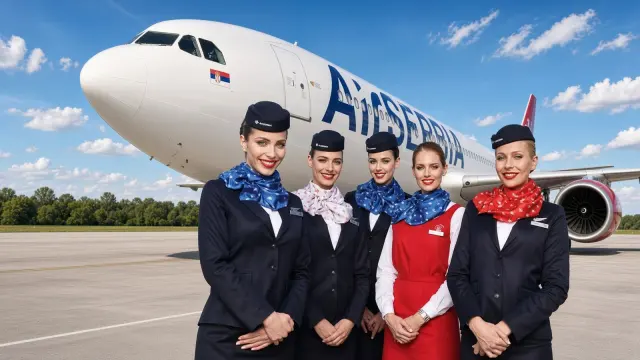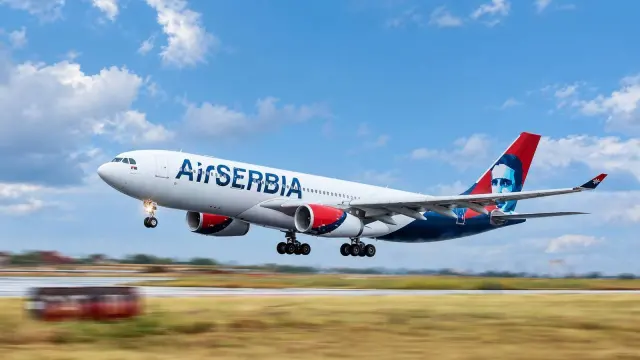
An Air Serbia flight made for Moscow never made it there first time around — and the reason has less to do with the plane than with who was sitting onboard.
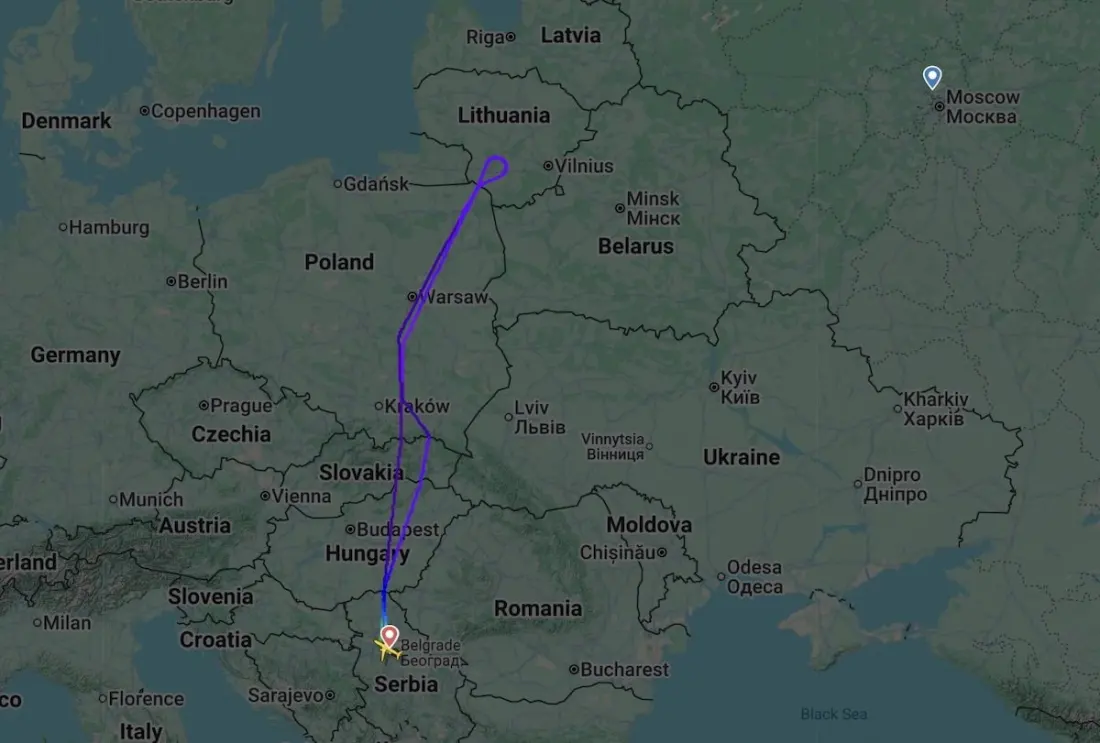
The flight, JU134 from Belgrade to Moscow Sheremetyevo, departed roughly on schedule on November 3, 2026, operated by an Airbus A320. Around 90 minutes into the roughly three-hour trip, while crossing Lithuania and already more than halfway to Russia, the aircraft u-turned and flew all the way back to Serbia, touching down in Belgrade a little over three hours after takeoff. It only got going again at 1:56AM, arriving in Moscow more than seven hours late.
Mechanical trouble wasn't the issue. The airline's official line was that the diversion followed "instructions received and all applicable security rules" — vague enough to invite speculation. According to Serbian media, the trigger was CCTV footage from Belgrade Nikola Tesla Airport suggesting that Aleksandar Vulin, a former deputy prime minister and associate of ex-president Aleksandar Vucic, had been helped to skip security screening before boarding. Vulin, who is openly pro-Russia and was sanctioned by the United States over those ties, was flying to Moscow for talks on extending a gas agreement, along with other associates of the former president.
After the plane landed back in Belgrade, all passengers went through security again — and Vulin says he underwent a separate procedure on his own. He denies dodging screening the first time, says he was asleep when the aircraft turned around, and has called the whole episode a politically motivated stunt aimed at proving loyalty to Serbia's new authorities. He also voiced frustration on behalf of ordinary passengers whose travel plans were wrecked by the detour.
The real puzzle is procedural. If airport staff genuinely suspected someone onboard had bypassed screening, a mid-air turnback is an extraordinarily heavy-handed response — normally you'd handle a screening question at departure. Once a plane is over Lithuania heading to Moscow, recalling it to Belgrade costs every passenger hours and raises awkward questions about how the concern was assessed in the first place.
For travellers, the takeaway is less about Vulin and more about how quickly a routine flight can turn into a seven-hour delay when security politics enter the picture. Serbia sits in an unusual position: it's one of the few European countries maintaining direct flights to Russia, which makes its Moscow route a lightning rod for exactly this kind of scrutiny. If you're flying Belgrade-Moscow or connecting through Belgrade airport, expect a heightened security environment and the occasional disruption on this corridor. And if your itinerary hinges on a tight arrival time, this is a reminder that even flights well past halfway can be sent back to square one.