A Korean professor flying between Seoul and Istanbul recently noticed something that would have been unusual a few years ago: Turkish voices filling the cabin. Where Korean travellers once dominated the route, Turks are now heading east in growing numbers — a small detail that captures a much bigger shift in relations between two countries that genuinely like each other.
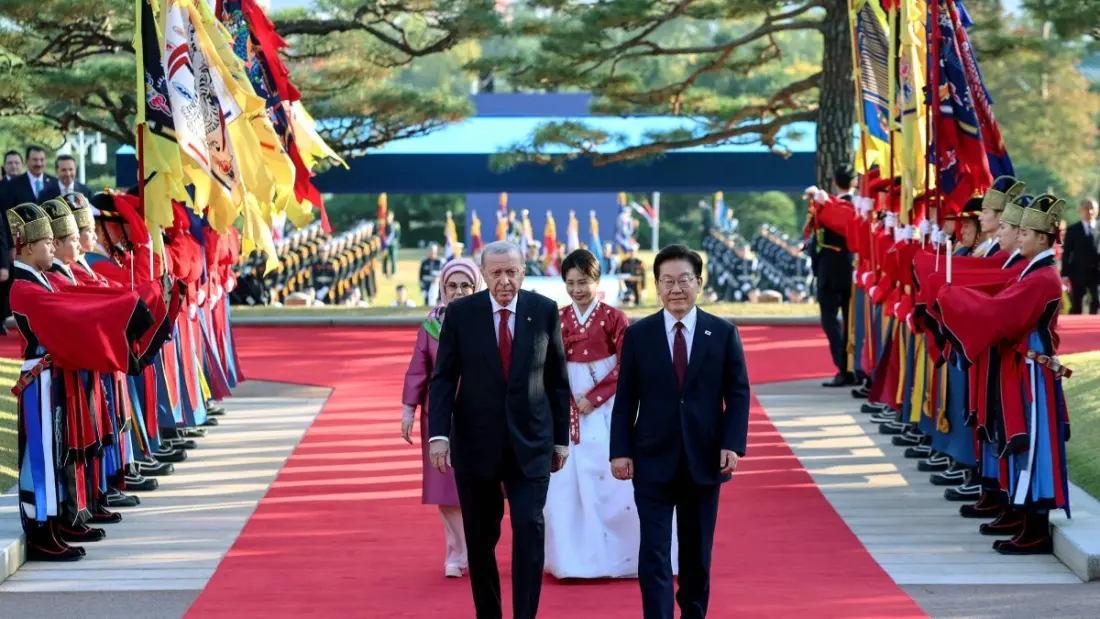
Writing in Daily Sabah, Chong-Jin Oh, dean at Hankuk University of Foreign Studies in Seoul, describes a relationship warming fast. President Erdoğan visited South Korea this November after an eight-year gap, but the two leaders have barely been apart: President Lee Jae-Mung visited Türkiye in November 2025, then met Erdoğan again at the NATO summit in Ankara in July 2026. Oh argues the two countries should formalise this into annual presidential meetings — the "shuttle diplomacy" South Korea already practices with Japan.
The affection is real and old. Turkish soldiers fought alongside Koreans in the Korean War, and ordinary Turks still greet Korean visitors as "blood brothers." The cultural affinity runs deeper than most people realise: Turkish, Kazakh, Kyrgyz, Turkmen and Uzbek share a language family with, arguably, Korean — both build meaning with suffixes and park the verb at the end of the sentence. Oh suggests Korean students learning Turkish recognise familiar structures in their very first lesson.
For travellers and students, the practical ideas in the piece are the interesting part. More direct flights between the two countries, joint university degree programmes, and easier recognition of qualifications earned abroad are all on the table. Oh's own graduate assistant studied at Boğaziçi University in Istanbul and now helps shape how Korean students learn about the region — exactly the kind of exchange both governments want more of.
Bigger infrastructure is in play too. Türkiye chairs the Organization of Turkic States' new OTS+ format and could invite South Korea into discussions on the Middle Corridor, the trade route crossing the Caspian toward Europe. Seoul, meanwhile, held its first summit with the five Central Asian states this September and could reciprocate by bringing Türkiye into that conversation. Next year marks 70 years of diplomatic relations between the two countries, and a joint nuclear plant project at Sinop, defence cooperation and even AI pilots are all being discussed.
Why should a traveller care? Because closer ties tend to mean more routes, better connections and richer exchange on the ground. The Seoul–Istanbul corridor is already one of the more fascinating long-haul journeys out there — Turkish Airlines flies it nonstop — and momentum between the two countries suggests more options, more student flows and more cultural crossover in the years ahead. Two nations separated by 8,000 kilometres are working out how to behave like neighbours. Frequent flyers stand to benefit first.