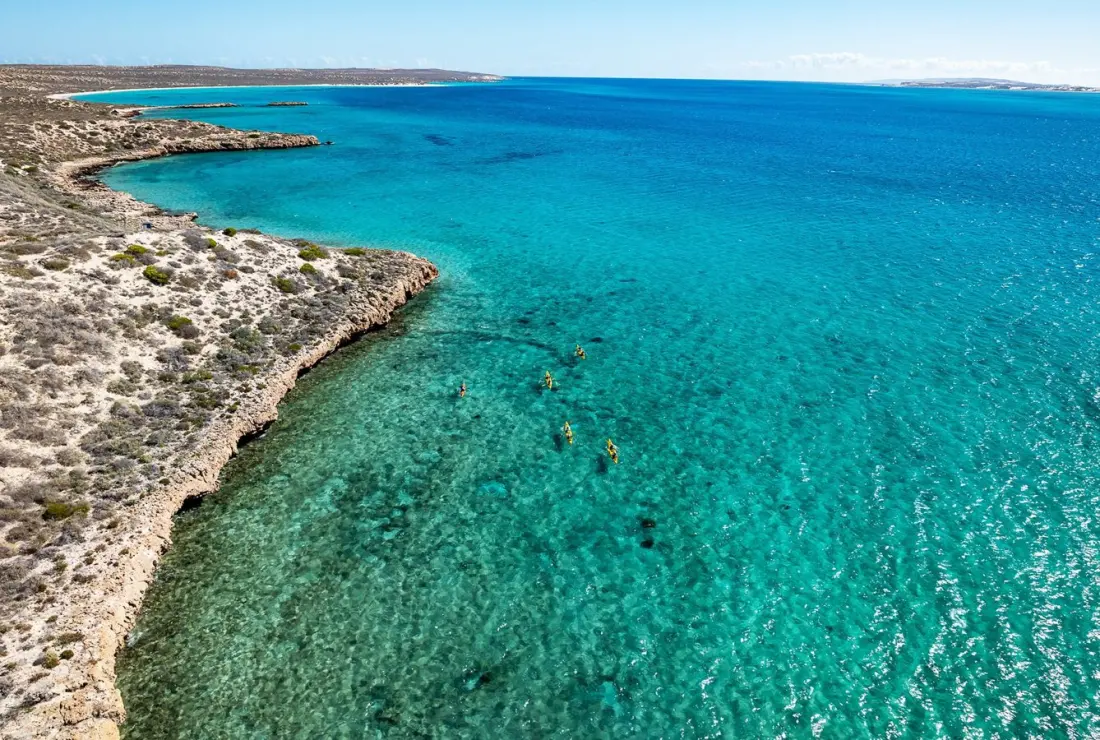
A one-night kayak trip and a week-long expedition are different animals entirely. Toby Story, lead guide at Southern Sea Ventures, an outfit that has run multi-day sea kayaking trips in Australia and further afield for nearly 40 years, has written a practical rundown of what separates paddlers who thrive on long journeys from those who merely survive them. His main point: strength matters less than you'd think.
The first skill is pacing. Day-one enthusiasm tempts everyone into charging ahead, but an expedition is a rhythm, not a sprint. Eat and drink regularly, take breaks before you're desperate, and protect your body early — a hot spot on your hand or a badly adjusted footrest becomes a genuine problem when you repeat the same motion for days. Dry clothes, decent sleep and proper meals count as expedition skills, not luxuries.
Then comes adaptability. Weather delays, unusable landings and groups moving faster or slower than planned are all but guaranteed on remote coastlines. Story's advice: have a Plan B and a Plan C, and never let attachment to the original itinerary push you into a bad call. Help is often a long way away, so a little extra caution on and off the water goes a long way.
Group dynamics get more attention than you might expect. On a week-long trip you're sharing camps, meals and often boats with the same people daily, so patience, humour and pitching in — carrying someone's kayak, keeping the group together, helping whoever is struggling — genuinely matter. Every group also needs a designated leader whose decisions suit the weakest paddler, not just the strongest, and everyone should know who that is before launching.
Weather thinking is the fifth pillar. Sea kayakers in particular need to read wind: its strength and direction can turn a friendly stretch of coast into a grind, make exposed crossings risky, or strand you happily at camp for an extra day. The trick is thinking several days ahead — if strong winds arrive tomorrow, can you use today's window, find sheltered water, or reroute?
Finally, gear: selective packing with built-in redundancy. Dry spare clothing, first aid, navigation and comms, spare paddling kit, and a repair kit matched to your hull — specialist adhesive or fibreglass supplies, plus the right Allen keys and screwdrivers for your specific boat. Just as crucial is knowing where everything sits; the perfect emergency item buried at the bottom of a hatch is useless.
None of this requires elite fitness. Story's closing advice is to build skills gradually, pick a trip matched to your experience, go with people you trust — and, once you're there, actually get out of the boat. Walk inland, watch wildlife, spend time with a coastline instead of paddling past it. That's the real payoff of a multi-day expedition.
For travellers eyeing their first big paddle, this is a genuinely useful checklist — most of it costs nothing to practise before you book.