
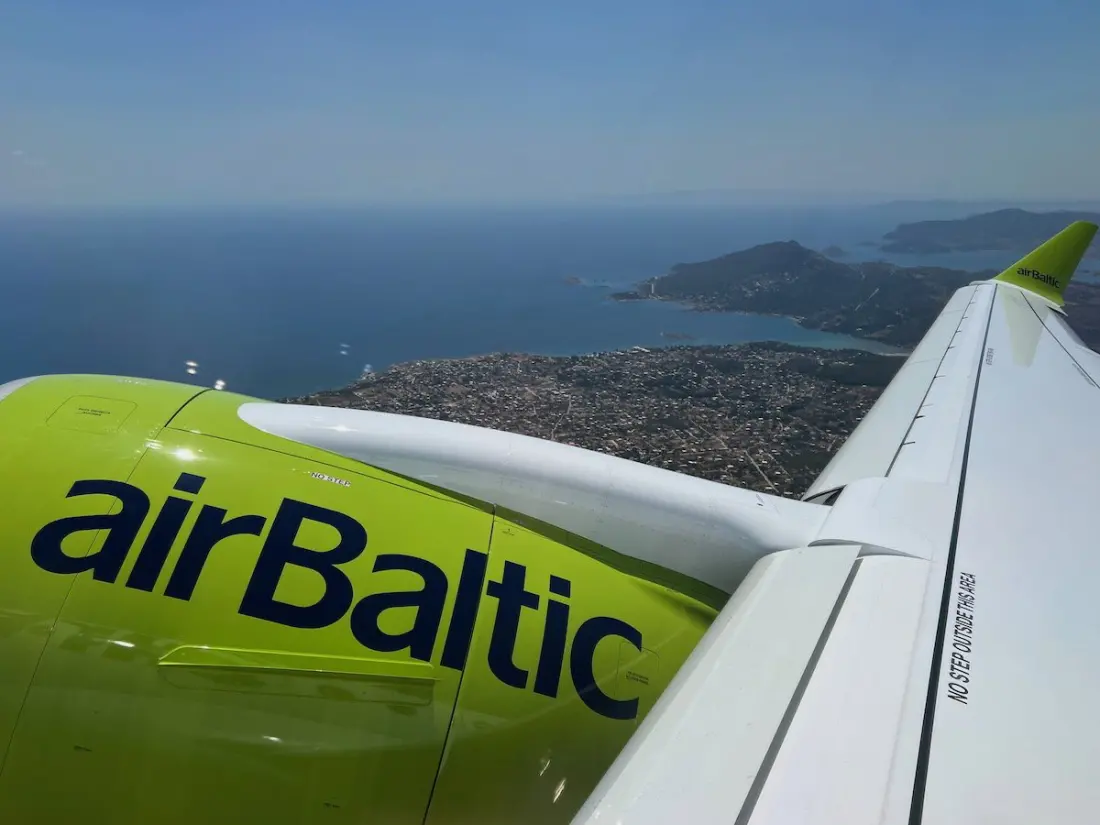
Latvia's national airline airBaltic has filed for Chapter 11 bankruptcy protection in the United States. The move is a restructuring tool rather than a shutdown: the airline keeps flying while it renegotiates debts with creditors, including aircraft lessors, under court supervision. Management expects to complete the process by around June 2027, with EUR 350 million in new financing lined up to keep operations liquid in the meantime.
If you have a flight booked, nothing changes. The airline says all flights are operating as scheduled, existing tickets and reservations remain valid, and passengers with upcoming trips don't need to do anything. Refunds, gift cards and baggage or service claims are still being handled under normal policies.
The filing follows weeks of signals that a turnaround plan was coming. airBaltic was long considered a well-run carrier with an all-Airbus A220 fleet and ambitions to grow to 100 aircraft. Those plans have now been scrapped. The airline will shrink its fleet from 54 A220-300s to just 36 by the end of 2026, before slowly rebuilding to around 40 by 2031. Instead of broad expansion, it will concentrate on Latvia and deepen frequencies in markets where demand and profitability are strongest.
Why did it come to this? A few forces stacked up. The closure of Russian airspace to EU carriers cut off a big chunk of the connecting routes airBaltic's Baltic geography was built to serve. Its wet-leasing business — renting out planes and crews to other airlines, including Lufthansa Group carriers like SWISS and Brussels Airlines — is strong but seasonal: rivals mainly want aircraft in summer, leaving expensive jets idle in winter. And fuel costs have climbed sharply in Northern Europe, while ultra low cost competition in the region squeezes a full-service-style regional operator. Lufthansa Group, which bought a small stake in the airline in early 2025 partly because it values those wet lease deals, remains a key partner.
One part of the fix is to shift the leasing business toward year-round deployment, so planes earn money in winter too. Capacity dips slightly — from 9.6 billion available seat kilometres in 2026 to 8.7 billion in 2027 — before gradually rising again to 10.5 billion by 2031.
For travellers, the practical takeaway is simple: for now it's business as usual, and with debtor-in-possession financing secured and a fast-track timetable, tickets bought today should be safe to fly. The main caveat is longer term — a smaller fleet and trimmed network could eventually mean fewer route options and possibly less generous frequencies on thinner routes. If you're planning Baltic travel, the core Riga hub connections look protected, since maintaining Latvia's connectivity is stated as the top priority. But if you've been eyeing one of airBaltic's more peripheral routes, it may be worth booking sooner rather than later, and keeping an eye on schedule changes as the restructuring unfolds through 2026.