
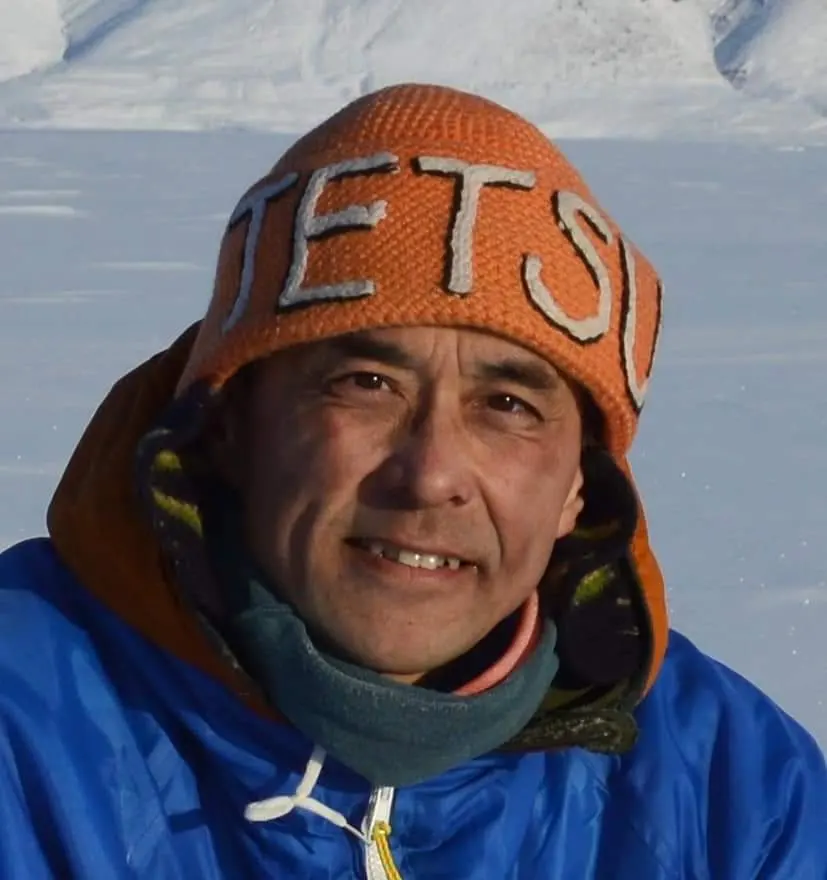
Siorapaluk, the northernmost settlement in Greenland, has a habit of holding onto its stories. One of the strangest concerns Tetsuhide Yamazaki, a Japanese scientist who vanished on the sea ice near the village on 29 November 2023, during the depths of polar night.
At first the explanation seemed simple. Yamazaki walked out that morning with his sled and his tooq, the long pole hunters use to test ice thickness. Someone warned him the early-season ice was broken. He kept going anyway, probing every step. Hours later, searchers found his tracks, his pole, and a hole in ice just 15 to 20 centimetres thick. No body. The obvious conclusion: he had fallen through and drowned.
But the hunters of Siorapaluk didn't buy it. This is a place where everyone watches everything — hunters scan the frozen sea through binoculars day and night, and people here hunt and travel comfortably in darkness. When experienced hunters examined the scene, they found scratches at the edge of the hole, the marks of a man gripping the ice, fighting something pulling him down. Yamazaki was strong, and he knew Arctic ice intimately — he had first come to Northwest Greenland in 1989 and spent decades doing dogsled fieldwork there.
Then there was the walrus breathing hole about 500 metres from shore. Hunters believe that's the answer. Atlantic walruses are immensely strong and surprisingly agile in water, and several experienced hunters in the Avannaata region have been killed by them in recent years. Local hunter Putdlaq Uvdloriaq reconstructed the attack on paper and by demonstration: a walrus can launch itself out of the water high enough to reach a standing person, and it can break through 20 centimetres of ice with its head. The theory goes that Yamazaki, checking the ice near the hole with his feeble flashlight, turned his back at the wrong moment. The hunters read the scratches as evidence of a fight, not a slip. He was never found.
Yamazaki's name lives on in Siorapaluk in unexpected ways. A plaque stands among the rocks near the church and heliport, looking out toward the ice where he disappeared. And a two-year-old Inughuit girl named Saki — short for Yamazaki — born days after he vanished, carries his name into the next generation. She joins a long line of Japanese connections to this tiny community, which began when explorer Ikuo Oshima arrived in 1972 to learn from the hunters, and includes Saki Daorana, a Japanese woman married to a local man and now among the most respected residents of the Avannersuaq region.
For travellers, Siorapaluk is a reminder that the far Arctic is never empty — of people, animals or history. Visitors who make it here by dogsled or boat enter a community where a walrus is not a curiosity but a serious neighbour, and where the ice underfoot demands respect in every season.
Story reported by ExplorersWeb.