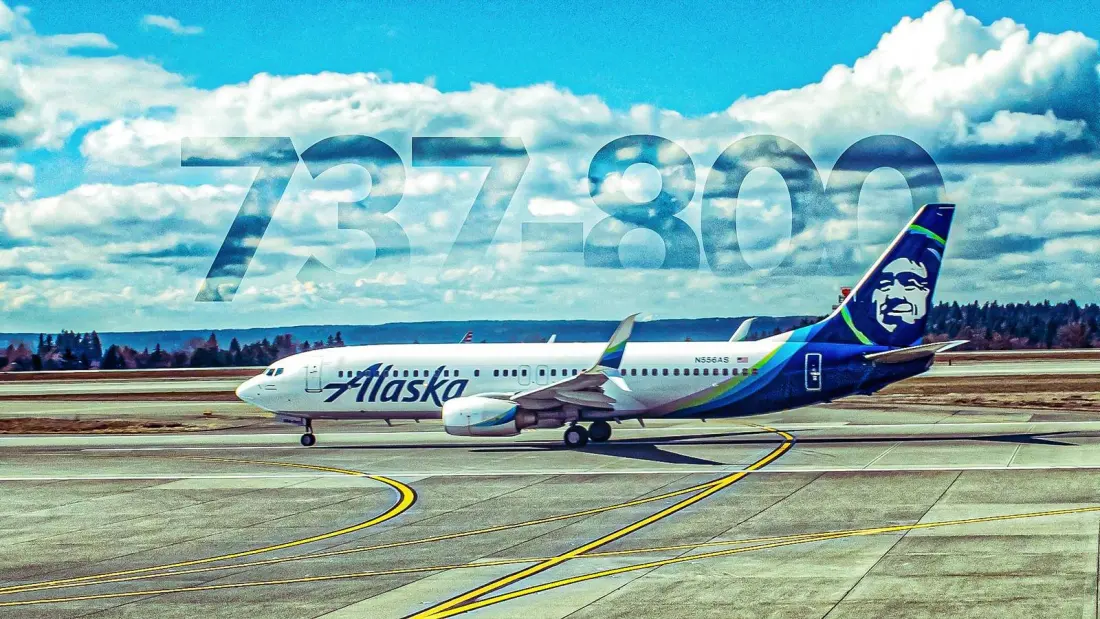
A routine evening departure turned into an overnight headache for Alaska Airlines on Monday, when one of its Boeing 737-800s was struck by a catering truck while parked at New York JFK. The jet, registration N548AS, was preparing to operate flight AS41 to San Francisco when its left winglet made contact with the vehicle. Damage to the ventral strake of the split scimitar winglet was serious enough that the aircraft was pulled from service and the flight cancelled, with passengers filmed the aftermath on board and told the plane would return to the gate so everyone could deplane.
Flight AS41 is one of Alaska's flagship transcontinental routes, a daily service with a block time of six hours and 41 minutes, scheduled to leave JFK at 5:25 PM and reach San Francisco at 9:06 PM. The airline runs up to four flights a day between the two cities, so stranded travellers weren't left hanging for long: a relief flight, AS9230, was lined up to depart JFK at 9:00 AM the following morning.
The good news for the aircraft is that this looks fixable. Tracking data suggested N548AS could be back in service as early as Tuesday, though that could still slip. The 737-800 is a workhorse of Alaska's fleet — the carrier operates 59 of them, averaging 18.7 years old — and N548AS is a veteran, having first flown more than 21 years ago before delivery to Alaska on July 1, 2005. It seats 161 passengers across two cabins.
Ground collisions like this are more common than most flyers realise, and they don't always end so gently. Earlier this year, a United Airlines Airbus A320-200 was hit by a truck at Washington Reagan National and, being over 25 years old, was judged beyond economic repair. It sat parked for months before being broken up in October. Age matters here: older airframes often aren't worth the repair bill after significant structural damage, while a mid-life 737 like Alaska's will almost certainly fly again.
For travellers, the takeaway is fairly straightforward. Ground service vehicle strikes can and do cancel flights with little warning, and there's little you can do to prevent one — but knowing your rebooking options helps. On a route as dense as JFK–SFO, carriers typically have spare capacity or follow-on departures the same day or next morning, as Alaska did here. If you're on a nonstop transcontinental flight that's cancelled for an operational reason, ask specifically about the next departure on the same route rather than accepting a circuitous rebooking through a hub. And if you're filming the scene from your seat, remember the crew will need you off the aircraft fairly quickly once it heads back to the gate.