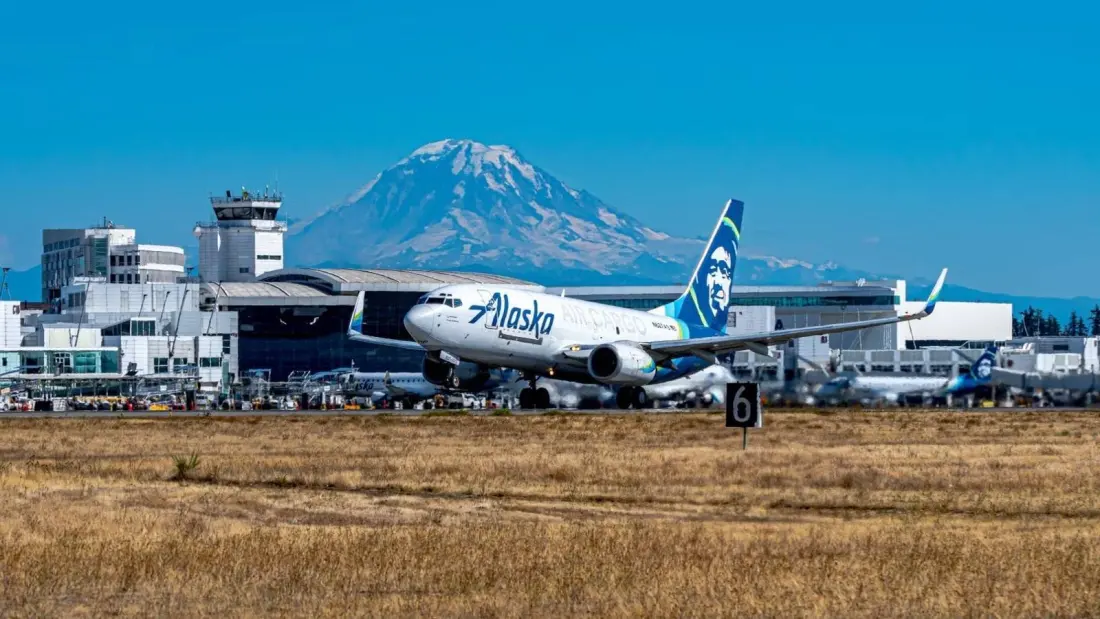
Alaska Airlines is retiring its entire fleet of Boeing 737-700 passenger jets by the end of 2027, and the swap will change the aircraft on one of America's most unusual air routes: the Southeast Alaska 'Milk Run', the multi-stop service that links roadless coastal towns between Seattle and Anchorage.
The plan hinges on Boeing's newly certified 737 MAX 10, which got its FAA type certificate on October 20 after nearly 1,000 test flights. Alaska has 27 MAX 10s arriving next year, freeing up its existing 737-800s to move onto the Milk Run. The stretched MAX 10 — nearly 144 feet long with up to 230 seats — is simply too much airplane for towns like Ketchikan, Wrangell and Petersburg, where communities number a few thousand residents and runways are short. The 161-seat 737-800 fits better, adding 37 seats and roughly 50% more cargo space per flight compared to the outgoing 124-seat -700.
For travellers, that means a bit more room and better cabins on one of aviation's great scenic hops. Milk Run flights are famously short — some legs between Wrangell and Petersburg last around 15 minutes — so the pace is quick, the views of fjords and islands are constant, and the cargo hold often carries fresh seafood alongside your suitcase. Alaska's market manager confirmed the -700s will be permanently phased out between early next year and late summer, with most headed for the boneyard. Three converted 737-700 freighters will keep flying cargo to remote communities until 2028, joined by four leased 737-800 freighters, part of a push targeting $150 million in annual cargo profit.
There's a knock-on effect in Hawaii, too. The same 737-800s are also needed to replace Hawaiian Airlines' retiring Boeing 717s on inter-island flights from 2028 — those jets will get Premium Class seating, free Starlink WiFi, USB power and more first-class seats. Alaska has already started interim 737-800 flying between Honolulu and Kahului. All of this depends on Boeing hitting its delivery schedule: 27 MAX 10s next year and 23 more in 2028, with little slack in the system.
If you've ever wanted to fly the Milk Run, the experience isn't going away — it's getting slightly bigger planes, which should mean more seats available during peak summer season and more room for fish boxes below. Just don't expect the new MAX 10 itself in Southeast Alaska anytime soon; that jet is destined for busy mainland routes.