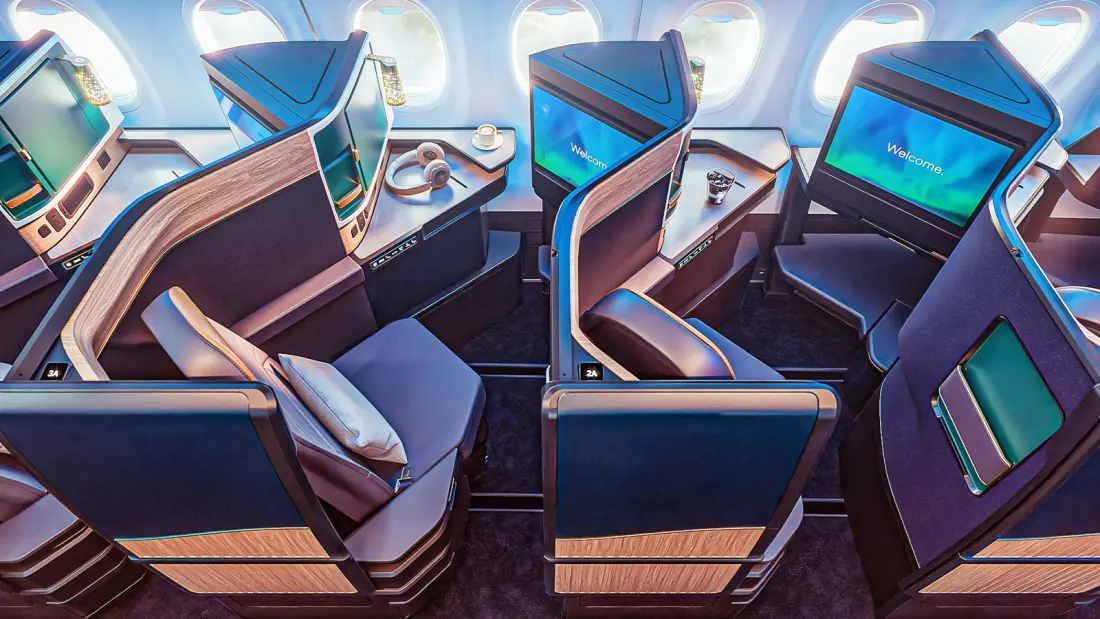
Lie-flat seats on a single-aisle jet used to be a rare curiosity. Alaska Airlines is about to make it a selling point: from 2028, at least 25 of its Boeing 737 MAX 10s will fly with 12 Aurora Suites up front - a proper lie-flat business class with direct aisle access, 19-inch 4K screens, Bluetooth, USB-C and wireless charging, and AC power. Chef-led dining, on-demand meals and Starlink Wi-Fi for eligible Atmos Rewards members round out the package.
The idea is simple. Not every long route needs a widebody, but plenty of transcontinental flights carry travellers who would happily pay for a real bed. By configuring the MAX 10 as a premium-heavy narrowbody, Alaska can put lie-flat inventory into high-value city pairs - think New York to Seattle or San Francisco - without committing a 787 to the route. The airline has been clear this is not a fleet-wide standard; the suites will only appear where demand justifies them.
What might matter more to ordinary flyers is the cabin below the suites. Premium Reserve, a new tier sitting between business and standard premium economy, will also feature on the MAX 10 with 12 seats. The specs are solid: 38 inches of pitch, a wider seat with extra recline and a leg rest, a 16-inch 4K OLED screen, bigger tray tables and upgraded dining. Sales open in summer 2027, ahead of the 2028 rollout.
The wider picture is a group-wide revamp. Alaska's 787-9s will get 34 Aurora Suites (40 on the future 787-10), with premium seating climbing to roughly 46% of the cabin. Hawaiian Airlines' 24 Airbus A330s will be rebuilt from 2028 with 22 Leihokū Suites - lie-flat beds with privacy doors, themed around Hawaiian navigation - plus 28 Premium Reserve seats. Both brands add dedicated airport services, upgraded dining and lounge access.
The result is a four-cabin ladder - Aurora Suites, Premium Reserve, Premium Class and Main Cabin - designed to capture spending at every level rather than chasing only top fares. Alaska says revenue from outside the Main Cabin already hit 53%, and it wants diversified revenue near 60% by 2030, with premium revenue specifically above 40%.
Why should you care? If you fly long domestic routes in the US, competition at the front of the cabin is finally spilling into narrowbody territory. Expect more chances to buy a bed on a five-hour coast-to-coast flight, or a genuinely comfortable seat without paying suite prices. The open question is pricing: whether Premium Reserve sells well without cannibalising suite demand will decide how widely these cabins spread. Watch the route and fare announcements as 2027 approaches - they will reveal more than any cabin render.