Before flying to Tanzania this fall to climb Mount Kilimanjaro, one American backpacker ran a dress rehearsal much closer to home: a solo five-day trip into California's eastern Sierra Nevada, designed to test how his body handles serious elevation.
The stakes are real. Kilimanjaro tops out at 19,341 feet, and there's only about 47 percent as much oxygen at its summit as at sea level. The hiker's previous high point was Mt. Whitney at 14,505 feet — and even that summit came mid-thru-hike, when his body had already spent months adjusting. This time, there'd be no such runway.
His plan: sign up for the eight-day Lemosho route on Kilimanjaro, chosen for its scenery and gradual acclimatisation profile over roughly 50 miles, then squeeze in a high-altitude shakedown trip two weeks before departure. Training at home meant steep hill cycling and day hikes with a 20-pound steel plate strapped to his pack.
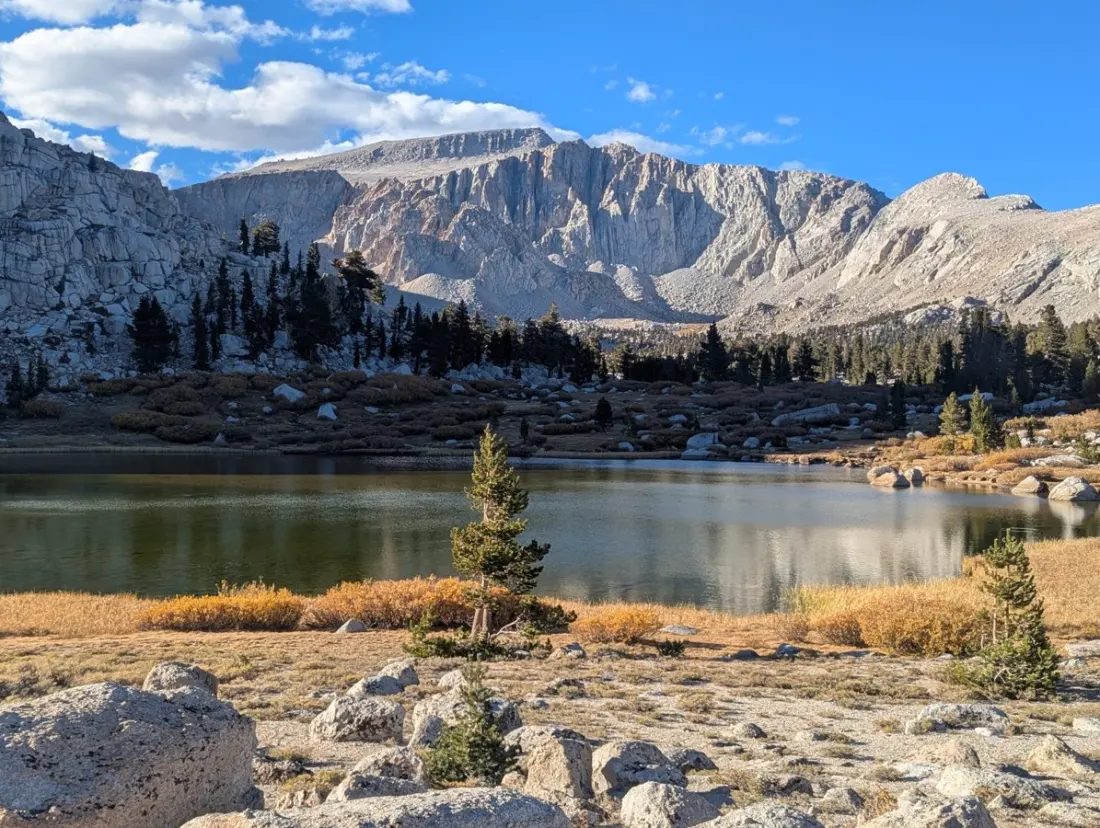
The rehearsal started at Tuttle Creek Campground near Lone Pine, then climbed the dramatic road up to Horseshoe Meadows — a 5,000-foot ascent by car — before a 12.8-mile day to Lower Soldier Lake at 10,822 feet. A nostalgic detour along the way revisited a favourite campsite from the previous year, where peaks above Miter Basin had once reflected in a seasonal pond. The pond, it turned out, was dry this time.
Day three delivered the highlight: an 8.4-mile day hike into Miter Basin itself and up to Iridescent Lake at just over 11,900 feet. Trail-less but gentle hiking led past potential campsites tucked in the trees, a possible bighorn sheep sighting, and a bracing swim in the frigid lake — quickly forgiven thanks to warm sun and wind shelter from the cirque walls.
The real test came on day four with a full-pack push up Mt. Langley at 14,032 feet, plus a 13.75-mile traverse to Cottonwood Lakes via Army and New Army passes. Above roughly 12,400 feet, the effects were unmistakable: short rests needed every couple hundred steps, a feeling of being completely out of breath while climbing — yet instant recovery the moment he stopped. His takeaway on acclimatisation is genuinely useful: as long as the body can process enough oxygen at rest, altitude hit hard only during exertion. The danger zone for acute mountain sickness likely begins when even resting becomes a struggle.
A short, leg-fresh 5.4-mile walk back to Horseshoe Meadows wrapped the trip, with a snack stop in Lone Pine on the drive home.
For travellers, this is a solid blueprint for any high-altitude goal, whether it's Kilimanjaro, a Himalayan trek or a big Sierra traverse: pick a route with a patient acclimatisation profile, train with weight, and schedule a genuine multi-night trip above 10,000 feet beforehand — not just day hikes — so you can learn your own limits. The Cottonwood Lakes and Miter Basin area out of Lone Pine happens to be one of the most accessible places in the US to do exactly that, with Mt. Langley offering a 14,000-foot summit achievable without technical climbing.
This article appeared on The Trek.