Every 1 and 2 November, homes across Mexico fill with candles, marigolds and the scent of fresh pan de muerto as families build ofrendas — altars of offering — for Day of the Dead. November 1 is traditionally dedicated to children who have died, November 2 to adults. Far from being sombre, the occasion is framed as remembrance and a celebration of lives lived.
A traditional ofrenda is built in three tiers. The top holds photographs of the deceased alongside religious images, often the Virgen de Guadalupe. The middle tier is the personal heart of the altar: offerings chosen for the individual. For children, that means toys, games and favourite sweets; for adults, the food and drink they loved in life — clay cups of coffee, hot chocolate or atole, or a bottle of tequila, mezcal or pulque. Small clay pots might hold corn, chiles and spices. The lowest tier carries lit candles, and sometimes a washbasin and towel so arriving spirits can freshen up.
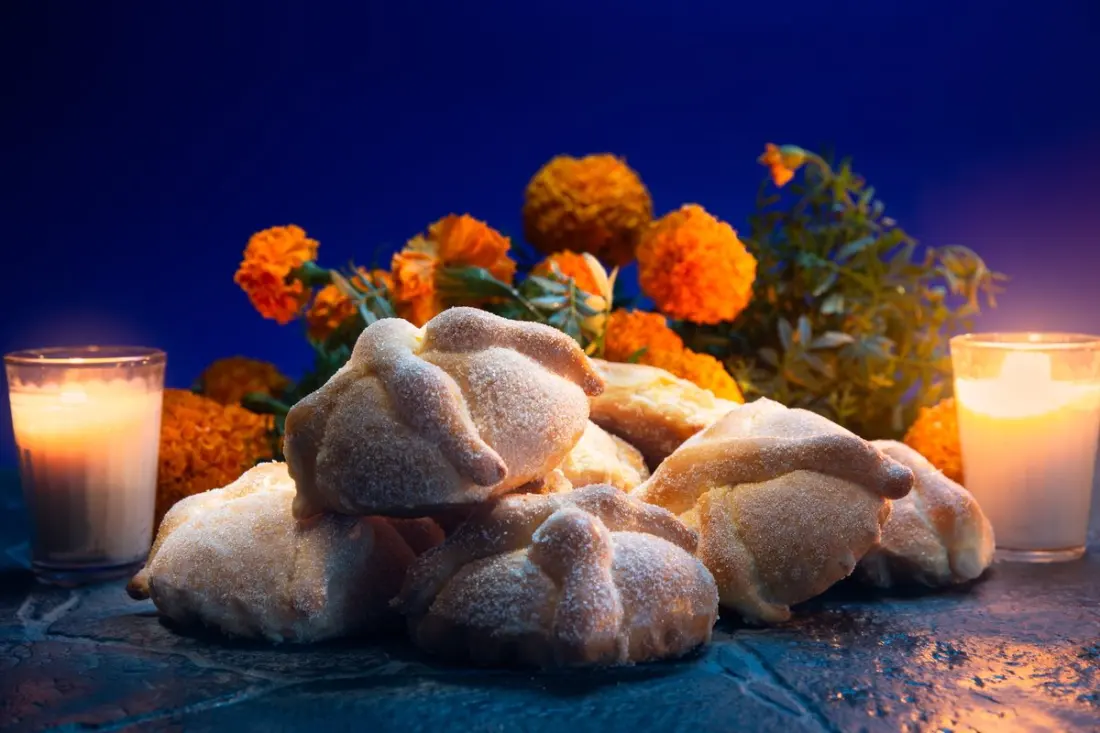
Certain elements appear on almost every altar. Orange marigolds called cempaxochitl — literally "flower of the dead" — are essential, as is pan de muerto, the sweet bread baked for the season. Tables are draped in cloth or paper and hung with papel picado, the perforated paper cut-outs patterned with skulls, Catrinas, crosses and flowers. Sugar skulls in all sizes and caramelised pumpkin provide the sweetness, while incense burners and decorated candles add atmosphere.
For travellers, the two weeks before the festival are when the preparations become visible. Local markets across Mexico stock everything needed to dress an altar: flowers, bread, candles in painted jars, sugar skulls and paper decorations. Wandering one of these markets in late October is one of the best ways to watch families assembling their own very personal ofrendas.
Ofrendas aren't only in homes. You'll find them in cemeteries, parks and plazas, and in smaller towns some families traditionally open their home altars to visitors on 1 and 2 November. A visit to a local cemetery and a slow walk through residential neighbourhoods during those two evenings can give you an intimate, respectful glimpse of the tradition — nowhere more famously than around Pátzcuaro in Michoacán or in Oaxaca City.
Understanding the ofrenda changes how you experience Day of the Dead. These altars aren't objects of worship but expressions of love, composed item by item around what someone enjoyed while alive. If you time a trip for the end of October, you'll catch both the market build-up and the two festival nights themselves — and if you're lucky enough to be shown a family altar, ask about the objects on it. Every one has a story.