San Diego International has long been Southwest country. The Dallas carrier still moves roughly 35% of all passengers there, but Alaska Airlines is closing in fast with about 21% — and it's doing it with a fleet trick Southwest simply can't match.
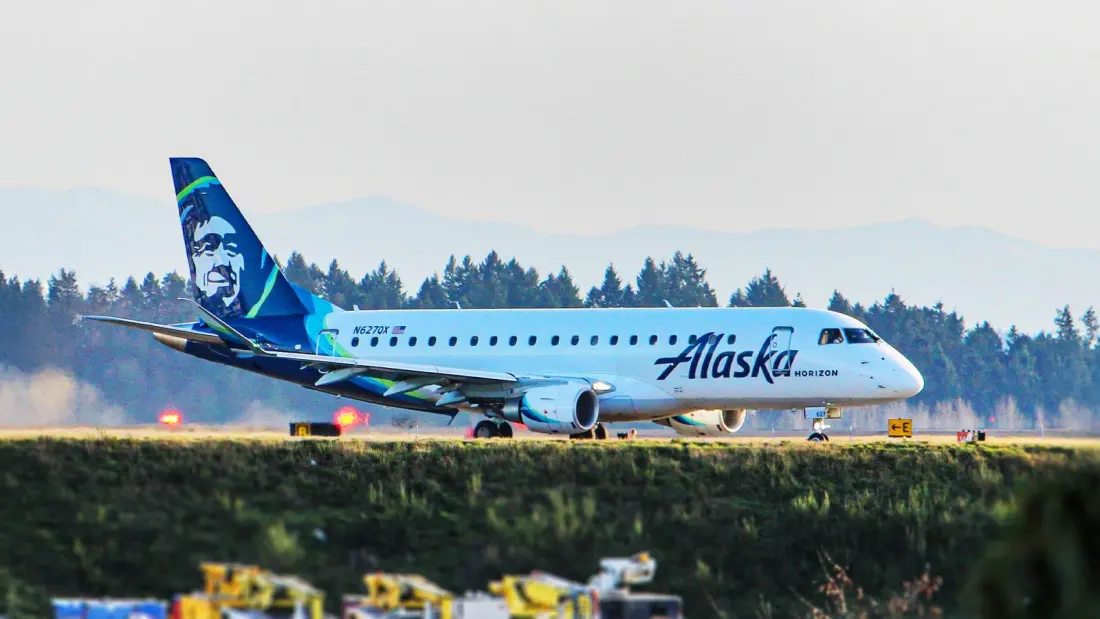
Alaska has grown its San Diego operation by more than 35% versus 2025, on top of a schedule the year before that was over 40% larger. The secret weapon is the Embraer E175, a 76-seat regional jet flown under the Alaska Horizon brand (with SkyWest crewing a good chunk of the flights from its San Diego domicile). Unlike a 159-seat Boeing 737, the E175 can fly routes that would never fill a bigger plane, letting Alaska serve more destinations from San Diego than Southwest does — even though Southwest carries more people overall. Multiple daily frequencies on stronger routes also help Alaska protect its fares.
The airline has also planted real roots. It opened a Boeing 737 pilot base in San Diego in June 2026, on top of a flight attendant base that's been there over a decade, and its schedule averages close to 100 daily departures. Southwest still runs up to 139 departures a day at peak summer and added 11 new routes for summer 2026, so it isn't rolling over. But the competitive math here is unusual: American, Delta and United treat San Diego as a mere spoke, which leaves the two hybrid carriers room to grow without legacy-carrier interference — and with better pricing power.
Hawaii adds another twist. Alaska's 2024 acquisition of Hawaiian Airlines means it now effectively controls both the mainland-Hawaii routes and the inter-island market, a space Southwest entered in 2019 with mixed results. On San Diego-Hawaii flights, the two go head-to-head with little outside competition, and Alaska holds the brand and loyalty-programme advantage in the islands.
Alaska's California strategy also explains why San Diego matters so much. The hubs it inherited from Virgin America at LAX and SFO have been a slog — Alaska is the number five airline at LAX, and SFO is a fortress for United. Rather than fight those battles, Alaska is trimming both operations and redirecting that capacity to San Diego, plus its strongholds in Seattle, Portland and Anchorage.
For travellers, this is good news: more nonstop options from San Diego, fare competition between two expanding airlines, and increasingly seamless Hawaii connections through the Alaska-Hawaiian combination.