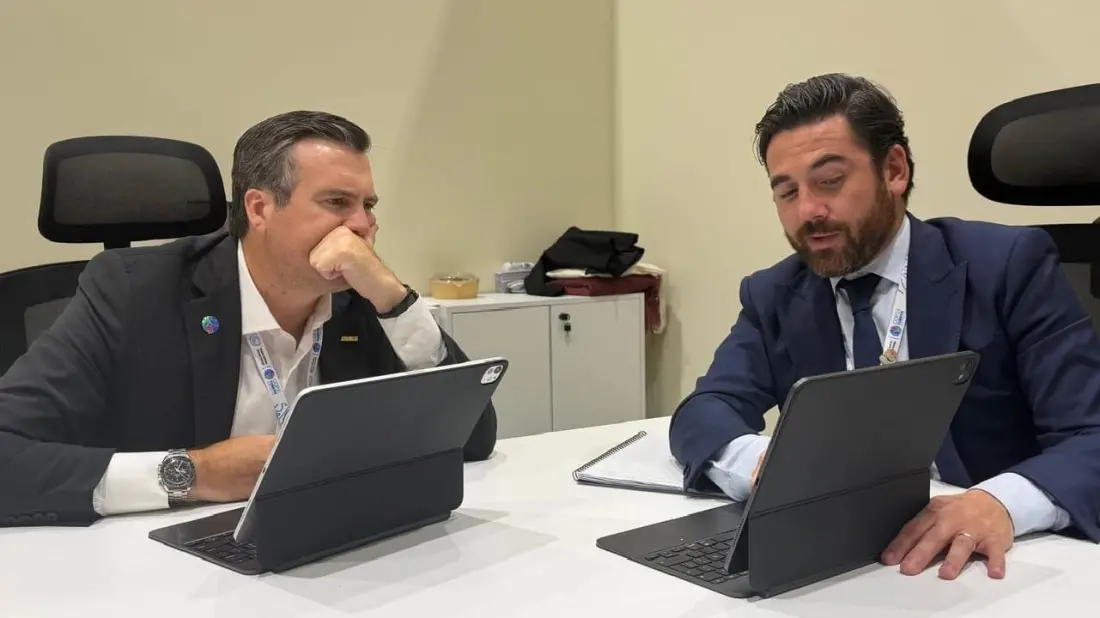
Sargassum has been the recurring headache of Mexico's Caribbean coast for years, and the state that includes Cancún, Playa del Carmen and Tulum is now going looking for serious money to fight it. Officials from Quintana Roo sat down with the Central American Bank for Economic Integration (CABEI) at a bilateral meeting tied to the UN Climate Change Conference (COP 31) in Antalya, Turkey.
The meeting, held on Tuesday through the state's Ministry of Ecology and Environment (SEMA) under Óscar Rébora Aguilera, focused on technical, financial and institutional cooperation against sargassum, plus wider beach recovery. Also at the table was Manfred Kopper Castro, head of sustainability at CABEI, with discussion reportedly touching on one concrete idea: oceanic sargassum barriers designed to catch the seaweed offshore before it washes ashore in rotting brown mats.
The two sides explored setting up a working group to develop fundable projects, along with investment criteria, financing instruments for conservation, and options for climate resilience and adaptation. CABEI is seen as a potential strategic partner for structuring and evaluating coastal management and conservation projects across the Mesoamerican region, which could give Quintana Roo access to money and expertise it doesn't currently have.
The state government says the goal is a long-term conservation model that protects both the beaches and the wider biological heritage of the Mexican Caribbean. For visitors, the practical stakes are simple: sargassum seasons have at times turned stretches of the Riviera Maya's famous white sand into a smelly, brown tide line, affecting swimming, snorkelling and the postcard appeal of towns like Tulum and Playa del Carmen. If new financing actually delivers offshore barriers and sustained beach recovery programmes, it could mean cleaner coastlines during the peak sargassum months. Nothing is guaranteed yet — this was a meeting about funding frameworks, not a signed cheque — but it signals that the fight against the seaweed is moving toward bigger, internationally backed solutions rather than day-to-day beach raking alone.
In the meantime, travellers heading to the Mexican Caribbean should still check current sargassum reports for specific beaches before booking, since conditions vary hugely between, say, Isla Mujeres and the Tulum coast.