Alaska Airlines is no longer content to be the scrappy West Coast carrier with comfy recliners. The Seattle-based airline is pouring money into its First Class product across four fronts: better seats, free high-speed Wi-Fi, chef-designed dining, and a big lounge expansion — all while folding Hawaiian Airlines into its network.
The most unusual perk is lounge access. On paid or award First Class tickets flying at least 2,000 miles — think transcontinental routes, Hawaii flights, and most Anchorage services — Alaska throws in lounge access at no charge. No other major US airline does this for standard domestic First Class; Delta, United, and American reserve their lounges for credit-card holders or long-haul premium passengers. Upgraded tickets don't count, and Alaska's lounge network is small (Seattle, Portland, Anchorage, LA, San Francisco), but it's growing: a 41,000-square-foot Seattle complex with two lounges totalling 700 seats opens in late 2027, with new San Diego and Honolulu locations following in early 2028.
The Atmos Rewards loyalty program, launched with Hawaiian in 2025, is equally distinctive. From January 2027, members choose how they earn status — by distance, spending, or segments — rather than being locked into a spend-based formula. All elite tiers qualify for space-available First Class upgrades, and top-tier Titanium members can even get day-of-departure upgrades to Hawaiian's international lie-flat business class with a companion, no points required. Availability isn't guaranteed, but the flexibility is unmatched among US carriers.
Food is where Alaska really tries to stand out. Its Chef's Table program rotates menus from big-name West Coast chefs, starting with James Beard winner Brady Ishiwata Williams of Seattle's Tomo, building on earlier work from San Francisco's Brandon Jew. First Class passengers can pre-order meals from two weeks to 20 hours before departure, and the drinks list leans regional: Stumptown coffee, Fremont Brewing beer, and Pacific Northwest wines. Note that the fancier dishes concentrate on select routes; shorter flights get simpler service.
Connectivity is catching up fast too. Around 40% of the combined Alaska-Hawaiian fleet had Starlink by autumn 2026 — including all E175 regional jets — putting it neck and neck with United, with free Wi-Fi for Atmos members on equipped aircraft. Full fleet coverage is targeted by the end of 2027.
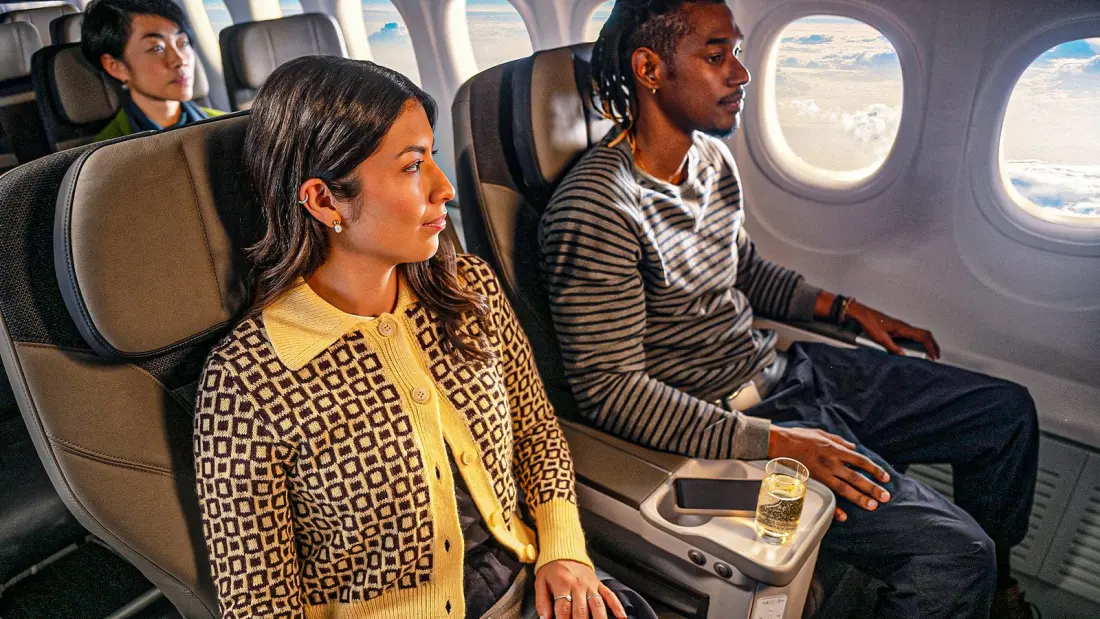
Then there's the seating itself. Alaska claims the roomiest conventional domestic First Class in the US at up to 41 inches of pitch, two to four inches more than Delta, United, or American. Newer seats add calf rests, USB-C charging, and device holders, and the airline is adding roughly 1.3 million premium seats a year across its fleet. The real headline arrives in 2028: at least 25 Boeing 737 MAX 10s will carry 12 lie-flat Aurora Suites each, with direct aisle access and 19-inch 4K screens — a genuine challenge to the premium transcontinental products of the Big Three.
For travellers, this matters if you fly the West Coast, Hawaii, or transcontinental routes and want First Class perks — especially lounge access and upgrades — without elite status gymnastics or a premium credit card. For a US carrier, it's a genuinely different take on domestic premium travel.