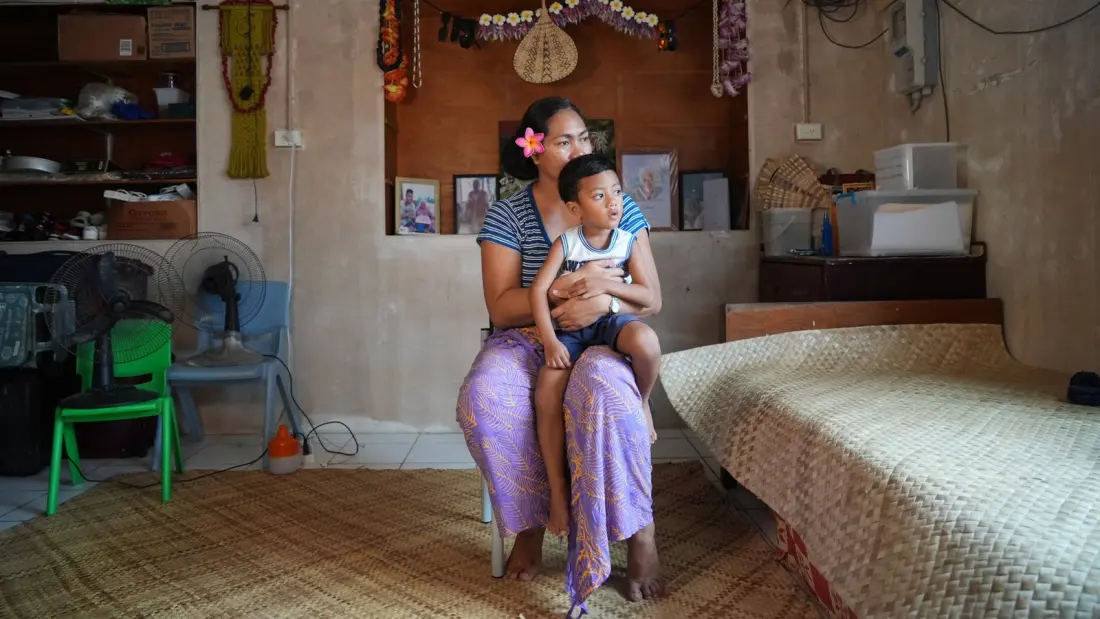
Rising seas and shifting weather aren't just reshaping coastlines in the Pacific — they're forcing an uncomfortable conversation about what happens when entire communities can no longer stay where they are. At the Pre-COP meeting in Nadi, Fiji, Iori Kato, the International Organization for Migration's regional director for Asia and the Pacific, made the case that human movement belongs at the centre of climate talks, not on the margins.
The numbers behind the talk are concrete. IOM's updated South Pacific Climate Mobility Action Plan calls for USD 19.1 million in 2026 alone, and USD 36.9 million across 2026–2028. How much has actually landed? Kato couldn't say — and that gap between requirements and real money is his central worry. As he put it, without actual financing, no action will be sustainable. His current push is to turn good ideas into "bankable solutions" that appeal to donors and investors alike.
Who should foot the bill? Kato resists a simple answer: relocation costs could sit under climate finance, development assistance, national budgets, humanitarian funds or private investment — likely a blend of all of them. For small Pacific states with tight fiscal room, spreading the load across instruments makes more sense than draining any single source. And he's pointed about fairness: Pacific communities contributed least to the emissions driving their displacement, so he wants the burden shared globally.
What makes this story resonate beyond policy circles is the part no budget line can capture. Moving a village can pay for houses and roads, but what about burial grounds, fishing waters, language and spiritual ties to land? Kato argues the Pacific's experience should shape the global debate on the "non-economic" side of loss and damage — things that resist translation into dollars but define people's identity. The Pacific Regional Framework for Climate Mobility, endorsed in 2023 with an implementation plan running to 2030, pushes a rights-based approach: people stay if staying is viable, or move with informed consent and real prospects at the destination. The programme behind it has just picked up the 2026 Human Security Award.
The stumbling block, as the source's own masthead notes, isn't ideas — it's delivery at scale. Declarations and guidelines exist; funded action doesn't, yet. Kato also flagged community resilience projects that give young Pacific Islanders reasons to build a life at home, and he's wary of any framing where preparing people to migrate lets big emitters off the hook on emissions cuts.
For travellers, this matters more than it might seem. The low-lying atolls and coastal communities that make the Pacific extraordinary are the very places these decisions will shape — and the region's own models, built on dignity and choice, may end up informing how the world handles climate displacement everywhere. The test now is whether COP31 in Antalya converts Pacific voices into funded, actionable commitments.
Islands Business