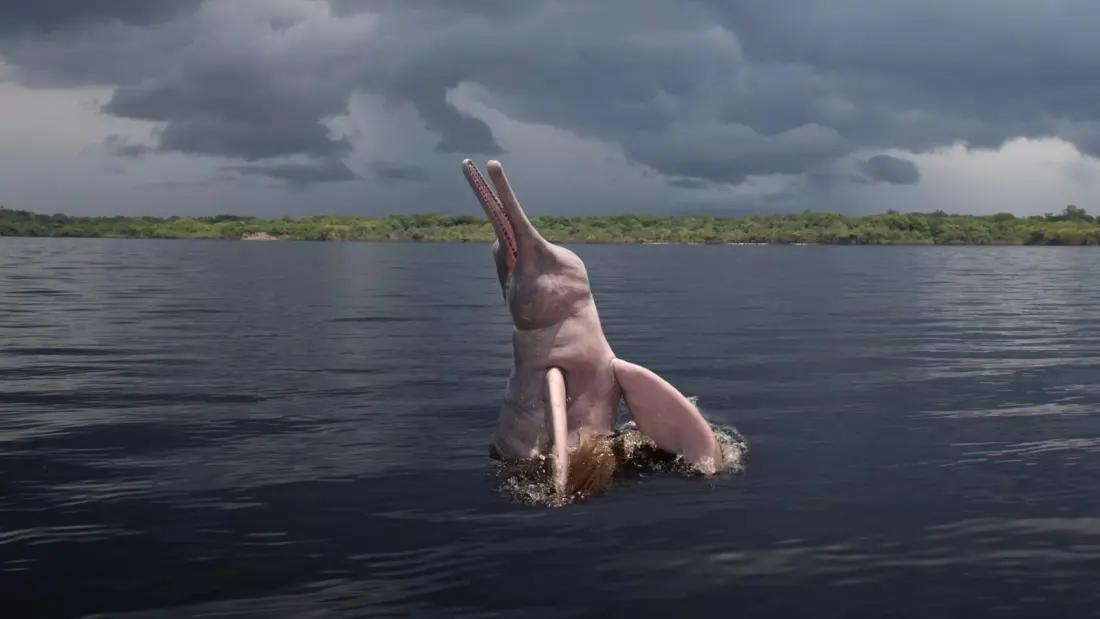
Bolivia's wildlife records just got a new entry: the Amazon river dolphin (Inia geoffrensis) has been documented in the country for the first time, in the Acre River basin of the northern department of Pando. Three separate sightings, logged between April 2025 and May 2026, were published in Neotropical Hydrobiology and Aquatic Conservation.
Until now, research in Bolivia concentrated on the Bolivian river dolphin (Inia boliviensis), which lives in the Mamoré and Iténez basins. The new records are different: the Acre River belongs to the Purús basin, which drains into the wider Amazon system, meaning these dolphins almost certainly travelled through connected waterways from Brazil. It's a neat illustration of how rivers ignore borders — and why conservation here needs Bolivia, Brazil and Peru working together.
The first sighting came about almost by accident. On 27 April 2025, during Cobija's first-ever participation in the global City Nature Challenge, two dolphins were spotted in the Acre River near the city's Junín neighbourhood. The team from the Shimanú Amazon Conservation Program grabbed photos and video, then started asking around. Local fishers, it turned out, already knew the animals well.
Between May and June 2026, researchers interviewed 34 fishers from the communities of San Pedro, Junín and Brisas del Acre — some with more than three decades on the river. They supplied extra footage and details on how often the dolphins appear. Two of the three official records came directly from them: one near Puerto Alto in November 2025, another from the Frontera neighbourhood in May 2026. The study was a joint effort by Shimanú, the Institute of Ecology at the Universidad Mayor de San Andrés, Juventud Proactiva de la Amazonia and the Wildlife Conservation Society's Bolivia programme.
Big questions remain. Nobody yet knows how many dolphins live in the Acre, whether they stay year-round, or how far they roam. Researchers also stress that protecting the river itself — riverside forest, water quality and the natural connections between waterways — will matter as much as counting animals. Dr Robert Wallace of the Wildlife Conservation Society called the find an important addition to Bolivia's biodiversity knowledge and a showcase for citizen science.
Why should a traveller care? Pando is one of Bolivia's least-visited corners — Amazonian, remote, and nothing like the salt flats or the high Andes. If you're drawn to wildlife tourism that's genuinely off the map, this is a region where your visit dollars support communities whose local knowledge just rewrote the science. Booking with local guides or conservation-focused operators in Cobija puts money behind the exact kind of community-led monitoring that made this discovery possible. And keep your camera ready: if casual observers and fishers can document a first national record, visitors with patience on the river might just add to the story.