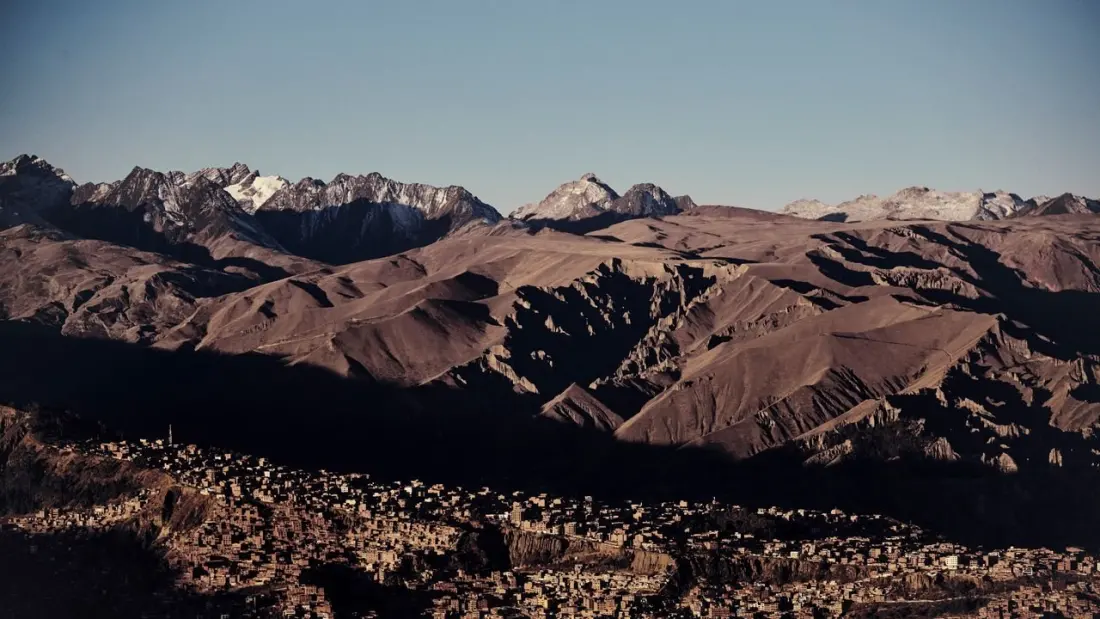
Bolivia isn't on many wine shoppers' lists, but in the valleys of the country's far southwest, vineyards turn out to be the best excuse to meet the people who define the place. A route through the altiplano between Potosí and the Chilean border threads together three very different worlds: colonial-era wineries, a mountain that once bankrolled an empire, and the surreal white expanse of the Salar de Uyuni.
The wine country sits in narrow green valleys near the old towns of Tarija and Tupiza, a landscape so reminiscent of Andalusia that early conquistadors reportedly felt homesick. In the Cinti Valley, along a former smugglers' route to Buenos Aires, San Pedro ranks among the region's oldest vineyards — founded in the 16th century — and now concentrates on singani, Bolivia's national grape brandy, long used as much for blessing the dead and sealing deals as for drinking. Nearby, Tierra Roja in Villa Abecia carries a poignant backstory: Cristian Villamor planted its Cabernet before dying suddenly in 2016 at 37, and his father Germán left the family greeting-card business to finish his son's work. The wines have since won prizes, with one vintage picked up by Lima's world-ranked restaurant Central. At family-run San Francisco de la Horca, fourth-generation owner Marcelo Vacaflores Ramírez pours Burgundy-style Negra Criolla red and Muscat of Alexandria white from bottles sealed with beeswax.
From the valleys, the road climbs to Potosí, founded in 1545 beneath Cerro Rico — the mountain whose silver made Spanish monarchs the richest in Europe and funded the world's first international currency, the piece of eight. The human cost was staggering: an estimated 9 million miners have died extracting some 66,000 tons of silver, and roughly 20,000 men still work the tunnels in barely changed conditions. Guided visits run deep into the mountain — bring gifts of coca leaves, cigarettes and cane alcohol for the workers — and stop at the shrine of El Tío, the devil-like Lord of the Mountain whom miners keep appeased with offerings.
The finale is the Salar de Uyuni, over 4,000 square miles of blinding white salt said to be visible from space. New upscale lodges have changed the game here: Explora's Jirira anchors a bespoke route called La Travesía, linking volcano ranges and further Bolivian lodges before crossing into Chile's Atacama desert. Along the way, atmospheric colonial estancias like Potosí's Hotel Museo Cayara — a Spanish house dating to 1557, stocked with armor and dueling pistols — make memorable stops.
This is a trip for travellers who like their luxury rough-edged and their history unvarnished: wine lovers with a sense of adventure, photographers chasing the salt flats, and anyone drawn to places where outlaw legends — Butch Cassidy and the Sundance Kid met their end near Tupiza — still feel recent. Few corners of South America pack this much variety into one drive.