Southern Africa hosted 36 visiting superyachts over 24 metres in 2025, up from just 14 in 2019. Better still, the average visiting yacht measured around 60 metres — nearly double the global average of 34. Cape Town, long known for wine routes and Table Mountain, is quietly becoming a serious player in the luxury cruising world.
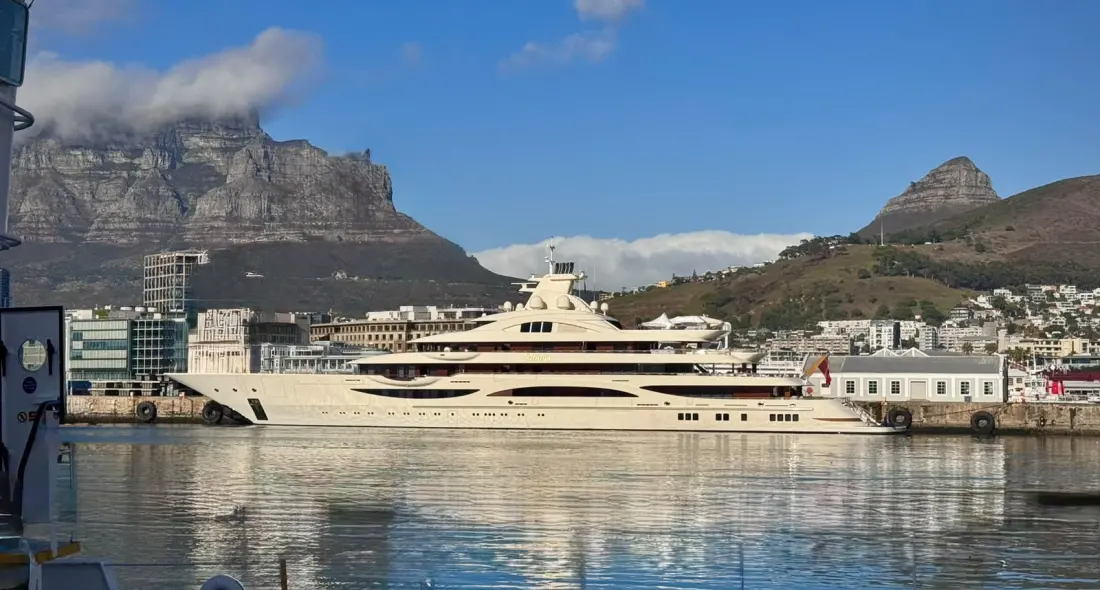
The catalyst is the V&A Waterfront's Quay 7 Superyacht Marina, opening in November with eight berths for vessels between 40 and 90 metres. Guests can step off their yacht straight into one of Africa's busiest tourism precincts, with Table Mountain behind them — a combination, says Veda Pretorius of Superyacht South Africa, that very few cities anywhere can match.
But the ambition stretches well beyond one marina. Speaking after the African Boating Conference, Pretorius framed Cape Town as the hub of a wider cruising network: the Seychelles and Mauritius for established island luxury, Zanzibar and Kenya for culture and marine life, Madagascar for the genuinely undiscovered, and KwaZulu-Natal, which is developing a superyacht precinct of its own. The pitch isn't to out-Mediterranean the Med, but to offer something distinctly African — wildlife, wild coastlines and adventure alongside high-end hospitality.
There's a solid economic argument too. A US$50 million yacht spending two weeks in port can inject anywhere from US$105,000 to US$330,000 into the local economy through fuel, engineering, provisioning, transport, restaurants and guides. The Western Cape's boating sector already supports roughly 4,000 direct jobs, with the wider ecosystem closer to 11,000 — and the provincial government wants to double that. Cape Town's catamaran-building industry is internationally respected, giving the city maritime expertise most emerging destinations lack.
Challenges remain. Pretorius is candid that the biggest hurdle is coordination rather than potential: marina infrastructure, refit facilities, customs and immigration processes, and consistent service standards all need work before captains will route itineraries here with confidence. South Africa's boatbuilders also face rising costs, skills shortages, Asian competition and US tariffs. Still, the industry has organised — the African Superyacht Working Group has evolved into Superyacht Africa, promoting the continent with a single voice.
For travellers, this matters even if you'll never charter a 60-metre yacht. Superyacht infrastructure tends to lift an entire destination: better marinas, more direct investment, trained crews, waterfront restaurants and improved coastal tourism generally. And Cape Town already offers one of the best value-vs-spectacle equations anywhere — world-class food, wine and scenery at prices far below Monaco or St Barts. If the continent positions itself as one interconnected cruising region, expect more routes, more boats and easier access to some of the world's least-crowded waters, from the Cape peninsula to the Indian Ocean islands. The new frontier in luxury cruising may well run down the African coast.