A horned sea cucumber nicknamed 'Loki' heads a haul of 57 newly identified marine species from Argentina's submarine canyons, announced after a two-week Species Discovery Workshop in Buenos Aires. Twenty taxonomists from Latin America and Europe worked at Universidad Maimónides from 13-24 July 2026, confirming five entirely new genera alongside the species finds.
Most of the material came from the Schmidt Ocean Institute's 2025 Underwater Oases of the Mar del Plata Canyon expedition, where the remotely operated vehicle SuBastian, launched from research vessel Falkor (too), collected specimens from depths beyond recreational reach. Researchers also studied historical samples from earlier CONICET expeditions.
The breakdown reads like a roll call of deep-sea oddities: 20 new copepod species, 22 echinoderms including sea cucumbers and crinoids, 14 cnidarians such as octocorals, sea pens and stony corals, and a single tusk-shell mollusc. The standout is Peniagone sp., dubbed 'Loki the Sea Cucumber' for horn-like appendages reminiscent of the Norse god, filmed at a depth of 2,577 metres. It's one of up to ten new sea cucumber species identified during the fortnight.
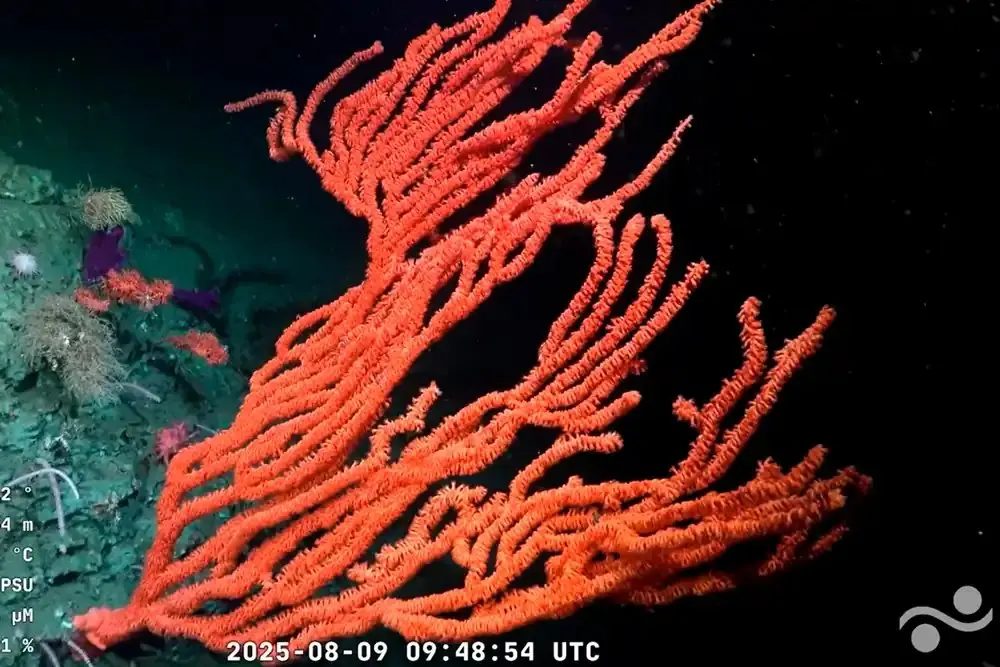
Some numbers suggest how little we know about these waters. Taxonomists examined just ten per cent of the collected copepod samples, yet every single specimen they looked at belonged to a species new to science. The coral finds are even more significant in classification terms: two potential new genera and a potential new family, pending genetic analysis, including the sea pen Pseudumbellula sp. and an orange-red octocoral, Orstomisis sp.
The workshop was led by the Nippon Foundation-Nekton Ocean Census in partnership with the Schmidt Ocean Institute, CONICET and the Museo Argentino de Ciencias Naturales, where the specimens will now be housed. Confirmed new species will join the open-access Ocean Census NOVA database.
For travellers, this is a reminder that one of the planet's least explored ecosystems sits just off Argentina's Atlantic coast. The 2025 expedition caught the public's attention with live-streamed footage of the canyon's deep-sea life, and while you can't dive 2,500 metres yourself, the Museo Argentino de Ciencias Naturales in Buenos Aires is the natural place to connect with this science. Argentina's Patagonian coast already draws wildlife watchers for southern right whales, orcas and penguin colonies, and the Mar del Plata region adds a quieter story about what lies far below the surface.