
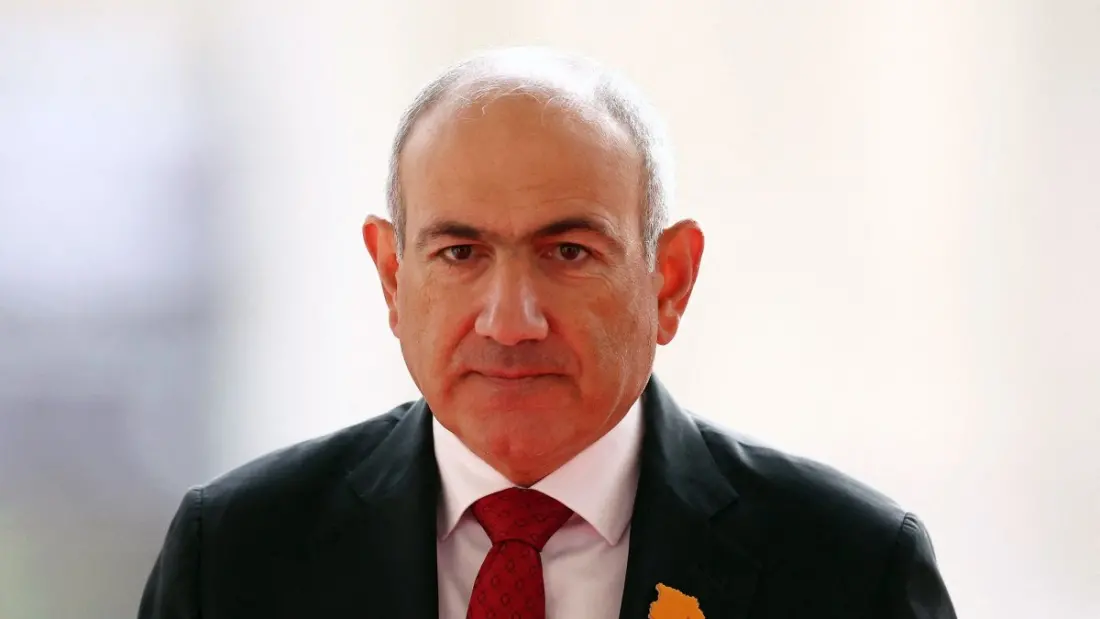
Armenian Prime Minister Nikol Pashinyan said this week that his country would raise no objections if Russia decided to shut down its long-standing military base on Armenian soil. Speaking at a news conference, he argued bluntly that the facility, Russia's 102nd base in the northwestern city of Gyumri, "adds nothing to Armenia's security" — a striking statement about a deployment that a 2010 agreement was supposed to keep running until 2044, with roughly 3,000 Russian troops stationed there.
The comments land amid a sharp diplomatic cooling between the two longtime allies. Russian President Vladimir Putin had already signalled flexibility earlier this month, saying Moscow could pull the base out "even tomorrow" if Yerevan no longer wanted a Russian military presence. On the same day as Pashinyan's remarks, Russian Security Council Secretary Sergei Shoigu accused Armenia of trying to cut ties with Moscow and move closer to NATO.
The backdrop matters: Armenia has frozen its participation in the Russian-led CSTO alliance since 2024, is pursuing possible EU membership, and has accused Russia of failing to protect it in confrontations with neighbouring Azerbaijan. Moscow has responded with import bans on Armenian produce — fruit, vegetables, flowers and beverages — while Brussels has offered a trade deal that would make nearly 80 percent of Armenian exports to the EU tariff-free. Russia still supplies most of Armenia's energy and remains a major trading partner, so the pivot is gradual rather than absolute.
So why should holiday travellers care? Armenia has become one of the South Caucasus' most rewarding and affordable destinations — Yerevan's café culture, the medieval monasteries of Geghard and Haghpat, and the wine country around Areni have all drawn growing numbers of Western visitors. The country is actively aligning itself with European institutions, which in practical terms points toward easier visas, more flights and deeper tourism investment over the coming years. Gyumri, the city where the base sits, is itself a worthwhile stop: Armenia's second city, known for its distinctive 19th-century black-and-orange stone architecture, its food scene and its reputation as the country's cultural capital.
For now, the base dispute is political theatre rather than anything that affects visitors on the ground — tourism continues to run normally, and neither side is talking about imminent withdrawal. But the direction of travel is clear: Armenia is slowly reorienting toward Europe, and travellers who visit in the next few years will see a country mid-transition, caught between old Soviet-era infrastructure and a fast-modernising capital. Anyone considering a Caucasus trip that strings together Georgia, Armenia and Azerbaijan should keep an eye on the Armenia–Azerbaijan situation, which remains the region's real flashpoint, and note that overland borders between Armenia and both Türkiye and Azerbaijan remain closed.
Daily Sabah Travel