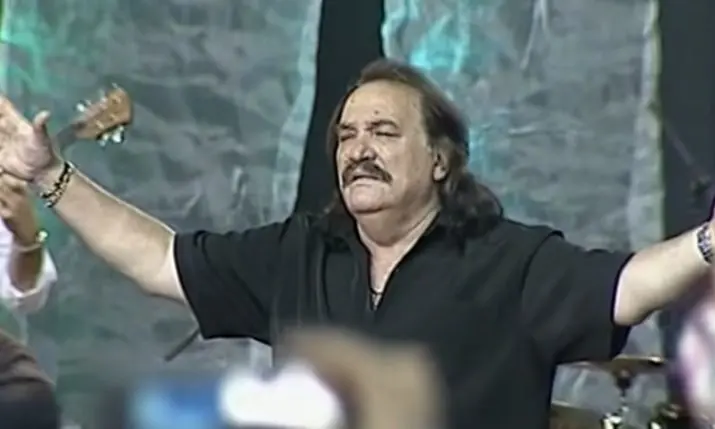
Poljud Stadium, the iconic home of Hajduk Split, will open its doors for a public farewell to Mate Mišo Kovač, one of the most beloved voices in Croatian music, who died in Split on Saturday 31 October 2026 at the age of 85.
The farewell takes place on Tuesday, 3 November, starting at 16:00, and entry is free. It has been organised jointly by Hajduk Split, the club's famous supporters' group Torcida, and the Croatian Musicians' Union — a fitting combination for a singer whose career and club loyalty were woven together in the public mind.
Kovač's story starts in the early 1960s, when he took up music as a teenager and cut his first record in 1964. His breakthrough arrived in 1969 with 'Više se nećeš vratiti', a hit that shifted close to 190,000 copies — huge numbers for the era. Through the 1970s and 1980s he became one of the biggest recording stars in the former Yugoslavia, with songs that remain fixtures of family gatherings and café playlists across the region. Titles like 'Proplakat će zora', 'Ostala si uvijek ista', 'Ako me ostaviš', 'Svi pjevaju, ja ne čujem', 'Poljubi zemlju' and 'Ti si pjesma moje duše' are the ones most people would still recognise instantly. Across more than six decades he sold millions of records, and in 2012 he received the Porin Lifetime Achievement Award, among Croatia's highest music honours.
But in Split, he was more than a singer. Kovač was a lifelong, famously passionate Hajduk supporter, and the club's decision to host his send-off at Poljud reflects how closely his identity was tied to the white shirts. For visitors in the city this week, it's also a glimpse of how football, music and civic identity blend in Dalmatia's largest city — Torcida, founded in 1950, is one of the oldest organised supporter groups in Europe, and Poljud's swooping concrete canopy is a landmark in its own right.
Why should a traveller care? If you're in Split on 3 November, expect the area around Poljud to be busy from mid-afternoon as crowds gather for the 16:00 start, and plan city movements accordingly. Even outside this event, Kovač's music is a genuine cultural key to Croatia and the wider region — hear a few of his songs and you'll understand a lot about the nostalgia and warmth Dalmatians bring to their evenings. And for football fans, Poljud belongs on any Split itinerary anyway, whether for a Hajduk match with its electric matchday atmosphere or simply to see one of the more striking stadiums in Europe.
A public farewell at a football ground says a lot about a city. In Split's case, it says that its biggest sporting home belongs as much to its cultural heroes as to its players — and that Mišo Kovač earned both kinds of loyalty.