
The Buriganga River, which flows past the southern edge of Bangladesh's capital Dhaka, is about as hostile to aquatic life as a river gets. Tanneries, textile and dyeing plants, battery factories, metal processors and pharmaceutical companies discharge untreated waste into it. Studies have found chromium, lead, mercury, arsenic and other heavy metals in the water and sediment, and in the dry season oxygen levels in places drop so low that native fish have largely vanished.
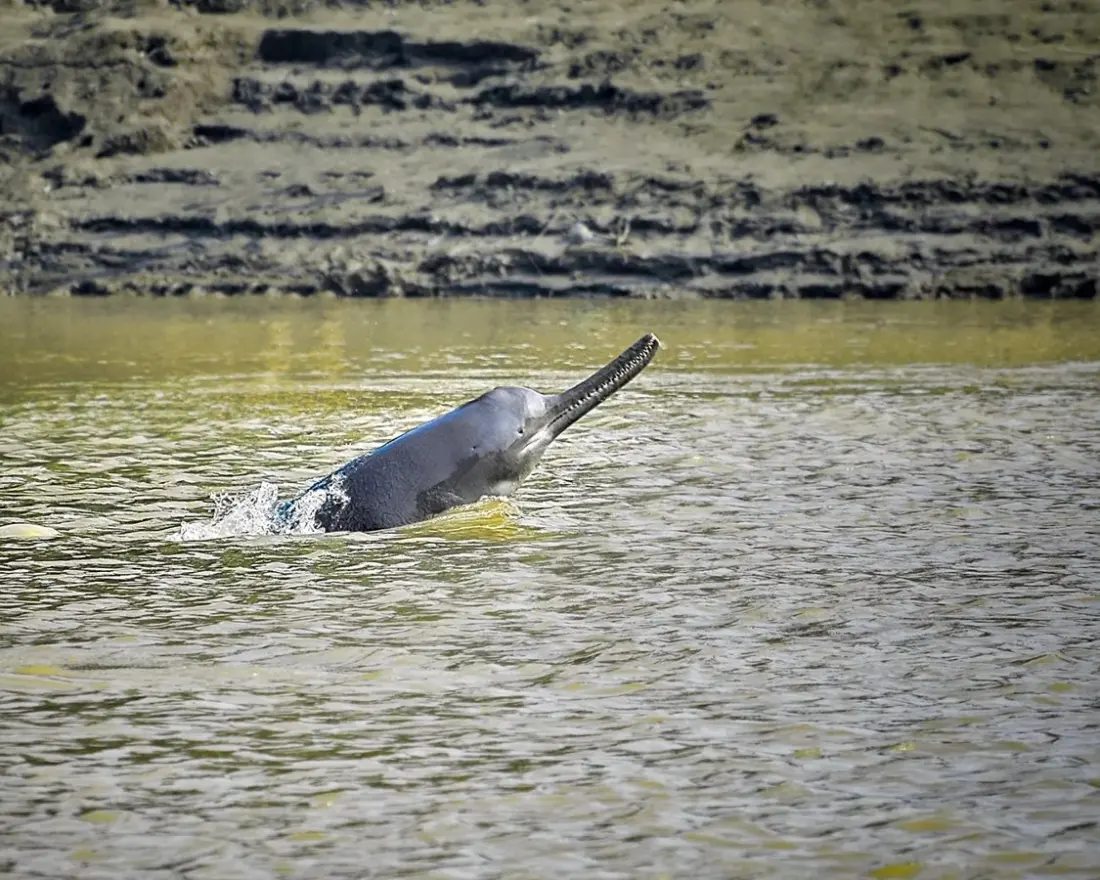
Against that backdrop, researchers have documented something remarkable: a small group of endangered Ganges river dolphins is still living there. A year-long survey, run between September 2023 and August 2024 along a 27-kilometre stretch of the river and published in the Journal of Asia-Pacific Biodiversity, counted roughly 20 dolphins. They were spotted in 10 of the 12 months, with peak numbers in December and the winter months, and groups averaged more than four individuals.
The most hopeful detail: calves accounted for nearly 16% of sightings, which suggests the population is still breeding despite the conditions. Scientists think an unlikely food web may explain their survival. The Buriganga is now full of suckermouth catfish, an invasive species that tolerates filthy, oxygen-poor water — and that can gulp air at the surface. Zoology professor Mohammad Abdul Aziz of Jahangirnagar University believes the dolphins are hunting these catfish.
Nobody is calling the Buriganga a success story. Researchers stress that pollution remains the top threat, followed by heavy boat traffic. The dolphins also aren't confined to the river: they move between the Buriganga and the Dhaleshwari and Meghna rivers downstream, with many clustered around the Bosila area. Sightings in nearby rivers such as the Turag have already disappeared, a warning of what could happen here too.
The bigger picture offers some grounds for optimism. A 2024–2025 survey by Bangladesh's Forest Department and WCS Bangladesh counted 2,307 Ganges river dolphins across roughly 4,900 km of 45 rivers, identifying 25 national hotspots. Bangladesh was also ahead of the curve in 2012, declaring three wildlife sanctuaries in the Sundarbans for Ganges river and Irrawaddy dolphins. What conservationists want now is action on industrial discharge, illegal gill nets and boat traffic so populations like the Buriganga's stand a real chance.
For travellers, this is a good reason to look beyond the usual wildlife circuit. Most visitors hoping to see Ganges river dolphins head for the Sundarbans, the vast mangrove delta shared with India, where boat safaris offer a far better shot at a sighting than a day trip to the Buriganga. But the story reframes Dhaka's river: even a waterway written off as dead can hold surprises, and the scientists behind the survey argue its dolphins deserve protecting, not just admiring. If you're in Dhaka anyway, responsible river tours and the nearby Bosila stretch occasionally offer glimpses — though patience and a very thick skin for the smell are required.