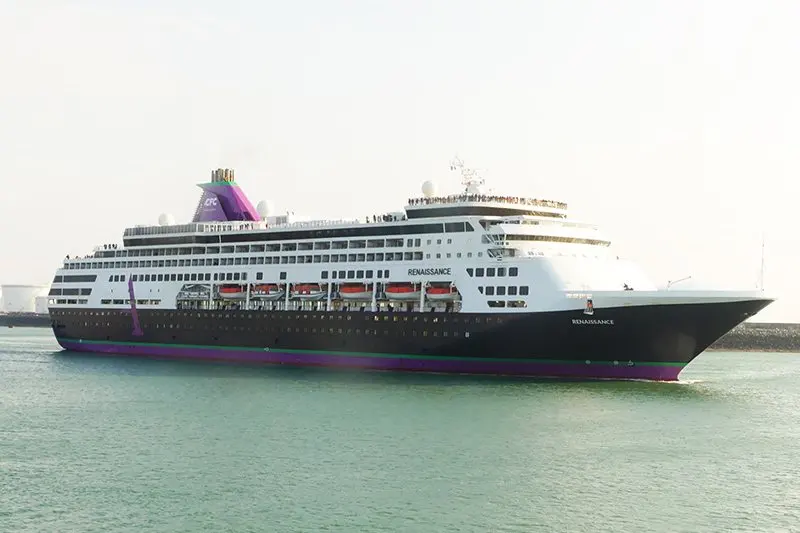
Ambassador Cruise Line is plugging its ships into the grid. The UK-based operator has signed a contract with Italian firm EnerMoves SRL to fit a shore power connection system aboard the Renaissance, letting the ship switch off its engines in port and draw electricity from the quay instead. Work has already begun, with final installation and commissioning timed to the ship's scheduled drydock in October and November 2027.
It will not stop there. Ambassador has pencilled in two further contracts with EnerMoves: a matching system for the Ambiance during its drydock in November and December 2027, and one for the Ambition in autumn 2028. Once all three are done, the line's entire fleet will be able to hook up to shore-based electricity.
Why does EnerMoves get the job? Ambassador highlighted the company's handling of the tricky part of any retrofit: synchronising a ship's onboard electrical systems with a shore supply and managing a clean handover of power between the two. Getting that interface wrong on an existing vessel is not a small engineering problem, and the line acknowledges that retrofitting older ships in this way is genuinely challenging.
The move fits into a broader pattern at Ambassador. Its ships already carry advanced food-waste and sewage treatment systems, plus IMO Tier III exhaust-emission control technology (SCR), which cuts nitrogen oxide emissions. Shore power is the next layer: with engines off alongside, a port call produces far less local air pollution and noise.
There is also an argument about sustainability economics here. Ambassador frames the retrofit programme as proof that existing ships can be brought up to modern environmental standards without commissioning brand-new vessels — a resource-intensive process with a heavy construction footprint. Refitting what you already have is, in its own way, the greener option.
For cruise passengers, the practical takeaway is modest but real. If you are sailing with Ambassador from 2027 onwards, your ship will increasingly sit quietly in port rather than idling its engines — cleaner air in harbour towns and a calmer deck for anyone staying aboard. Shore power only pays off where ports offer the connection, so the benefit will roll out port by port, but the industry-wide direction of travel is clear, and Ambassador is positioning its small, older fleet as evidence that second-hand ships can keep pace with newer, greener tonnage.
For the line itself, the three-ship programme is a statement of intent: no newbuilds, just a steady series of drydock upgrades that keep its vessels compliant and marketable as environmental rules tighten across Europe and beyond.