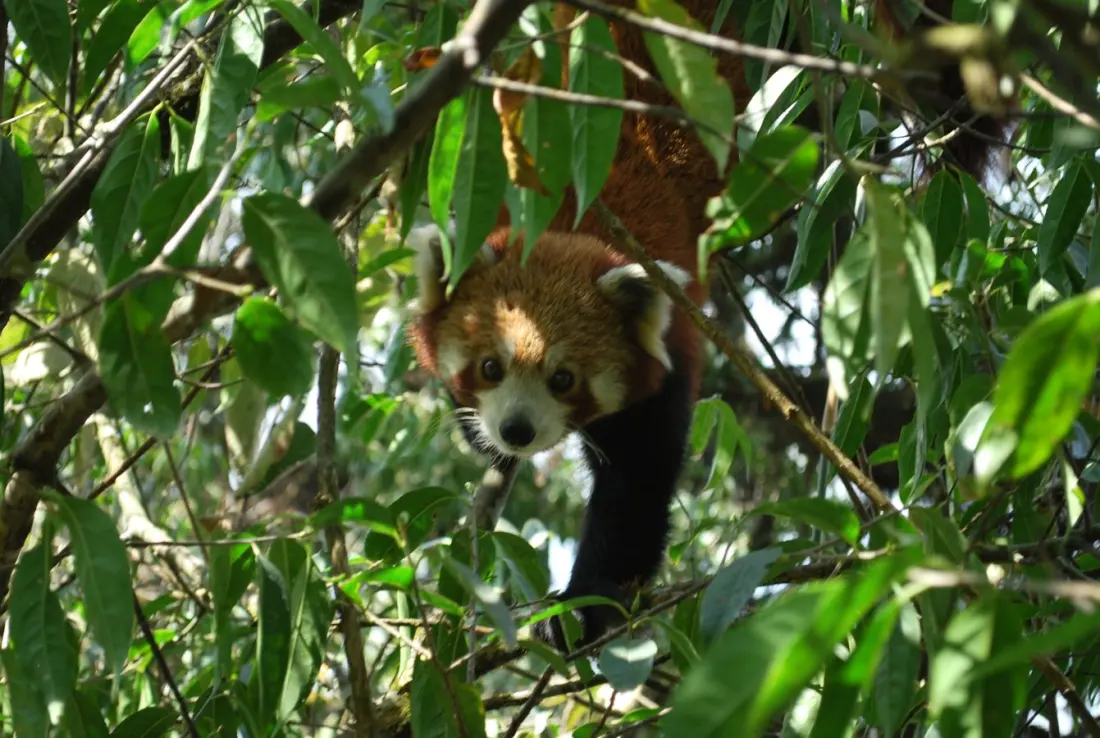
The red panda beat its famous namesake to science by half a century. Western researchers described it back in 1825, naming it Ailurus fulgens; the giant panda didn't get its scientific classification until the 1870s. And it turns out the word 'panda' itself is Nepali — from 'nigalya panja', or 'bamboo paw', in an eastern Nepali dialect. Even so, the red panda remains one of the least understood mammals in the Himalayas.
Nepal holds an estimated 1,000 red pandas, mostly in the cloud forests of the east, where a thin bamboo called nigalo grows at altitudes of 2,400m to 3,900m. Though classified as a carnivore, the animal lives almost entirely on bamboo — scientists have catalogued 72 species it eats. Populations have now also been confirmed in Bhojpur and as far west as Dolpo, though western Nepal remains a research blind spot.
The reason this small mammal matters was the focus of the first Red Panda Symposium, held in Kathmandu earlier this month, organised by the Red Panda Network with Rotterdam Zoo, the IUCN and the AZA SAFE Red Panda Program. The red panda is an indicator species: where it thrives, the forest ecosystem is healthy. Protecting it means protecting the forests that rural communities from Taplejung to Dolpo also depend on for their livelihoods.
The threats are piling up. Habitat fragmentation from new infrastructure cuts panda populations off from each other, which conservationists warn could erode genetic diversity. Poaching for fur continues, and feral dogs transmit rabies — a problem being tackled head-on with the vaccination of more than 10,000 free-ranging community dogs in rural Nepal. Disease, forest loss and wildlife trade are increasingly treated as one interconnected problem rather than three separate ones.
The research itself is getting more sophisticated. A centre in Taplejung studies the animals' behaviour, and faecal-sample analysis has underpinned the population estimates. But funding is tightening globally, and the symposium's message was that conservation needs continuity — patrols, monitoring and community awareness cannot be stop-start efforts. WWF Nepal is also working across borders with India and China, since red panda habitat ignores national boundaries.
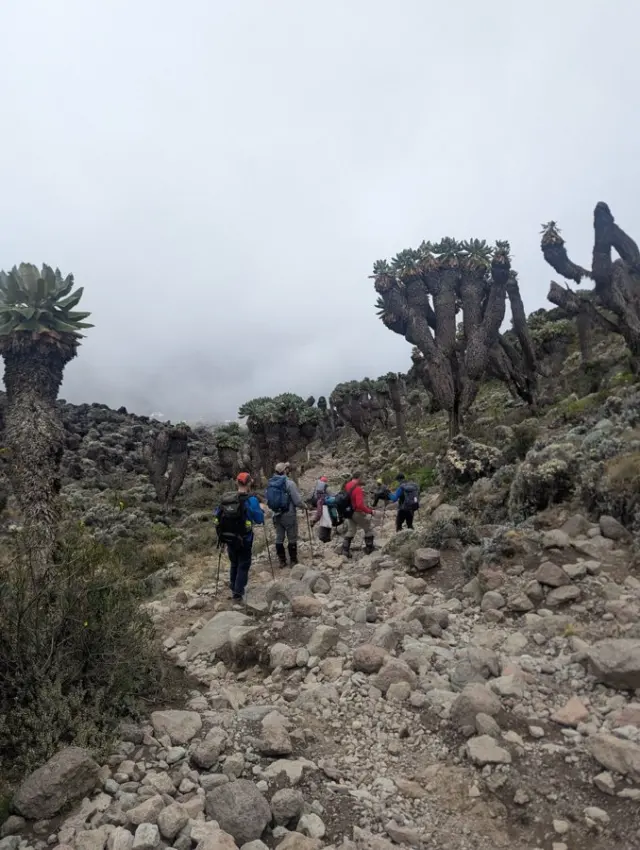
For travellers, the takeaway is that Nepal's red panda country doubles as some of its most atmospheric trekking terrain. Eastern hill towns like Taplejung sit on routes toward the Kanchenjunga region, and community-forest initiatives mean ecotourism dollars can directly support the people patrolling these forests. You'd be extremely lucky to spot a red panda — they're shy, canopy-dwelling and elusive — but walking the bamboo belt with a local guide puts you inside one of the world's great little-known ecosystems. Conservationists stress that awareness around small mammals lags far behind the attention given to tigers and elephants; visitors who understand what's at stake are part of the solution.
The red panda's future, as those at the symposium made clear, is tied to the forests and the people who live in them. Give communities a stake, and the bamboo forests keep their most charming resident.