A fire that tore through the hills above the Dalmatian coast in August has now claimed six lives, and more than two months later no one has said how it started — or who, if anyone, is to blame.
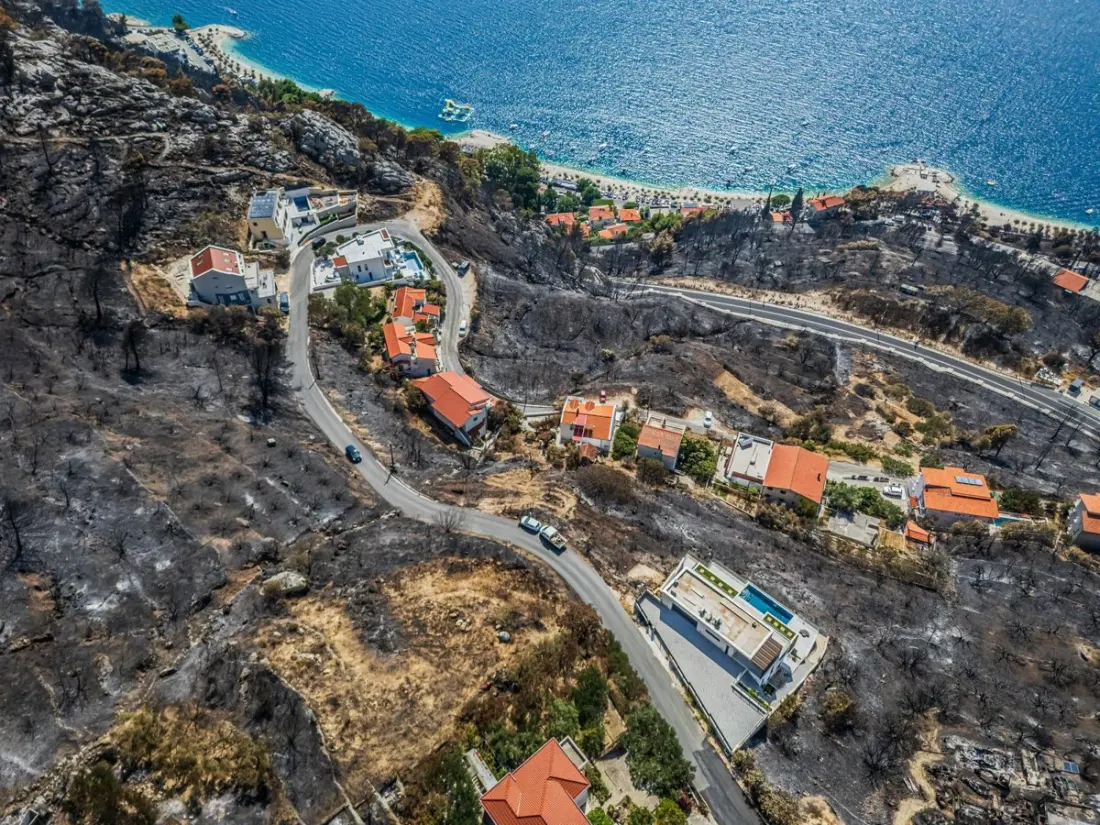
The blaze broke out on the evening of 13 August around 20:00 in a densely forested area near the road at Lokva Rogoznica, just north of Omiš. Pushed by strong winds, it spread fast, burning along a corridor roughly 23 kilometres long and up to 1.5 kilometres wide. Around 1,000 hectares of pine forest, grass and Dalmatian shrubland went up, along with houses, business premises, plantations and vehicles — damage running into the millions of euros. Several dozen people were injured.
The death toll has climbed steadily since. Dragana Antešević, a 34-year-old seasonal worker from Bosnia and Herzegovina, died during the fire itself. She was followed by retired firefighter Drago Lelas, 79, Katica Nikolić, 58, Ivana Kovačić, 41, a 70-year-old man treated at KBC Split, and — just days before this report — a 66-year-old woman who had been in hospital with serious injuries since August.
So far, the police and the County State Attorney's Office in Split have released no findings. The investigation began immediately: two days after the fire, the State Attorney's Office confirmed that a crime scene investigation had been carried out at the point of origin, involving police, a fire and explosion inspector, and chemical-physical experts from the "Ivan Vučetić" Centre. Samples were taken, surveillance footage from across the burned area was ordered seized, and the terrain was surveyed and photographed. None of those results have been made public, and no suspects have been named or arrests announced.
There's a second unresolved question hanging over the disaster: the warning system. Croatia's SRUUK alert system — introduced specifically so people get timely warnings during fires, floods and earthquakes — was never activated on the night of the fire. Whether all available mechanisms for alerting residents and visitors were used remains unanswered, and the victims' families, along with the public, are still waiting for an explanation.
Why does this matter to travellers? Omiš and the surrounding Riviera are a summer staple for European holidaymakers — cetina canyon rafting, island beaches, packed August occupancy. This story is a reminder of how quickly wildfire can move through coastal Dalmatia in high summer, and of real gaps in the public warning infrastructure. If you're travelling to Croatia in fire season, it's worth signing up for local alerts or your embassy's travel notifications, keeping an eye on regional fire risk maps, and knowing your accommodation's evacuation routes — don't assume a national alert will reach your phone automatically.
For the people who live and work along this stretch of coast, meanwhile, the wait for answers continues — with every new victim, the question of responsibility grows heavier.
Reported by Total Croatia.