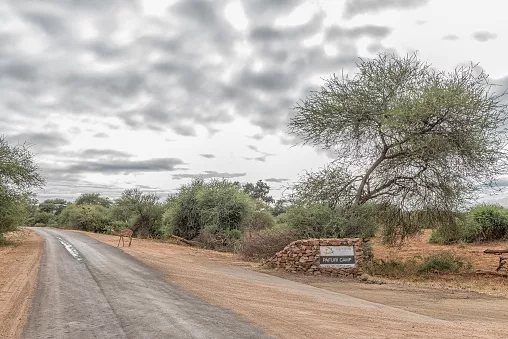
Most visitors to Kruger National Park head straight for the southern savannahs and their Big Five promises. But at the very top of the park, where South Africa bumps into Mozambique and Zimbabwe, lies Pafuri — a greener, stranger and far quieter corner that rewards the long drive.
Pafuri is defined by water. The Luvuvhu River curls through riverine forest before joining the Limpopo near the park's northern boundary, and together the two rivers sustain floodplains, mopane woodland and dense green corridors that look nothing like the open grasslands further south. The signature sights are botanical: pale yellow-green fever trees lining the riverbanks, and enormous baobabs standing over the drier ground.
Birders already rank this among South Africa's best spots. The species list is genuinely exciting — Pel's fishing owl, African finfoot, Narina trogon, trumpeter hornbill, broad-billed roller and crested guineafowl all appear here. The Pafuri Picnic Site, shaded along the Luvuvhu, is a standout for birding, and the S63 and S64 scenic drives along the river offer more of the same from the comfort of your car. Summer (November to March) brings migratory species, though birding holds up year-round.
There's large game too — elephant, buffalo, leopard and antelope — with nyala especially at home in the riverine forest, plus hippos and crocodiles in the rivers. History adds another layer. Crooks' Corner, where the three countries converge, earned its name from hunters and smugglers who once used the remote tri-border to slip past the authorities. Nearby, the Thulamela archaeological site preserves a late Iron Age settlement that traded gold and ivory along routes reaching the Indian Ocean; guided visits are arranged through SANParks and should be booked ahead.
Pafuri also carries a powerful human story. The Makuleke community was forcibly removed from this land in 1969, won it back through a land claim in 1998, and now co-manages the area with SANParks as the Makuleke Contractual Park — a rare model of community-led conservation inside a national park.
Why bother with the long haul north? Because Pafuri shows you a Kruger most people never see: green, secretive, bird-rich and steeped in history. Access is via Pafuri Gate or Punda Maria Gate, and it's a serious drive from the southern entrances — pair it with a stay at Punda Maria rest camp or one of the area's safari lodges rather than trying to day-trip it. Self-driving is easy on the public routes, but check road conditions and gate times with SANParks before setting off.
For birders, photographers tired of the same leopard-in-a-tree shot, and anyone drawn to places with stories, Pafuri is well worth the journey.
Story via Getaway South Africa.