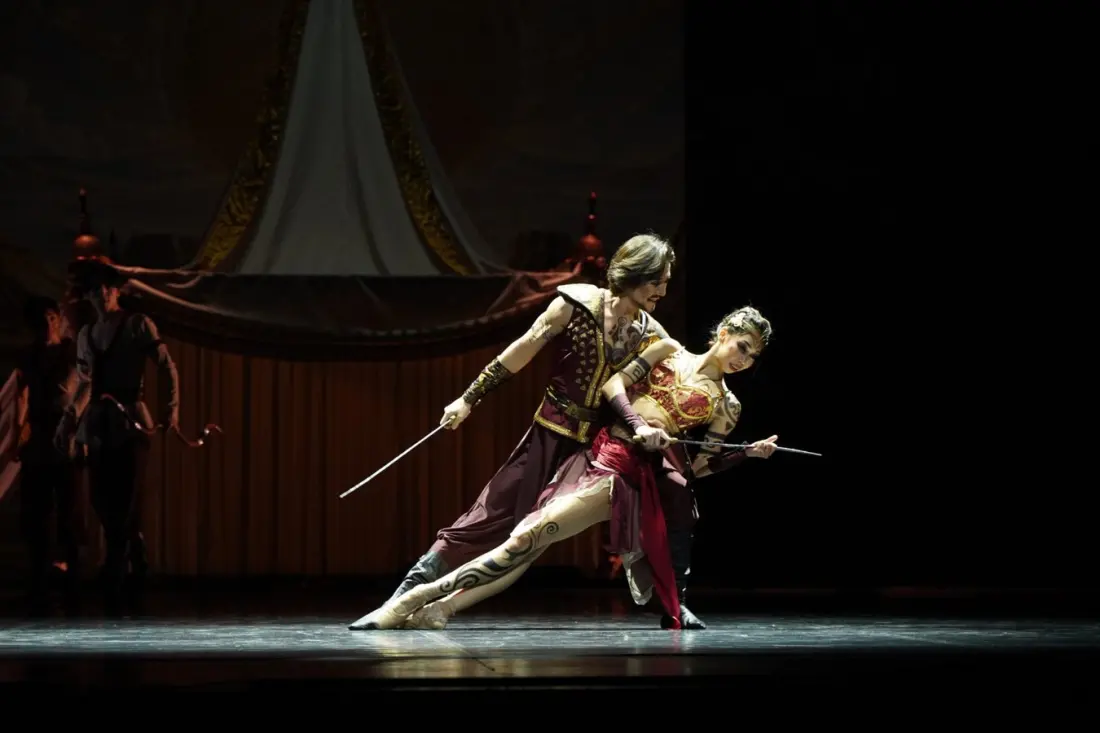
Kazakhstan's national ballet scene just hit a milestone. On Nov. 26, Astana Opera premiered "Tomyris," a two-act ballet telling the story of the ancient queen of the Massagetae who defeated Persian King Cyrus the Great in the sixth century B.C. A second performance followed the next night, and the production doubles as a celebration of the 35th anniversary of Kazakhstan's independence.
What makes this one different from earlier national ballets at the theatre is who made it. Past productions often brought in foreign choreographers, but "Tomyris" was created entirely in-house: choreography by Astana Opera's own Sultanbek Gumar, music by Khamit Shangaliyev and a libretto by Yermek Amanshayev. Gumar and Shangaliyev worked almost non-stop in the studio together, with the composer translating the choreographer's movements directly into score.
The story itself is epic and tragic. Tomyris sends her son Spargapises to defend their homeland against the Persian invasion; he is captured and killed, and she rallies her people for a decisive revenge battle. There's a love thread too, through Arnava, leader of the Amazons and Spargapises' beloved. Librettist Amanshayev draws a bold comparison: he argues Tomyris' victory over Cyrus stalled Persian ambitions toward Greece for nearly half a century, placing her triumph in the same league as Thermopylae.
Musically, the team ditched a purely symphonic approach and folded in traditional Kazakh instruments — the dombra, sazsyrnai and sybyzgy — to evoke the sound world of the Saka period. Costumes by Dariga Taishykova aim to show Tomyris as more than a warrior: a mother, an inspiration and a defender of her people. The title role alternates between Sofiya Adilkhanova and Torgyn Leben, with two casts also sharing the roles of Spargapises, Cyrus and Arnava.
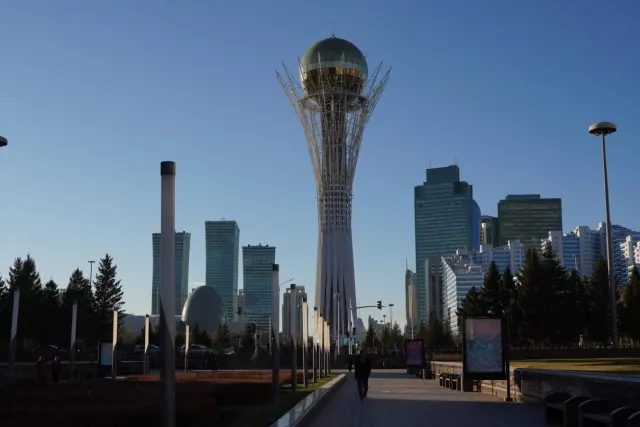
For visitors, this is a good reason to put an evening at Astana Opera on the itinerary. The building is one of the city's landmarks, ticket prices are far below what you'd pay for a comparable evening in Western Europe, and the programming increasingly showcases Kazakh stories told by Kazakh artists. Catching "Tomyris" means seeing a major new national work, likely with a young, hungry cast, in a purpose-built opera house that anchors the capital's cultural quarter. Pair it with exploring Astana's futuristic architecture and the National Museum next door for a full steppe-history day.
Composer Shangaliyev put it plainly: a ballet only proves itself if it stays on stage for decades. If "Tomyris" endures, travellers catching it now will be seeing the start of something — and it's a rare chance to watch a country's creative scene step fully into its own voice.
Story reported by The Astana Times.