A rare bit of fare relief could be coming for premium travellers flying between Australia and Europe via the Gulf. American Express Global Business Travel's annual Air Monitor 2027 forecast predicts business class fares on the Australia-Middle East corridor could fall by as much as 7.2 per cent next year — or rise by up to 1.8 per cent, depending on how events unfold.
Either way, Australia stands out as one of the few markets in the report where front-of-cabin prices might actually drop, against a global trend of continued (if slower) increases.
The reason is simple: capacity. Qatar Airways, Etihad and Emirates are rebuilding their Australian schedules through Doha, Abu Dhabi and Dubai, but demand hasn't fully bounced back. IATA figures show Middle East airlines carried 30 per cent fewer passengers, measured in passenger kilometres, between April and June 2026, with regional conflict damping demand. That leaves three big carriers chasing the same premium passengers — and competition tends to favour the buyer.
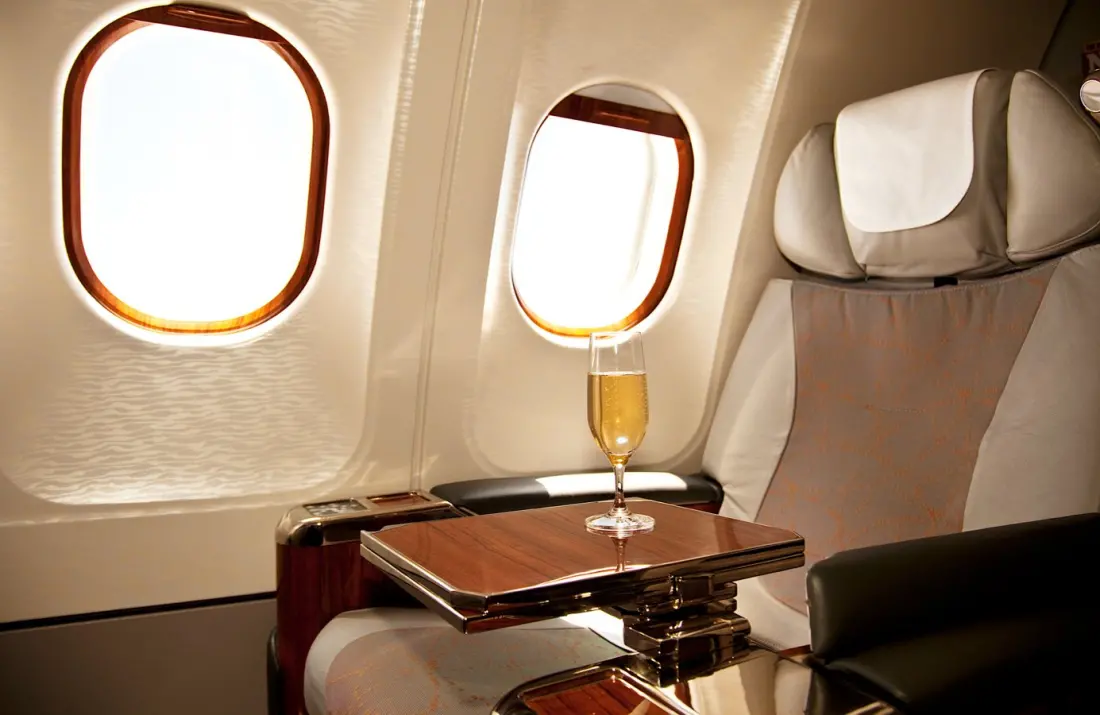
For anyone booking a lie-flat seat to Europe or the UK via a Gulf hub, the timing looks promising, particularly as Australia's Department of Foreign Affairs has recently lowered travel warnings for Qatar and the UAE.
The good news stops at the domestic terminal, though. Economy fares within Australia are forecast to rise 3.8 to 4.8 per cent in 2027, so local flying keeps getting pricier even as long-haul premium softens.
Across the rest of Asia-Pacific, the direction is up. Business class between Asia and North America is tipped to climb 3.6 to 4.5 per cent, with premium economy up 2.6 to 3.3 per cent. Asia-Europe routes look steadier: business class forecast up 2.2 to 2.8 per cent, economy barely moving. India is flagged as a market to watch — strong growth plus Air India Group and IndiGo controlling over 90 per cent of the domestic sector could push fares up faster than the regional average.
Amex GBT points to three forces shaping the year: fuel-price spikes easing while airline surcharges stay high, ancillary fees growing faster than ticket revenue as carriers unbundle more services, and the ongoing premiumisation push as airlines pour money into business and premium economy cabins. In other words, the sticker price is only part of what you'll pay.
Because the outlook hinges on geopolitics and inflation, the forecast gives ranges rather than single numbers — the lower end applies if global inflation stays near the IMF's projected 4.1 per cent for 2027, the upper end if it runs hotter.
For leisure travellers, the practical takeaway is this: if you've been eyeing a premium cabin to Europe via Doha, Abu Dhabi or Dubai, 2027 could be the year to book, while domestic Australian flights are likelier to keep climbing. Just keep an eye on add-on fees, which are rising faster than base fares everywhere.