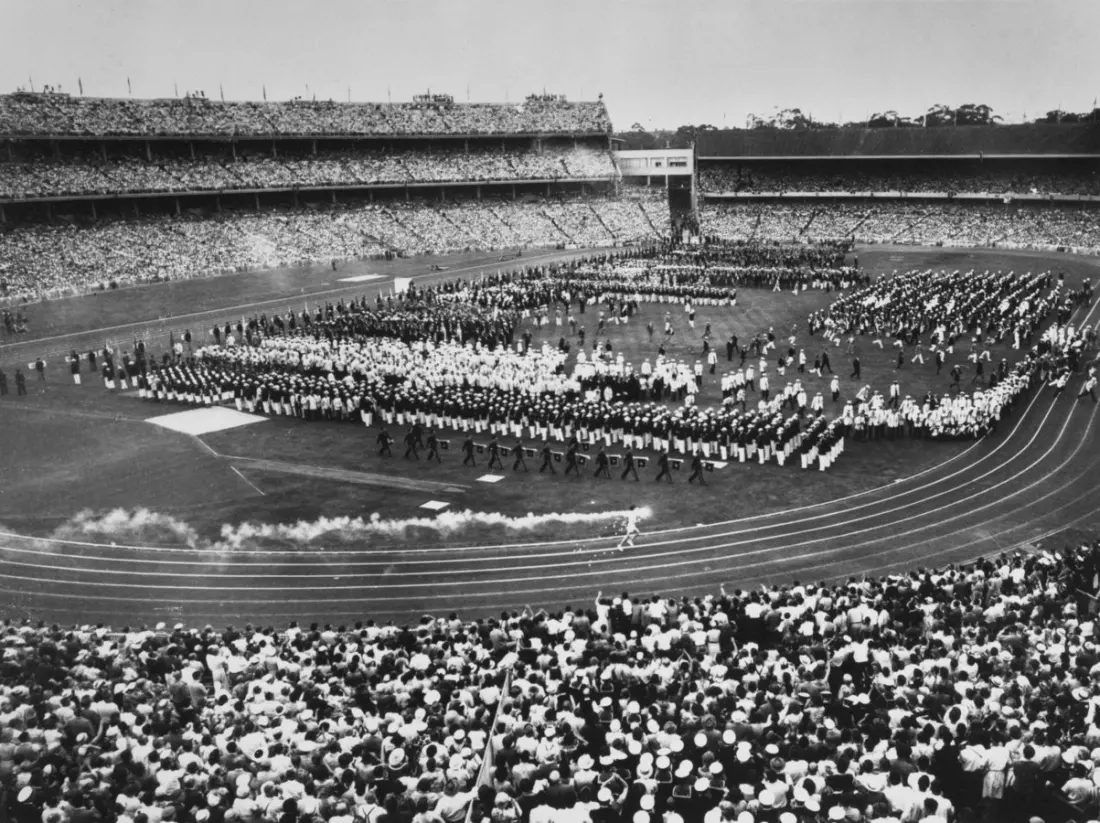
On 22 November 1956, a 19-year-old named Ron Clarke jogged into the MCG carrying the Olympic torch, kicking off the first Games ever held in the Southern Hemisphere. The flame had covered more than 20,000km from Olympia, hopping through Asia before landing in Darwin, then travelling by RAAF bomber to Cairns, where roughly 3,000 runners carried it down the east coast. Not everything went smoothly: in Sydney, student Barry Larkin pranked a crowd of 30,000 and the Lord Mayor with a counterfeit torch built from a chair leg, a plum pudding tin and a pair of burning underpants.
The Melbourne Games earned the nickname 'Friendly Games' for their laid-back atmosphere and local hospitality. They also started a tradition that survives today: at the closing ceremony, athletes from all nations walked in together as one crowd rather than marching by country. But the year wasn't without friction. Australia's tough six-month horse quarantine forced the equestrian events to Stockholm in June 1956, and geopolitics kept several teams home — Egypt, Lebanon, Iraq and Cambodia over the Suez Crisis; the Netherlands, Spain, Switzerland and Liechtenstein over the Soviet invasion of Hungary; and China over a dispute with Taiwan.
None of that dented the party. Locals packed the venues, and the home team delivered: it was, at the time, Australia's best Olympic performance, with swimmers Dawn Fraser and Murray Rose and sprinter Betty Cuthbert becoming household names. The track-and-field squad's haul of four gold, two silver and six bronze remains Australia's best athletics result at any Games. There's a lovely footnote, too — Clarke, who never won Olympic gold despite setting 17 world records, was given one of his own by his friend Emil Zátopek in 1966, who told him he deserved it.
For travellers, the most intriguing detail might be the television angle. Australia's first-ever TV broadcast happened just weeks before the Games — Sydney on 16 September, Melbourne on 4 November. With only about 100,000 sets in the entire country, neighbours crammed into loungerooms and strangers watched shop windows as three black-and-white cameras shuttled between the MCG and the Olympic Park pool. The Olympics essentially introduced a nation to the small screen.
Today, sports-mad visitors to Melbourne can still feel that history. The MCG runs tours that touch on its Olympic legacy, and the surrounding sports precinct — including the pool site at Olympic Park — remains the heart of Australian sport. Combine it with Melbourne's coffee-and-laneways culture and you've got a city break with genuine depth. For anyone curious about how a mid-century Games shaped modern Australia, this anniversary story is a great excuse to book the trip.